
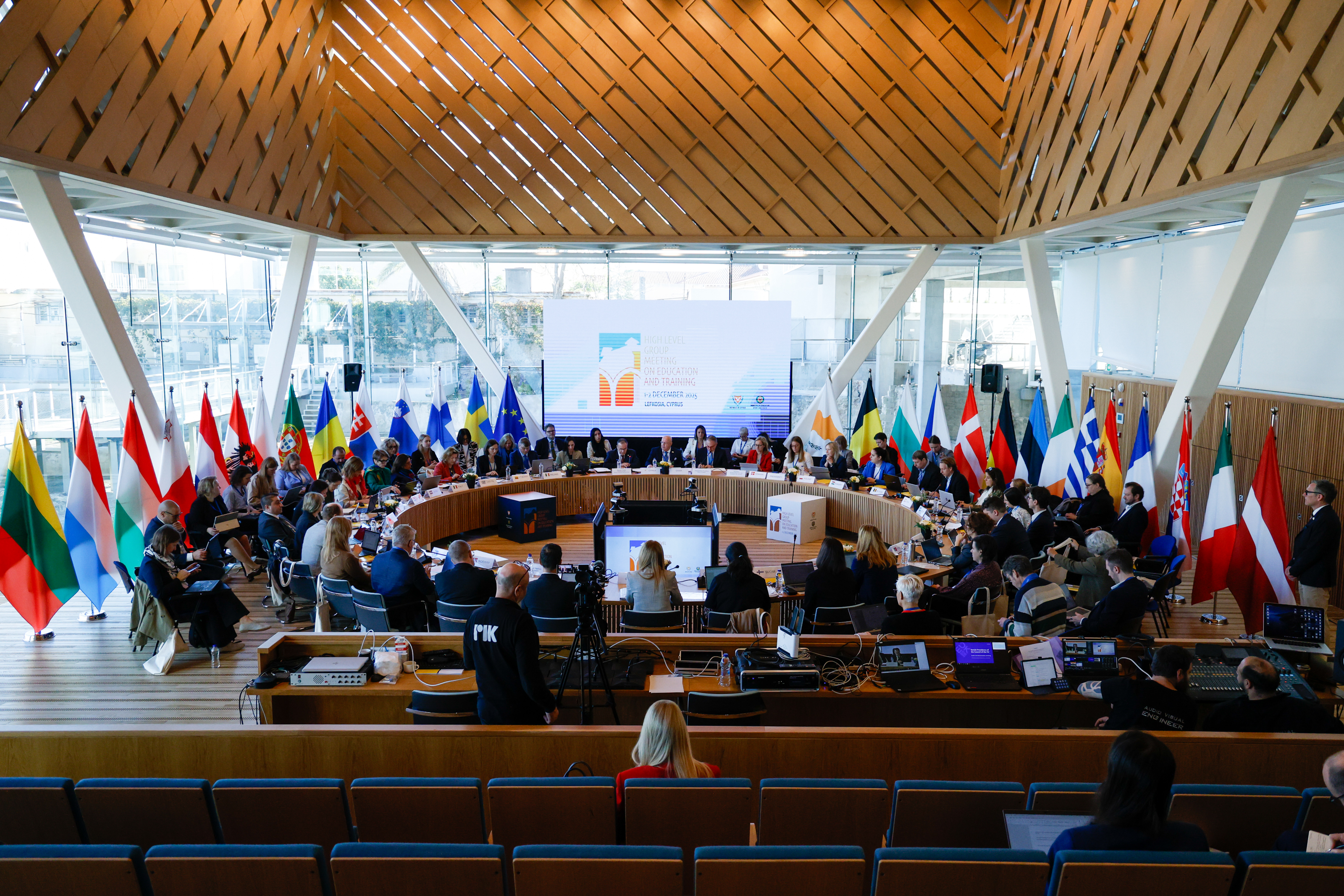
Cyprus will pursue a “balanced and forward-looking” education agenda during its EU presidency in the first half of 2026, as the cornerstone of a resilient, cohesive, competitive and innovative Europe, Education Minister Athena Michaelides said on Monday.
She added that younger generations were facing “unprecedented challenges”, such as technological acceleration, climate disruption, social fragmentation and complex geopolitical realities.
Cyprus’ policy regarding education must not be left on paper, but materialise into specific actions to the benefit of students across Europe, Michaelides said.
In an address read out at a high level meeting in Nicosia on education and training, in the framework of Cyprus’ upcoming EU presidency, Michaelides said the country’s priorities included promoting negotiations on the Erasmus+ regulation, with emphasis on accessibility and integration, teaching in the AI era, a modern vocational training sector and a renewed commitment for mobility in tertiary education.
“It is our collective duty to make sure that students receive not only high quality education, but values, direction, confidence and hope,” Michaelides said.
She added that this was the responsibility of governments, foundations, teachers, researchers and communities.
This responsibility, the minister said, was especially strong in Nicosia, which albeit divided due to Turkish occupation, constituted a live example of resilience, creativity and human capability, embodying the conviction that transformation is always possible.
Education ministry permanent secretary Giorgos Panteli presented Cyprus’ priorities in education and training for the EU presidency, saying they were in line with the EU agenda to make sure that the people were well-prepared for future challenges and opportunities.
Cyprus, he said, would host a series of meetings and events, focusing in general terms on careers, skills and sustainable development.
The meeting was also addressed by senior official of the Danish education ministry Marie Juel Bech Nielsen, who referred to the work done by the Danish presidency, and head of innovation, digital education and international cooperation at the European Commission Antoaneta Angelova-Krasteva, who referred to the importance of cultivating skills, STEM education and AI.
Nicosia mayor Charalambos Prountzos said these meetings were useful for drafting policy and strategies to secure high quality education, life-long learning and professional advancement for all.
He added that Nicosia hosted most of the country’s universities and about 50,000 students.


Click here to change your cookie preferences