
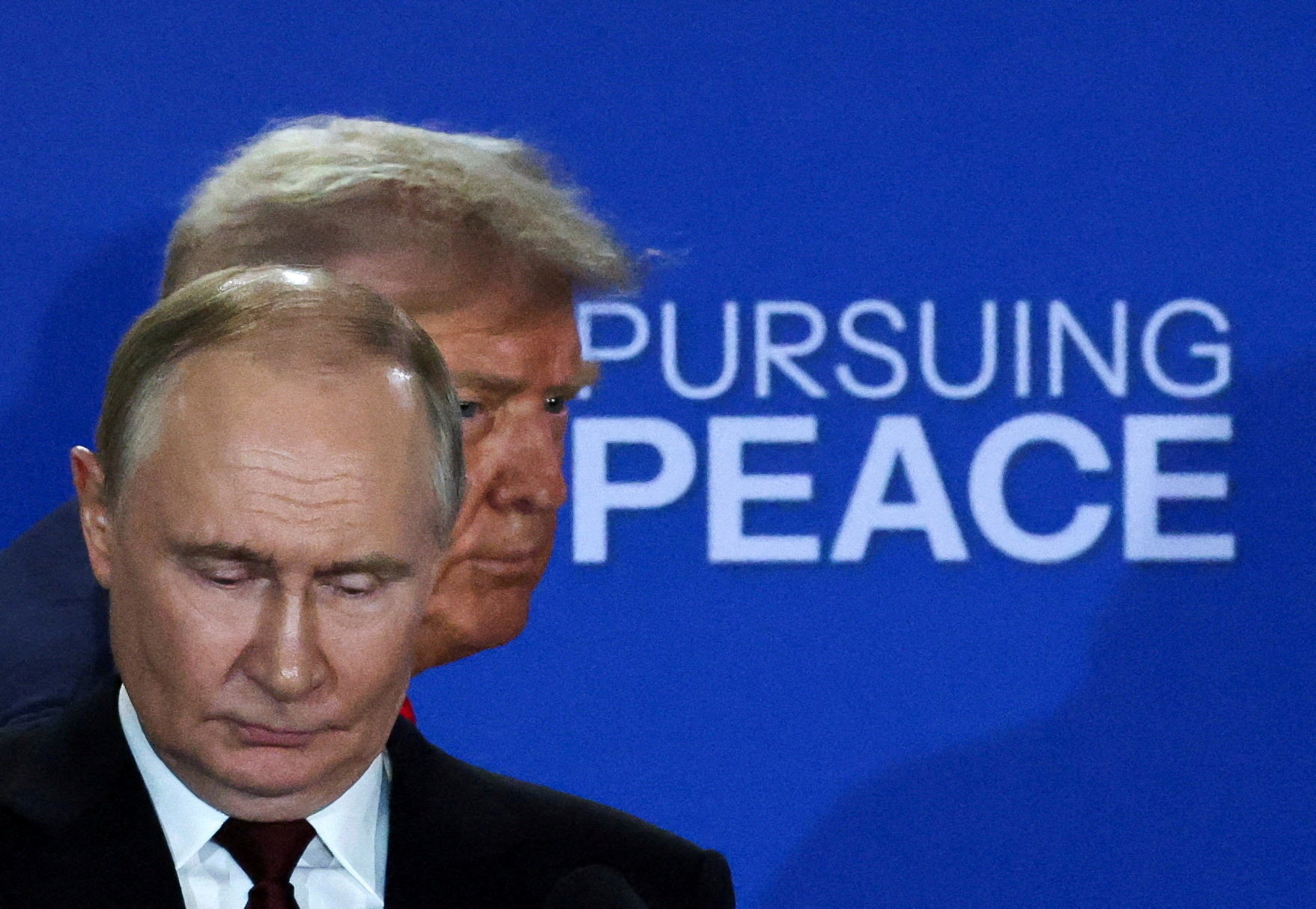
As was widely expected, Tuesday’s talks between the United States and Russia made no progress towards a Ukraine peace deal. This was the view expressed by a Kremlin aide Yuri Ushakov to the Russian media, after the five-hour meeting with President Trump’s envoy Steve Witkoff and son-in-law Jared Kushner. US Secretary of State Marco Rubio said “some progress” was made on security guarantees, but that seemed to be clutching at straws.
The tone was set by President Vladimir Putin with his incendiary comments before the meeting. Putin accused European countries of torpedoing peace in Ukraine by setting conditions that were “not acceptable to Russia.” Showing that his primary objective was to cause a split between Europe and the US over Ukraine, he said: “Europe is preventing the US administration from achieving peace on Ukraine” and that “they are on the side of war.”
It defies belief that the man who can stop the war today and achieve peace in Ukraine immediately by issuing an order to his troops is blaming European countries for supposedly preventing peace and for being ready to start a war against Russia. “Russia does not intend to fight Europe but if Europe starts, we are ready right now.” The EU, quite rightly, had demanded changes to President Trump’s totally one-sided peace plan, which satisfied all Moscow’s maximalist demands and set the conditions for Ukraine’s capitulation. After some changes were made, it was inevitable Putin would reject the plan and blame Ukraine or Europe for its collapse.
Although the US kept its distance from the latest dispute, Nato general secretary Mark Rutte did not mince his words when he responded to Putin’s hawkish remarks on Wednesday, saying “we are ready and willing to do what it takes to protect our one billion people.” Also on Wednesday, the European Commission announced it would fund Ukraine, with a loan that would be backed by Russia’s frozen assets. EU leaders failed to agree on the proposed “reparations loan” in October, but it will be raised at the summit, later this month, as the funding of Ukraine has become of great urgency.
Ukraine is expected to run out of money by spring and the reparations loan would cover its financial needs for 2026 and 2027 that EU officials estimate to be in the region of €136 billion. The money would be more useful paying for the reconstruction of Ukraine which has seen its infrastructure devastated after four years of Russia’s brutal aggression. But without the funds, Ukraine would collapse as a country as will its resistance to Russia. The US is unlikely to offer any more support to Ukraine, so it had been left to Europe to offer assistance in the form of the “reparations loan”. Although it is not the type of assistance to give a military advantage, it may allow Ukraine to carry on fighting. The alternative is total surrender to Putin.





Click here to change your cookie preferences