
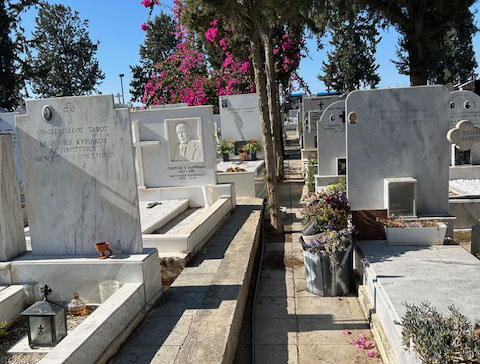
I was shocked when I visited the grave of my husband’s parents in Nicosia. There is hardly space to walk to a grave, and many of them have not been looked after for decades.
In other countries, such as Germany, cemeteries are very much like parks, where people go for recreation and spaces are created for trees, grass and wide lanes for walking.
“The main cemetery in Dortmund is where most people walk their dogs,” my father commented. “It is a place where you feel at peace.”
There’s definitely no dog-walking in a cemetery in Cyprus, even though I am talking about a cemetery in Strovolos, one of the most overcrowded, unkempt cemeteries in Nicosia.
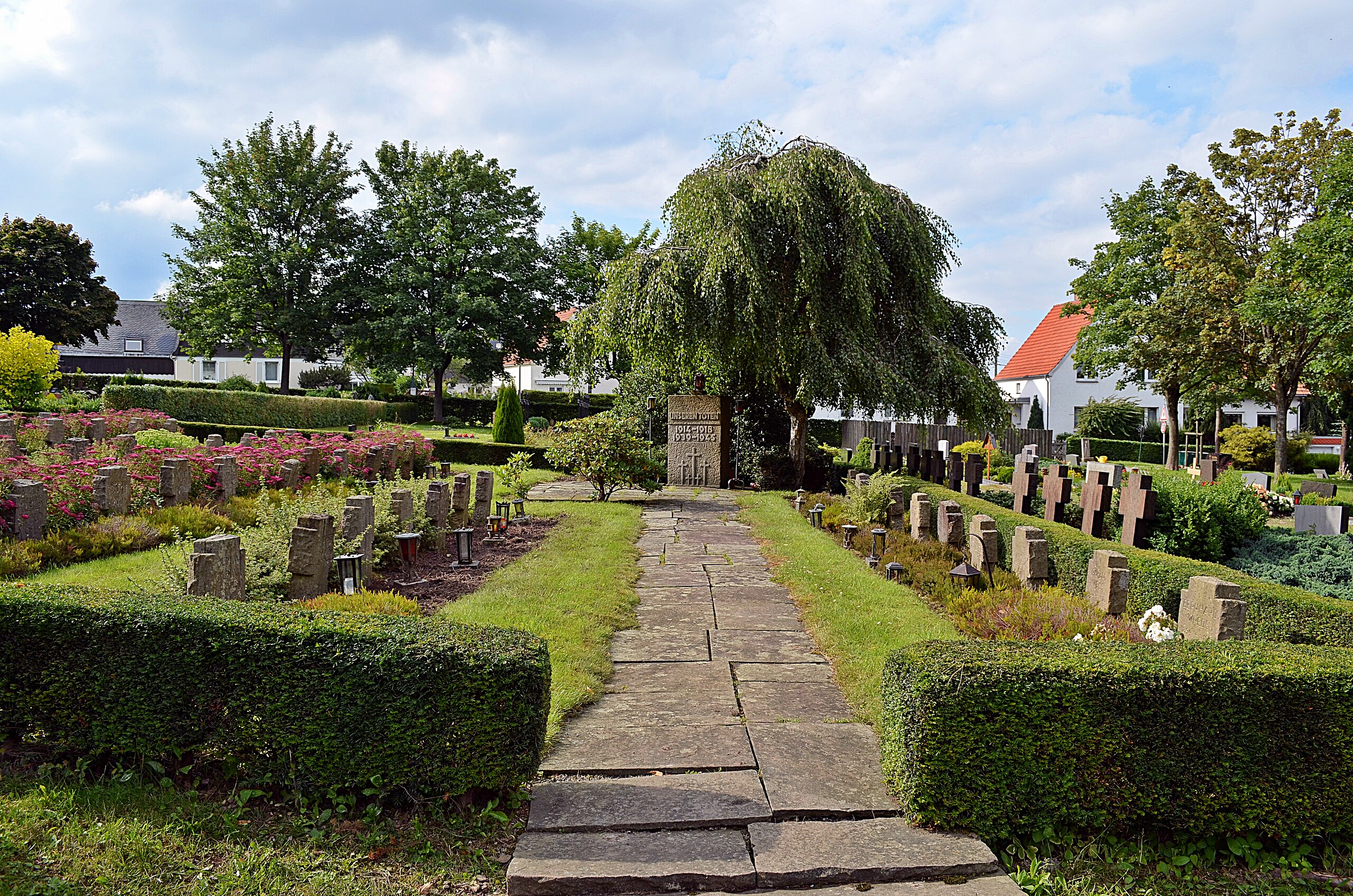
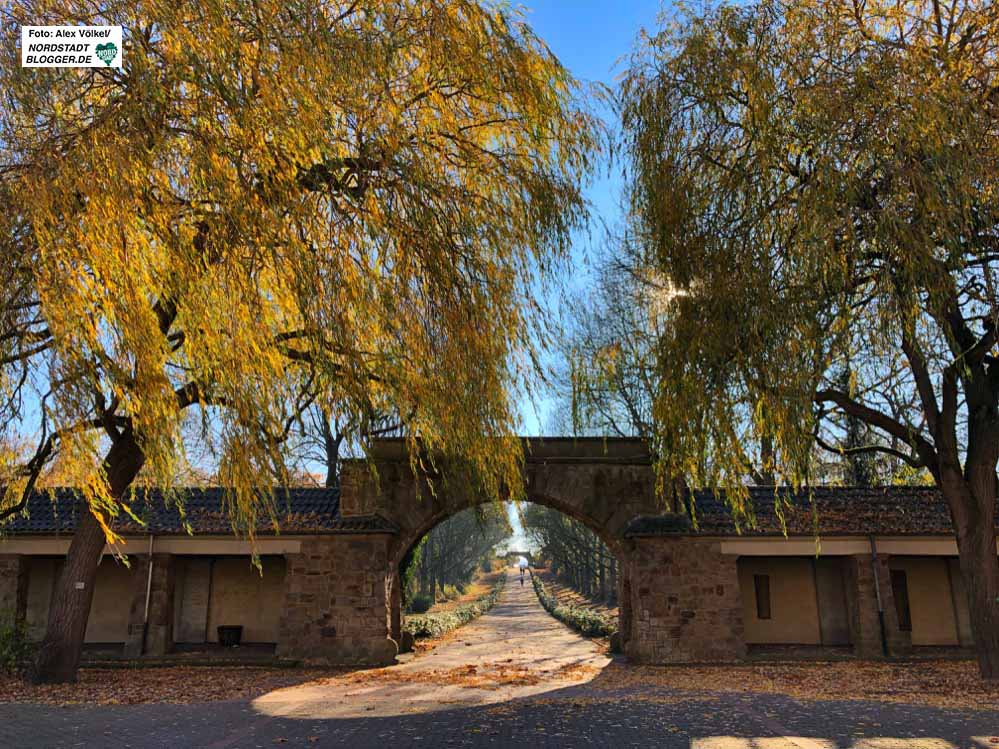
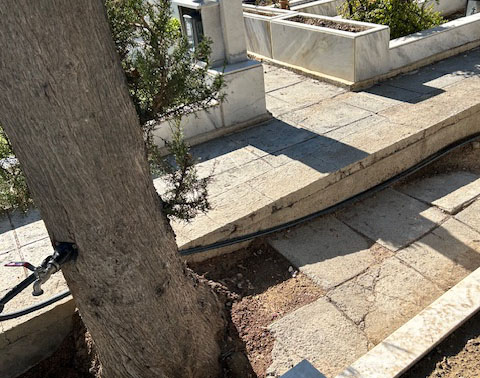
There must be reasons why such crowded cemeteries exist in Cyprus, and why they are so different from northern countries. Land which the church owns in Cyprus may play a role. Couldn’t the church do something about it? They own so much land after all and are able to sell it to build luxury houses and flats everywhere. Why not allot more land to create better places for peaceful surroundings, if not for the dead, then for their living relatives visiting their dead loved ones?
However, it is not that easy to pass judgement.
Graveyards are, after all, a reflection of society.
“Differences exist in cemetery design and grave space management, which can be influenced by region, climate, and cultural traditions,” says Artificial Intelligence, our most popular source of information nowadays.
And AI may be right about this.
While older cemeteries in Cyprus are often overcrowded, that doesn’t necessarily mean German park like cemeteries are much better: the concept and the management are so different after all.
Though I don’t have all the answers to the different mindsets of northern vs southern Europeans, it is possible that Cypriots, as the island has been invaded so many times over centuries, crave for places which are eternally theirs. In other countries, it is a given that a space for a grave is essentially temporary. It is not owned by a family forever.
A grave in Germany is available for around 20 years in a town, and up to 30 years in rural areas. After that, relatives are contacted and asked to remove the headstone and other signs that this person was buried in the grave they have occupied. When families do not comply, the grave is simply removed.
In Cyprus cemeteries offer perpetual rights, meaning the plot is reserved for the family indefinitely.
This is probably more suitable for a society which values long family traditions and good news for relatives who want to visit a grave after many years and opt to bury a relative much later in the same place.
But at some point, however, there may not be any surviving relatives to care for the graves. It then becomes a forever place nobody visits and cares for, hence the neglect I have witnessed.
And then there is the nationwide reluctance for cremation. In northern Europe the vast majority of the dead are cremated. In 2022, there were approximately 779,100 cremations in Germany, representing about 78 per cent of total deaths.
Obviously less space is needed for an urn, and less care is needed to look after the space. Even so, the same regulations as for graves exist, urns are removed after a certain amount of time.
But if there really is so little space for graves in Cyprus, why does a crematorium still not exist?
Annette Chrysostomou is a former journalist for the Cyprus Mail

Click here to change your cookie preferences