
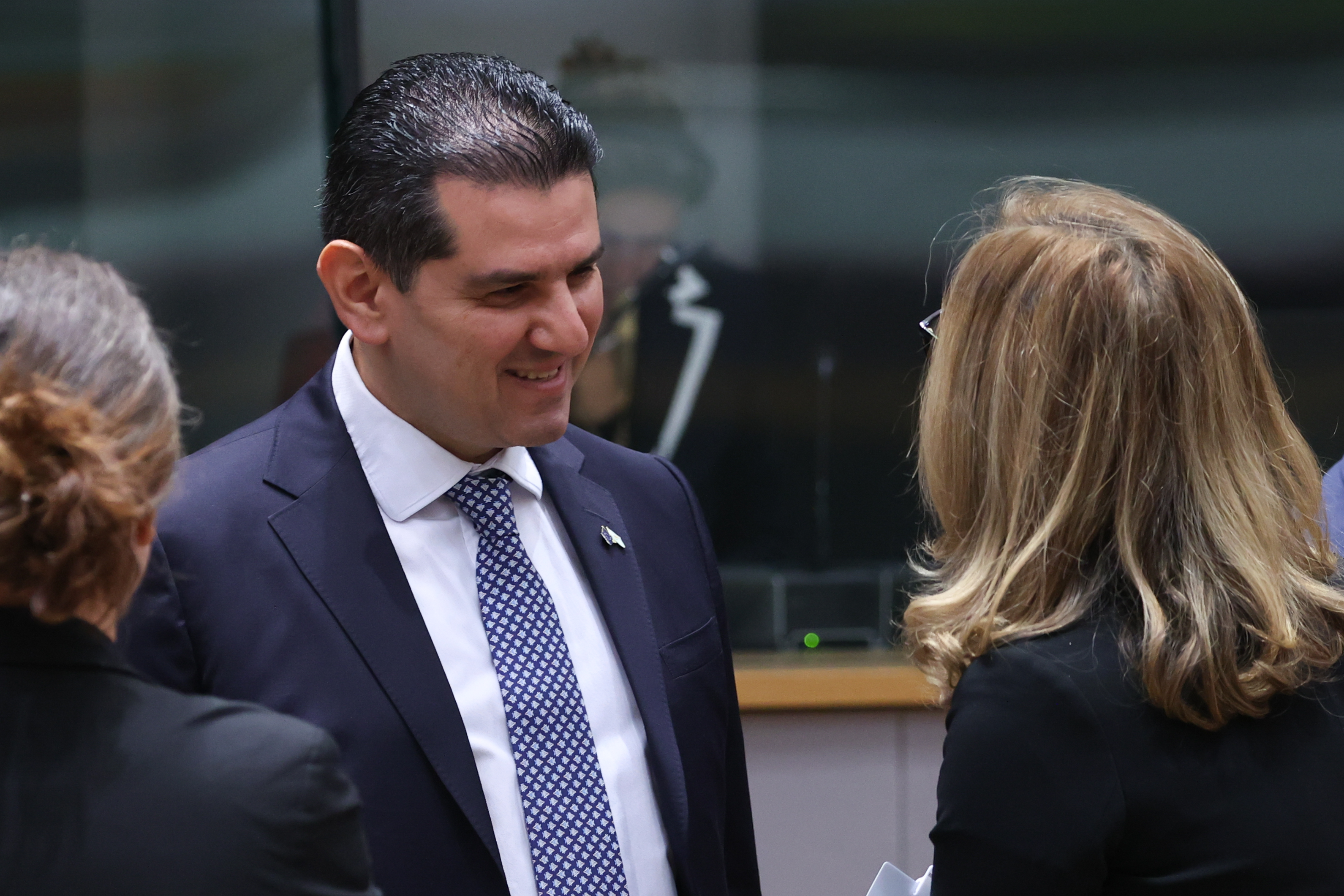
The Great Sea Interconnector project will not “collapse”, Energy Minister Michael Damianos said on Wednesday, stressing that “there is no question” of such a thing happening.
Speaking to CyBC radio, he said the governments of Cyprus and Greece have “a common line on this specific issue”.
This, he said, was “established during the brief discussion” he held with his Greek counterpart Stavros Papastavrou on the sidelines of the European Union’s transport, telecommunications, and energy (TTE) council meeting in Brussels earlier in the week.
He said that in that meeting, he and Papastavrou had “agreed that the project is progressing normally”, and that at the same time, “the corresponding assurances were received” from Nexans, the French company contracted to construct the interconnector cables.
Those reassurances were offered after it was reported that Nexans had withdrawn tenders it had put out in relation to the interconnector and informed interested companies that the project is not moving forward in accordance with its set timetable, though the company did not withdraw from the project in its entirety.
Instead, it has been reported that it will issue a revised programme to interested parties as and when needs require.
Damianos on Wednesday also made reference to last month’s joint announcement made by the governments of Cyprus and Greece that the “economic and technical parameters” of the project would be “updated”, saying that this plan is “known to the European Commission”.
That update came with a view to attracting more investors to the project, with Damianos’ predecessor George Papanastasiou saying last month that to this end, the parameters which would be updated would also include the project’s feasibility study.
Papastavrou, too, said the plans for a new feasibility study and updated “economic and technical parameters” are now afoot “in view of the potential investment interest”.
“We highlighted the need for Europe to move quickly, to strengthen interconnection projects, and to further de-escalate the price of energy for households and businesses,” he said.





Click here to change your cookie preferences