
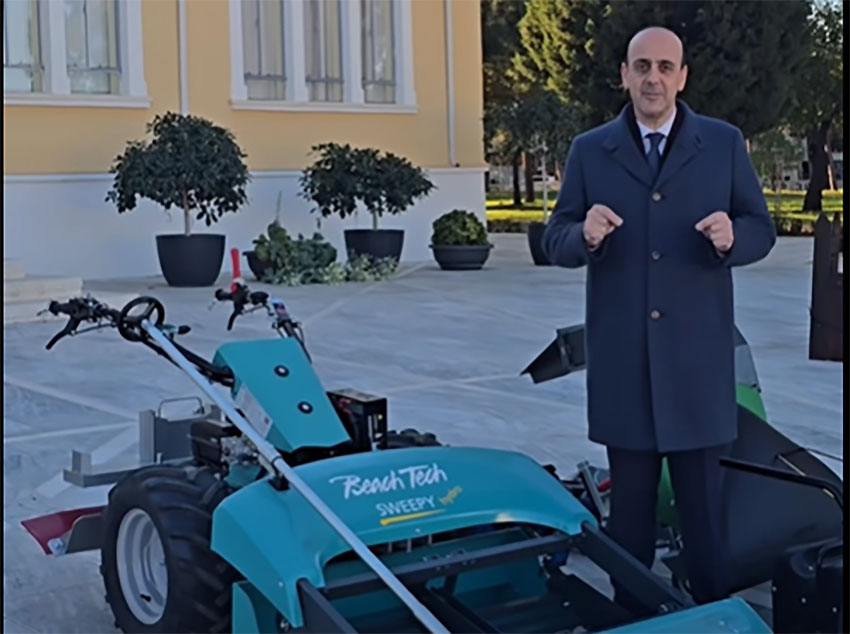
It is very easy to understand the outrage of Paphos Mayor Phedonas Phedonos for having to pay an extortionate price for a beach cleaning machine, also known as a ‘beach tech sweepy’, for Paphos municipality. The mayor posted a video of himself on social media, standing outside the town hall, posing next to the machine, which came with three components, protesting about €46,200 the municipality had to pay.
The problem was that all the correct procedures were followed. Tenders were invited and technical specs were given but only one supplier submitted an offer. In the absence of no other tenderer, the municipality had to buy the beach tech sweepy at a price that was much higher than what was being charged abroad. Phedonos said that when he saw what was delivered for the price, he could not accept it and would be sending it back to the suppliers and demanding the money back, conceding that legally the municipality did not have a very strong case.
Overpriced equipment was the result of a lack of competition caused by the small number of suppliers, something inevitable, given the size of the country. He also offered a rather more sinister explanation as regards the way the tenders are carried out. The municipality seeks assistance from people with knowledge in compiling the technical specifications, which could lead to the high price. The mayor, however, speculated that the price could be decided first and the specs written in way that would justify it.
If there was competition – five or six suppliers – the price charged would have been in the region of €12,000, he said, adding that despite being legally obliged to accept the deal he would fight it, because his primary duty was to ensure public money was not wasted. If the supplier does take the sweepy back and return the money, Phedonos said he would name and shame the company for profiteering at the expense of the public.
The mayor’s plan could work, and it could be a small victory for him, but it will not rid us of the lack of competition that exists in a small place. There cannot be five firms supplying beach sweepers in Cyprus to bring the price down. As Phedonos conceded, the problem is much wider, with cement producers, contractors, asphalt-makers all charging very high prices because there are few of them. He also spoke of cartels and the abject failure of the Commission for the Protection of Competition to crack down on them.
The gross overcharging of the state by suppliers and contractors is as old as the Republic. The smallness of the economy combined with the creation of cartels has ensured the state always pays top buck for everything, because it has to deal with local suppliers, in contrast with businesses that can buy from abroad. Nobody has ever tried to tackle the matter even though tens of millions of euro are wasted as a result. Perhaps now that the issue has been raised by Phedonos the authorities will look into how the situation can be improved.





Click here to change your cookie preferences