
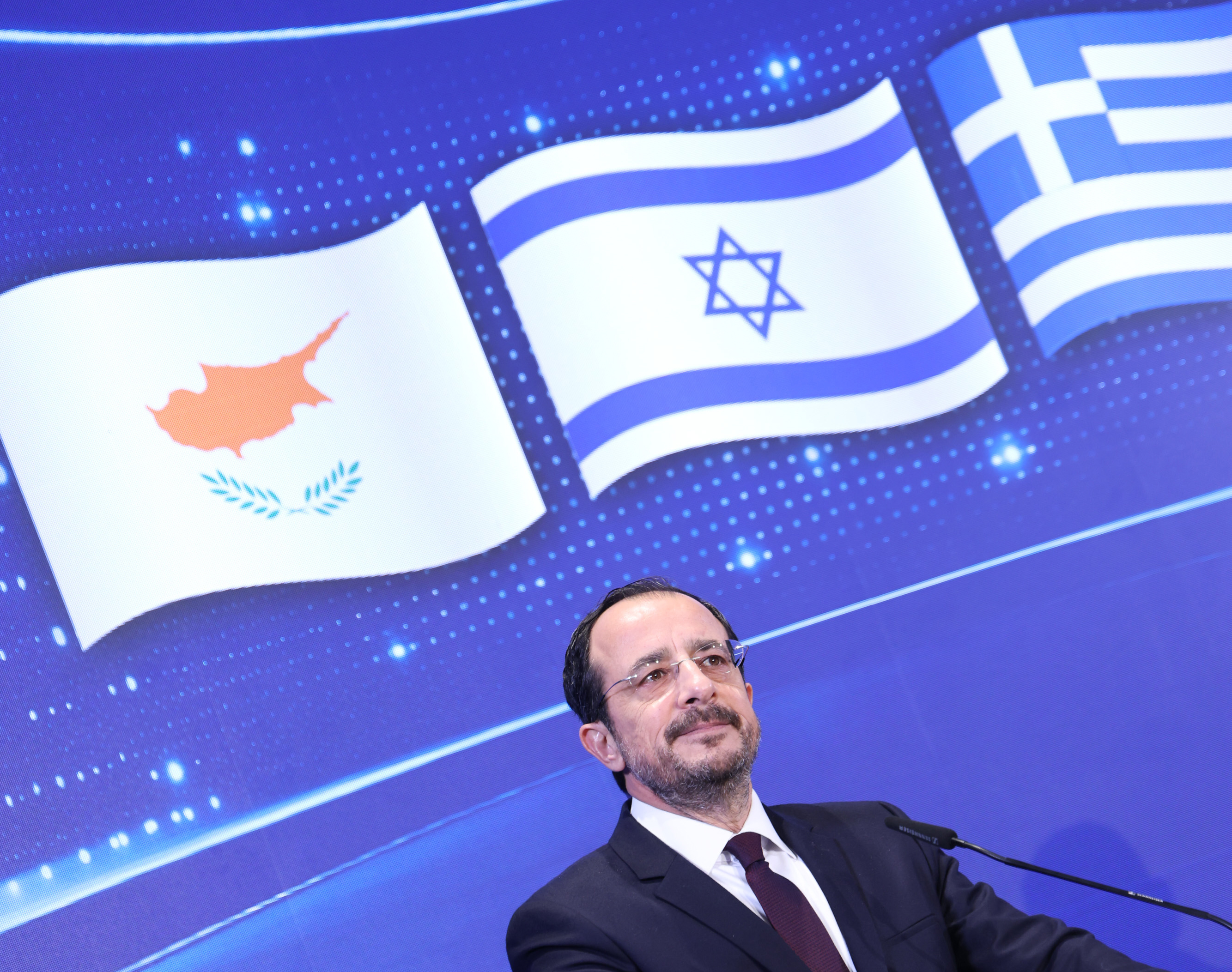
Turkish Cypriot leader Tufan Erhurman on Monday decried what he described as an “anti-Turkey axis” being forged by the governments of Greece, Israel and Cyprus in the defence and energy sectors.
He wrote in a post on social media that despite President Nikos Christodoulides’ references to solving the Cyprus problem in his new year’s message, actions in the defence and energy sectors have suggested the opposite approach.
“We have long been saying that cooperation between Cyprus, Turkey and Greece in energy is one of the most important motivating factors for resolving the Cyprus issue. A solution comes not by creating and fuelling antagonism, but by creating cooperation,” he said.
He added that a “climate for a solution” can be brought about “not by ignoring Turkish Cypriots, but by approaches which demonstrate that Turkish Cypriots and Greek Cypriots are accepted as equal partners”.
To this end, he said that “there are, of course, approaches which will only be relevant if resolving the Cyprus issue is truly seen as a priority”.
“The solution itself needs a climate which precedes it … and everyone who says they want a solution is expected to contribute to creating this climate not only with words but also with actions,” he said.
On this matter, he added that the Turkish Cypriot side “will, of course, continue our suggestions and contributions towards creating a climate for a solution within the framework of our people’s will for a solution.
“As I said before, if this can be done fairly and if a ‘measurement and evaluation’ is to be made, everyone’s ‘will for a solution’ must be measured not only by what is done and not done at the negotiating table,” he said.
His comments came after Christodoulides had held a telephone conversation with Israeli Prime Minister Benjamin Netanyahu on Sunday, with the pair discussing among other matters, the Great Sea Interconnector and the planned India-Middle East-Europe Economic Corridor (Imec).
Erhurman had on Sunday expressed his opposition to the Great Sea Interconnector, which, if completed, will connect the energy grids of Cyprus, Israel and Greece, though Cypriot Energy Minister Michael Damianos had last month insisted that the project “will not collapse”.
Much of the attention related to the project so far has been related to the interconnection of Cyprus and Greece, with the two countries’ governments having appeared to have been at odds over the matter in recent months, though Damianos had on this matter insisted that they now have “a common line on this specific issue”.
The reference to cooperation in the field of defence, meanwhile, comes after Defence Minister Vasilis Palmas had been forced to deny reports that the governments of Cyprus, Israel, and Greece are planning to combine to create a military “rapid reaction force” to counter Turkish forces in the eastern Mediterranean.
“I am telling you that these issues which have such a high level of decisions are made by the political leadership, and as the political head of the defence ministry, I am telling you that no such issue has been raised and we have not discussed any issue,” he said.
Asked whether the idea would be an “unlikely or fantasy scenario”, he said that “even if a meeting were to take place which had different contents, it would be wrong for us to bring some confidential issues to light”.
The reports of a “rapid reaction force” first appeared in Greek newspaper Ta Nea, which stated that a 2,500-strong brigade-level force, armed with boats, planes, and other infrastructure would be formed, with stations on one of either Rhodes or Karpathos, in Cyprus, and in the State of Israel.
It added that 1,000 Greek soldiers, 1,000 Israeli soldiers, and 500 Cypriot soldiers would be brought into the force, as well as one squadron each from the Greek and Israeli air forces, a frigate and a submarine from Greece, and a corvette boat and a submarine from the Israeli navy.
The newspaper reported that the aim of the force would be to protect Greek, Cypriot, and Israeli interests from “Turkish revisionist provocations”, with Greece and Turkey having long been at odds over their maritime borders in the Aegean sea and the eastern Mediterranean.

Click here to change your cookie preferences