
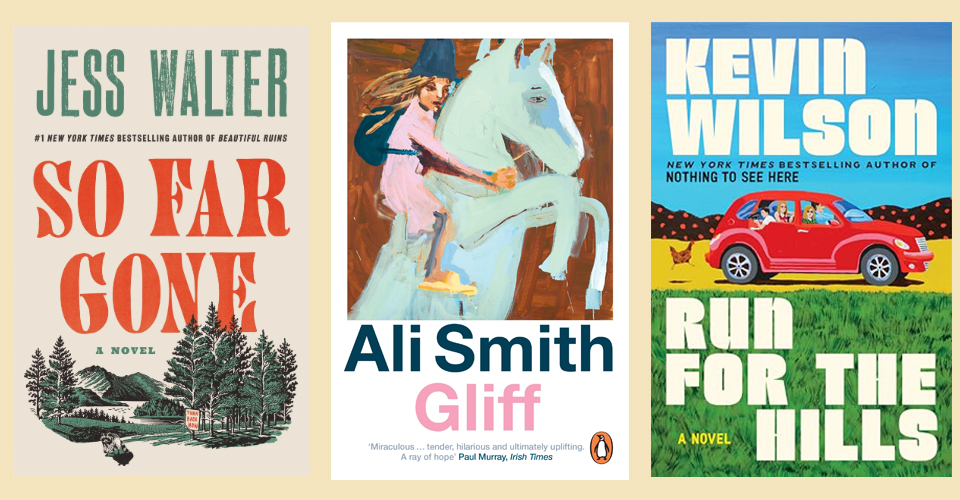
2025 felt a bit uneven as far as literary fiction went, with a number of big-name writers and novels failing to live up to their billing. But as the year drew to a close, there are still plenty of books that I am grateful to have read. Here are the ones whose memory will carry most vividly into 2026.
I See You’ve Called In Dead – John Kenney
When a blind date goes wrong, middle-aged obituary writer Bud loses it. So, naturally, he goes home, gets drunk and writes his own obituary – in which he was ‘a member of the Jamaican Bobsled Team, ninth in line to the British throne, and inventor of toothpaste’ – before publishing it on the company website for the world to read. Thus begins a journey to discover the meaning of death, and with it the point of being alive. John Kenney’s novel is both a very funny book and also one that touches tenderly and wisely upon the darkness and lunacy and uncertainty of life.
So Far Gone – Jess Walter
I like books that are funny. I like books that treat flawed characters tenderly. I like books about parents and children. I like books about human absurdity and folly. I like quest narratives. I like books about people living in cabins. I like books by writers who can sketch minor characters with so much power that you remember them as vividly as the major characters. And I like books that manage to do and be all of the above as well as providing commentary on the history of the western fetishisation of individualism and its terrifying ramifications through which we are all now living. If you like any of the things I like, you’ll like So Far Gone too.
The Poisoned King – Katherine Rundell
The Poisoned King is the story of two children called upon to save the Glimouria Archipelago, the ‘last surviving magical place’, from the cruelty and greed of a very human villain. Ultimately, the children find the antidote not just for the literal poison spreading through the Archipelago, but also for the more urgently destructive venom that is human egotism and corrupted desire. This is an utterly superb book. It is funny; it is profound; it is fun; it is moving. And it calls to the power of every reader to revive the heart of childhood inside them and respond to the enchantment that surrounds us in our world all the time. Nothing could be worth cherishing more.
Gliff – Ali Smith
There’s a moment in Gliff where its narrator, a child named Briar, reflects upon reading a dictionary that ‘there was such a thing as a family of words… all touching on each other, hitting or striking each other, acting on each other, influencing each other, agreeing with each other or throwing each other out, disturbing each other, doing all of these things at once.’ In Ali Smith’s Gliff, the power of language and the power of family are the only hope for the survival of the human race in a bleak, data-driven technocratic dystopia. And like everything Smith writes, it’s brilliant – in both senses of the word.
Run for the Hills – Kevin Wilson
‘You weren’t supposed to suddenly get a new family at eleven o’clock on a Saturday after you’d sold out of eggs.’ So much of Kevin Wilson’s latest little delight of a novel might be unpicked from this single line that sets the stage for the plot of Run For The Hills at its very outset. This is a novel about what family is and what it can, could and should be; it is a novel about the inherent necessity and inherent fallibility and, indeed, silliness of the narratives we all rely upon to get through the world; and it is a novel that treats serious things in a tone that manages to be both airy and profound, witty and tender.



Click here to change your cookie preferences