
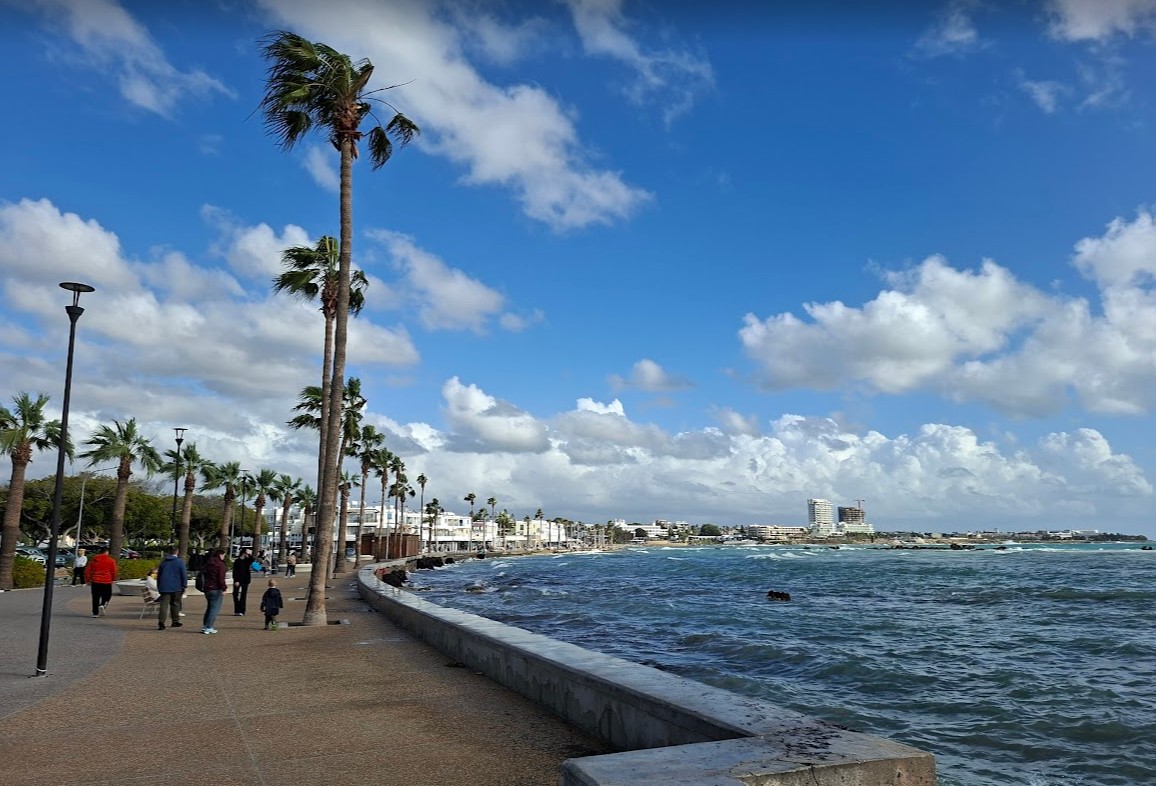
Larnaca and Paphos set for positive tourism growth in 2026
Tourism prospects for 2026 are shaping up positively in both Larnaca and Paphos, with local authorities pointing to continuity, targeted upgrades and a stronger emphasis on quality and sustainability, even as geopolitical and economic pressures persist.
In Larnaca, expectations remain upbeat following what officials describe as a strong year.
Speaking to the Cyprus News Agency, Larnaca Regional Board of Tourism (Etap) president Dinos Lefkaritis said that, after “a successful programme of actions in 2025”, work is under way to roll out a new action plan alongside ongoing initiatives.
The objective, he added, is to “upgrade the touristic Larnaca, promote it, enrich the tourist product and maintain and enhance our authenticity, which is an element that characterises the board”.
Beyond promotion, the focus will shift to practical improvements on the ground.
Lefkaritis said that “we will focus in the new year on issues of improving accessibility to tourist areas as well as on enhancing greenery and creating tourist clusters”, pointing to the cluster of the nine beekeeping villages in mountainous Larnaca.
At the same time, he said Etap will address beach erosion affecting several parts of the city, including Oroklini.
More broadly, he added that attention will also be given to longer-standing issues that shape the visitor experience.
Etap, Lefkaritis said, will focus on “solving the problems that directly or indirectly affect the touristic Larnaca”, including delays to road and infrastructure projects, visual pollution, issues involving the department of antiquities and tourists’ access to public transport.
In parallel, cooperation with local authorities remains central.
Asked about relations with the Municipality of Larnaca and other municipalities in the district, Lefkaritis said cooperation remains central, noting that Etap’s institutional role is to coordinate the public sector and local authorities involved in tourism, with the aim of strengthening Larnaca as a destination.
Along similar lines, he said initiatives with communities in mountainous Larnaca will continue this year, with actions and events organised alongside local authorities, organisations and associations.
The promotion of mountainous areas, he added, is treated on an equal footing with the main tourist zones, while “the main goal of the board is also to emphasise the characteristics of each community”.
Lefkaritis also pointed to 2026 as a year of opportunity for the destination, noting that Larnaca is expected to host several conferences in the context of Cyprus assuming the Presidency of the Council of the European Union.
Against that backdrop, he said the outlook for tourism in the city and district remains positive.
A similar assessment is emerging further west, from Paphos, where tourism performance in 2025 held up despite a volatile international backdrop.
Nasos Hadjigeorgiou, executive director of the Paphos regional tourism board (Etap), said he was satisfied with the destination’s performance last year, despite what he described as intense geopolitical and economic challenges.
Even so, he referred to another year of consolidation, achieved on a qualitative and sustainable basis.
Building on that base, for 2026, Hadjigeorgiou said the authority is aiming for the qualitative upgrade and sustainable maturation of the destination.
Priorities include strengthening year-round air connectivity, developing thematic markets, including sports, wedding, wellness, rural tourism and the 55 plus segment, advancing digital tools, improving accessibility for people with disabilities, promoting the countryside, particularly the Polis Chrysochous area, and supporting major events.
In terms of aviation, he noted that Paphos has built a strong network of year-round connections with major carriers, while efforts continue to secure new routes to Germany, Switzerland, the Netherlands, Lebanon and Egypt, as well as to support the presence of a Cypriot airline at Paphos International Airport.
Reflecting on the past year, Hadjigeorgiou said 2025 was marked by instability linked to the conflict in the Middle East, the war between Russia and Ukraine, high energy costs, labour shortages and water scarcity.
However, he added, arrivals and revenues performed positively, confirming the resilience of the local tourism ecosystem.
Within this context, 2025 also marked a turning point for Paphos as a multi-thematic, smart and sustainable destination, delivering tangible results across three pillars.
The first related to air connectivity and markets, where international accessibility increased significantly, not only from the United Kingdom but also from Germany, Poland and central Europe.
This progress, he said, reflected close cooperation between Etap, Hermes Airports, the Deputy Ministry of Tourism, hoteliers and air carriers.
The second strand focused on digital transformation. During 2025, actions included more than 25 new QR and smart information points, upgrades to applications for the UNESCO archaeological park and the myth of Aphrodite, 360-degree digital and audio tours in five languages, smart signage, data analytics tools and targeted digital campaigns in Cyprus and abroad.
At the same time, Paphos also participated in European programmes such as COSME, Interreg Smart Tour and Erasmus Idemo, positioning it as a smart destination at a Mediterranean level.
Meanwhile, centred on thematic tourism and interactive experiences, with eco-routes and thematic clusters emphasising the hinterland, nature and culture.
Emphasis was also placed on cycling, with seven gravel routes covering more than 30 communities, alongside gastronomy, wine, local products and festivals.
“All of the above substantially reinforce Paphos’ transition from the sun and sea model to an experiential and quality tourism,” Hadjigeorgiou concluded.


Click here to change your cookie preferences