
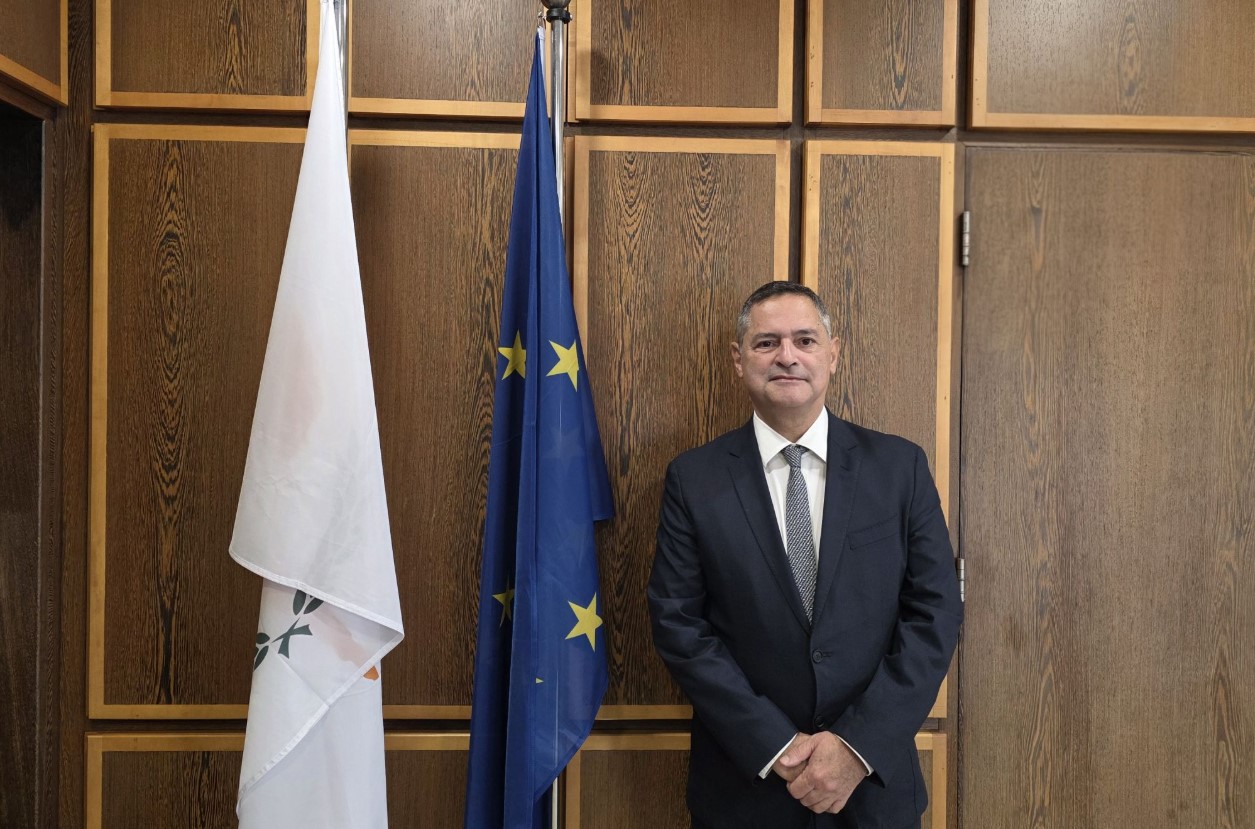
Patsalides highlights AI risks, changing financial landscape, economic resilience
The landscape of financial services in Cyprus has changed significantly over the last decade, Central Bank of Cyprus (CBC) governor Christodoulos Patsalides said on Monday.
In his opening address at fintech forum taking place in Nicosia, Patsalides stated that the domestic economy of Cyprus continues to be robust.
He pointed out that growth remains significantly above the euro area average at approximately 3.5 per cent, supported by services, tourism, and professional activities.
At the same time, public debt is on a downward trajectory and labour market conditions remain favourable and close to full employment.
“The Cypriot banking sector is a pillar of resilience and a factor for growth,” he said.
“The Common Equity Tier 1 (CET1) ratio is about ten percentage points above the euro area average and liquidity ranks among the strongest in Europe,” he added.
Furthermore, the governor stated that, mirroring European trends, the financial services landscape of Cyprus has changed significantly over the last decade.
“Alongside traditional institutions, Cyprus is now home to a growing community of digital payment providers, such as Electronic Money Institutions and Payment Institutions, although the bulk of this business is conducted outside Cyprus,” Patsalides said.
Referring to artificial intelligence (AI), he said that recent research shows that more than 70 per cent of financial institutions worldwide are already using, piloting, or exploring applications based on artificial intelligence.
These include applications related to customer interaction and credit assessment, to fraud detection, trading, and risk management.
“While these technologies offer significant efficiency gains and analytical power, their impact is profound, challenging existing business models, introducing new operational and modelling risks and increasing dependencies on data and third-party providers,” he stated.
“Innovation”, he continued, “must be embraced, but always based on sound risk management, strong governance, and a clear commitment to financial stability.”
“In a world characterised by rapid technological transformation and increased global risk, maintaining trust in money and financial institutions is of paramount importance,” Patsalides said.
“The Central Bank of Cyprus, as a member of the Eurosystem, remains fully committed to this goal, working with European partners to support a resilient, innovative, and inclusive financial system,” he added.
Referring to the European Central Bank Financial Stability Review of November 2025, he said that it highlights that financial stability risks remain elevated, although generally contained.
Despite the challenges, he explained, the European economy has shown resilience and the euro area banks themselves have shown resilience to recent shocks amidst strong profitability and ample capital buffers and liquidity.
The governor further stated that the European banking sector is undergoing a major shift and that technology is the primary driver of this change.
“Digital banks are gaining market share, while innovation is revolutionising payments through the exploitation of new technologies,” he said.
He added that “within this evolving payments ecosystem, the introduction of the digital euro represents a major strategic response”.
“The digital currency of Europe”, he continued, “aims to maintain public access to central bank money in digital form, to support the monetary sovereignty of Europe, to enhance resilience in retail payments, and to promote innovation, while maintaining high standards of privacy and security.”
“Crucially, the digital euro is designed to complement rather than replace cash and private payment solutions,” he said.
“It is essential for the financial industry to remain well-informed, to participate proactively, and to navigate effectively the changes introduced by new technologies,” he conluded.





Click here to change your cookie preferences