
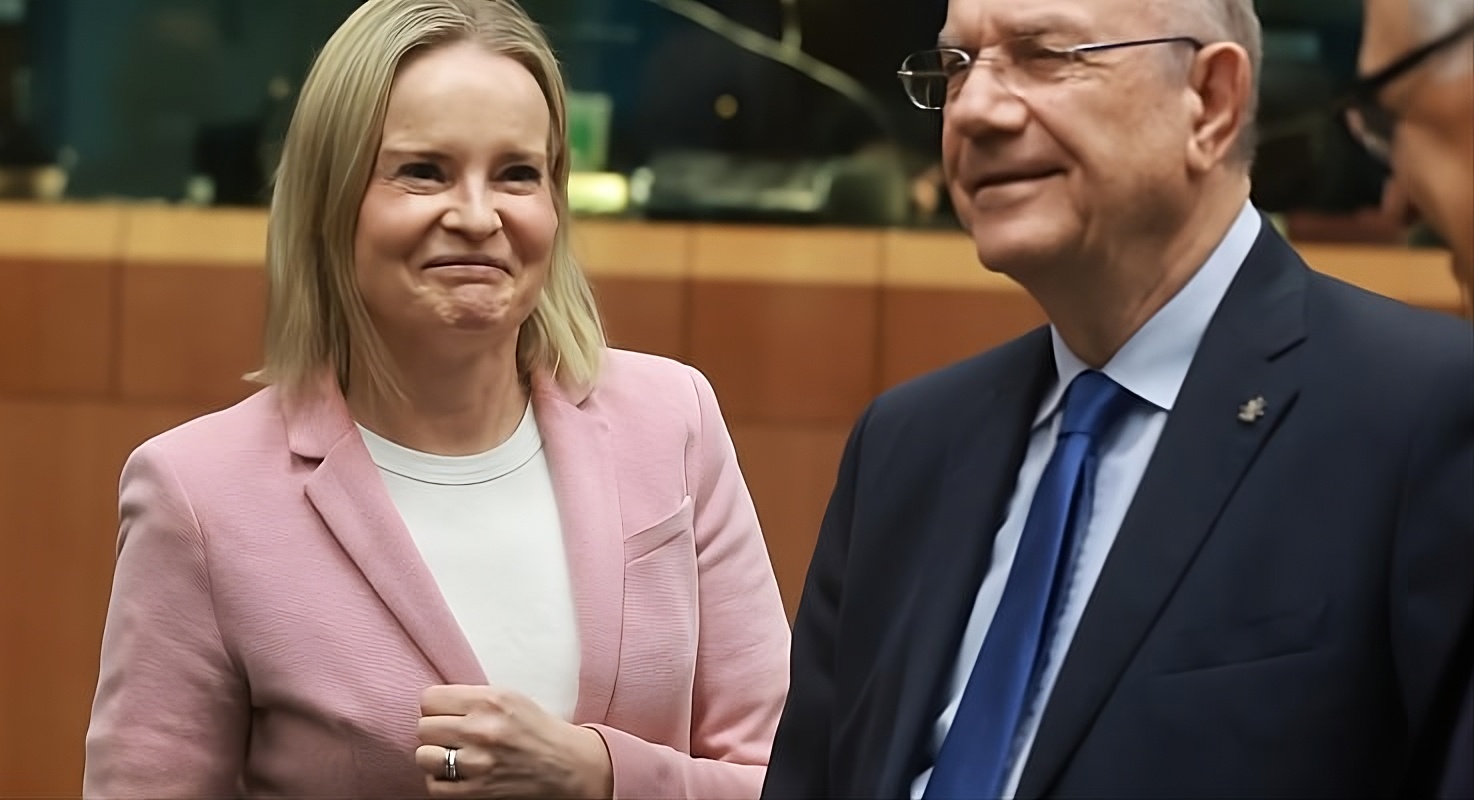
The EU’s Economic and Financial Affairs Council on Tuesday decided to launch an excessive deficit procedure for Finland after its state deficit breached the limits set under EU fiscal rules.
The decision was taken by ECOFIN, which determined that Finland’s deficit had exceeded the 3 per cent of GDP threshold established by the Stability and Growth Pact.
Alongside the decision, the Council issued a formal recommendation setting out the required fiscal adjustment path and a timetable for public spending to correct the excessive deficit by 2028.
Finland’s deficit reached 4.4 per cent of GDP in 2024 and is expected to remain elevated at 4.3 per cent in 2025, according to the Council’s assessment.
Although Finland has made use of the national escape clause for defence spending, which allows an excessive deficit of up to 1.5 per cent without triggering the procedure, the Council said this was not sufficient to fully justify the current deficit level.
The Council called on Finland to take effective corrective measures and submit the necessary plans by April 30, 2026.
It also instructed the country to ensure that the growth rate of net public expenditure does not exceed 2.5 per cent in 2026, 4.1 per cent in 2027 and 5.9 per cent in 2028.
Under the Stability and Growth Pact, EU member states are required to keep their budget deficits below 3 per cent of GDP and public debt below 60 per cent of GDP.
The excessive deficit procedure is designed to support member states in correcting fiscal imbalances through enhanced monitoring and targeted recommendations, with the aim of strengthening the sustainability of public finances.
The decision on Finland was adopted at the conclusion of the ECOFIN meeting chaired by Finance Minister Makis Keravnos, who was presiding over the Council session as part of his official duties.
Keravnos travelled to Brussels to chair the ECOFIN meetings and participate in the Eurogroup session, where eurozone economic priorities and member state recovery plans were discussed.
Earlier the same day, he attended a Eurogroup meeting focusing on Bulgaria’s adoption of the euro, followed by exchanges on Eurozone economic policy priorities for 2026 based on European Commission recommendations.
The agenda also included a briefing on the outcomes of recent G7 finance meetings, a presentation of objectives by France as the 2026 presidency, and discussions on candidacies for the vice-presidency of the European Central Bank.
Before the ECOFIN decision on Finland, ministers also examined the economic and fiscal impact of the Russian invasion of Ukraine and adopted revised Recovery and Resilience Plans for several member states, including Finland.





Click here to change your cookie preferences