
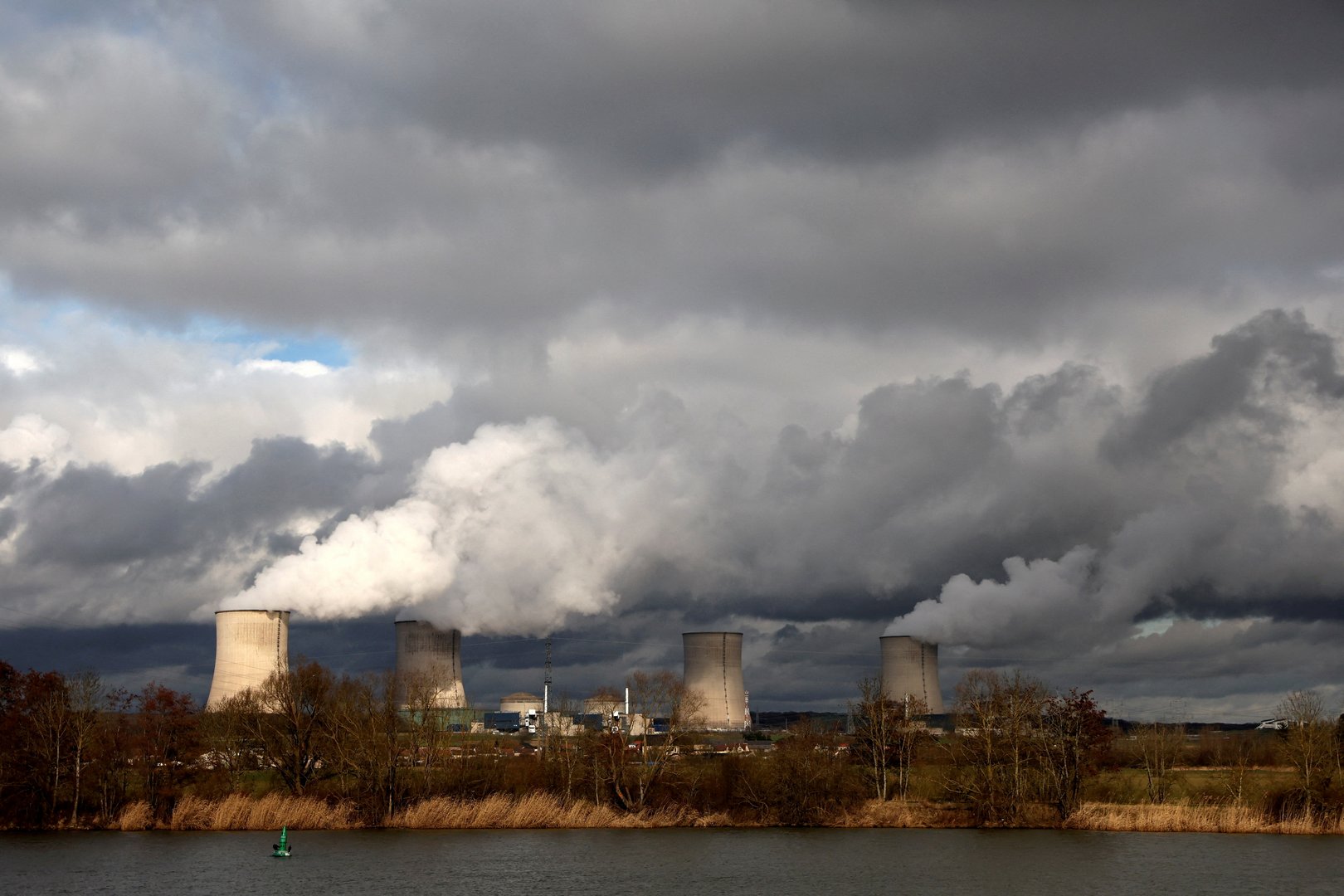
Nuclear power generation across the European Union experienced a significant rebound during 2024 as twelve member states produced a combined 649,524 gigawatt hours of electricity, according Eurostat.
This output represents an increase of 4.8 per cent compared with 2023, marking the second consecutive year of growth following a sharp downturn in 2022 when production dipped to 609,255 gigawatt hours.
Nuclear power plants played a vital role in the continental energy mix as they accounted for 23.3 per cent of total electricity production within the union.
France maintained its status as the largest nuclear producer in the bloc by generating 58.6 per cent of all EU nuclear power, totalling 380,451 gigawatt hours.
Spain followed as the second-largest contributor with 54,510 gigawatt hours representing 8.4 per cent of the total, while Sweden produced 50,665 gigawatt hours to secure a 7.8 per cent share.
Finland rounded out the top producers by generating 32,599 gigawatt hours which accounted for 5.0 per cent of the overall output.
When comparing performance to the previous year, nuclear electricity production saw its most substantial rise in France with a 12.5 per cent increase.
Sweden and Slovenia also recorded notable growth in their nuclear sectors with increases of 4.5 per cent and 4.2 per cent respectively.
By contrast, the remaining producers within the union registered an average decrease of 4 per cent, illustrating a diverging trend across different member states.
These declines ranged from a minor reduction of 0.6 per cent in Slovakia to a more significant drop of 10.3 per cent in the Netherlands.
The data also highlighted a major shift in the European energy landscape regarding Germany, which had been the second-largest producer until 2021 before terminating nuclear production completely in April 2023.
France and Slovakia were identified as the nations most reliant on nuclear electricity in 2024, with nuclear energy providing 67.3 per cent and 61.6 per cent of their respective total electricity generation.
A high degree of dependency was also evident in Hungary, Bulgaria, Belgium, Finland, and Czechia, where nuclear power provided approximately 40 per cent of all electricity generated.
The Netherlands sat at the opposite end of the spectrum as only 2.9 per cent of electricity produced in the country originated from nuclear power plants.
The recovery in total output suggests that despite some domestic phase-outs, the technology remains a cornerstone of the EU energy mix for a majority of its operators.



Click here to change your cookie preferences