
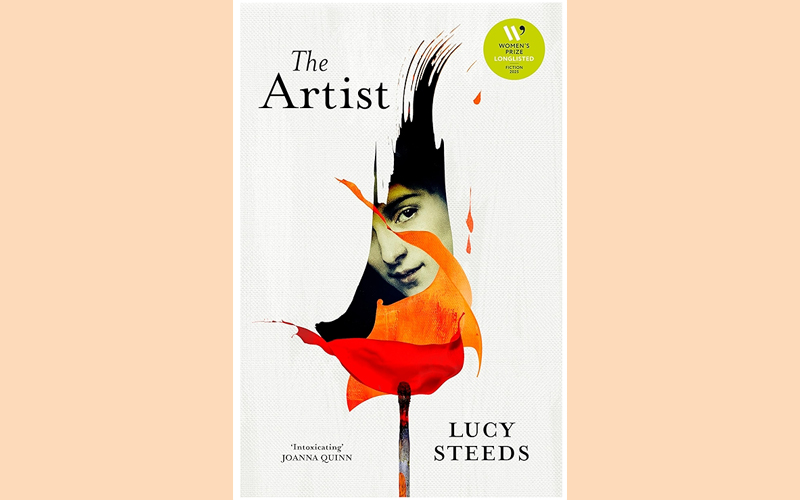
Book review: The Artist by Lucy Steeds
By Philippa Tracy
The Artist opens in London, in 1957, with a woman looking at a painting by a well-known fictional artist, Edouard Tartuffe. That painting, The Feast, described by some as “an allegory of the Last Supper,” is the only painting to survive a fire in Tartuffe’s studio in 1920. It is giving nothing away here to say that, in the opening pages, we learn that the woman standing in front of the painting remembers starting the fire. The question is: why? And who is she?
Most of the book is set in a remote part of Provence, in 1920. A young aspiring English journalist, Joseph Adelaide, has received an invite to meet the reclusive painter, known as Tata. The artist may be the greatest painter of his age, possibly a genius and a misanthrope. He is also a mystery. When Joseph arrives, it is clear it was not Tata, but his niece Ettie, who sent the invite. However, the ageing Tartuffe, while hardly welcoming, does have some use for Joseph, “I do not give interviews. I do not care what you are writing… but I am in need of a model.”
What unravels, slowly, over the next 300 pages, is a mystery, a meditation on the power of art, the role of women in it, and a love story. There is no shortage of rumours about Tata, and why he exiled himself from the art world, but it is Ettie who is at the heart of the mystery. She patiently sweeps and cleans, “so Tata can work.” She sets up the canvas and easel for him every day, prepares his paints and cleans his brushes. She cooks the meals, even when she doesn’t get to eat. She chooses the food, for the way it looks to great the artist, not for how it tastes; she only prepares food that Tata can paint. There are wonderfully detailed descriptions of shrivelled and decaying fruit and rotten oysters.
Joseph writes that Tartuffe’s treatment of light “distinguishes him from his contemporaries.” Joseph’s own mother had introduced him to Tata’s work, as “a man who could paint light because he understood darkness.” It becomes clear that Tata is a man with a fair share of darkness in him. He makes vile, misogynistic comments about Ettie’s mother. He warns Joseph about women disturbing the silence and getting in the way of creativity. His cruelty and controlling behaviour are evident from early on. While Tata uses his art as a weapon at times, Ettie longs to “strip the image from the surface and reveal the lost woman underneath”. How will it end?
The book’s secrets are gradually revealed. Why did Ettie’s mother, Tata’s sister, run away? Who is Ettie’s father? Ettie “has spent her life waiting just out of sight, out of reach.” Why? What of her own ambitions? And where does she go at night? This book is about the choices women have and the choices Ettie makes. This much talked about debut novel is the Waterstones Book of the Year 2025. It is beautifully written and well worth the read.




Click here to change your cookie preferences