
Across much of the Western world, any 13th day of the month that falls on a Friday carries unease for the superstitious. Hotels skip the number. Airlines often avoid the row.
In Cyprus and Greece, however, it’s Tuesday the 13th that scares us. But why?
In Cyprus, it’s not Friday the 13th that scares us. It’s Tuesday. But why?
Across much of the Western world, any 13th day of the month that falls on a Friday carries unease for the superstitious. Hotels skip the number. Airlines quietly avoid the row. Even those who don’t believe in bad luck may hesitate before making major decisions.
Its origins are layered: Friday was the day of the Crucifixion; there were 13 guests at the Last Supper, one of whom betrayed Christ. Over centuries, the combination acquired a cultural gravity of its own, reinforced through literature, media, and habit, until Friday the 13th became shorthand for misfortune across Britain, the United States, and much of Northern Europe.
In Cyprus and Greece, however, it’s Tuesday the 13th that worries us.
Apparently, the association stems from a defining catastrophe in Byzantine history. Constantinople, the heart of Eastern Christianity, was first sacked on Tuesday, April 13, 1204, during the Fourth Crusade.
It was an event that marked profound rupture and loss, embedding Tuesday in collective memory as a day when stability could suddenly collapse. And while there may, of course, be other reasons (answers on a postcard please!), that’s enough for now.
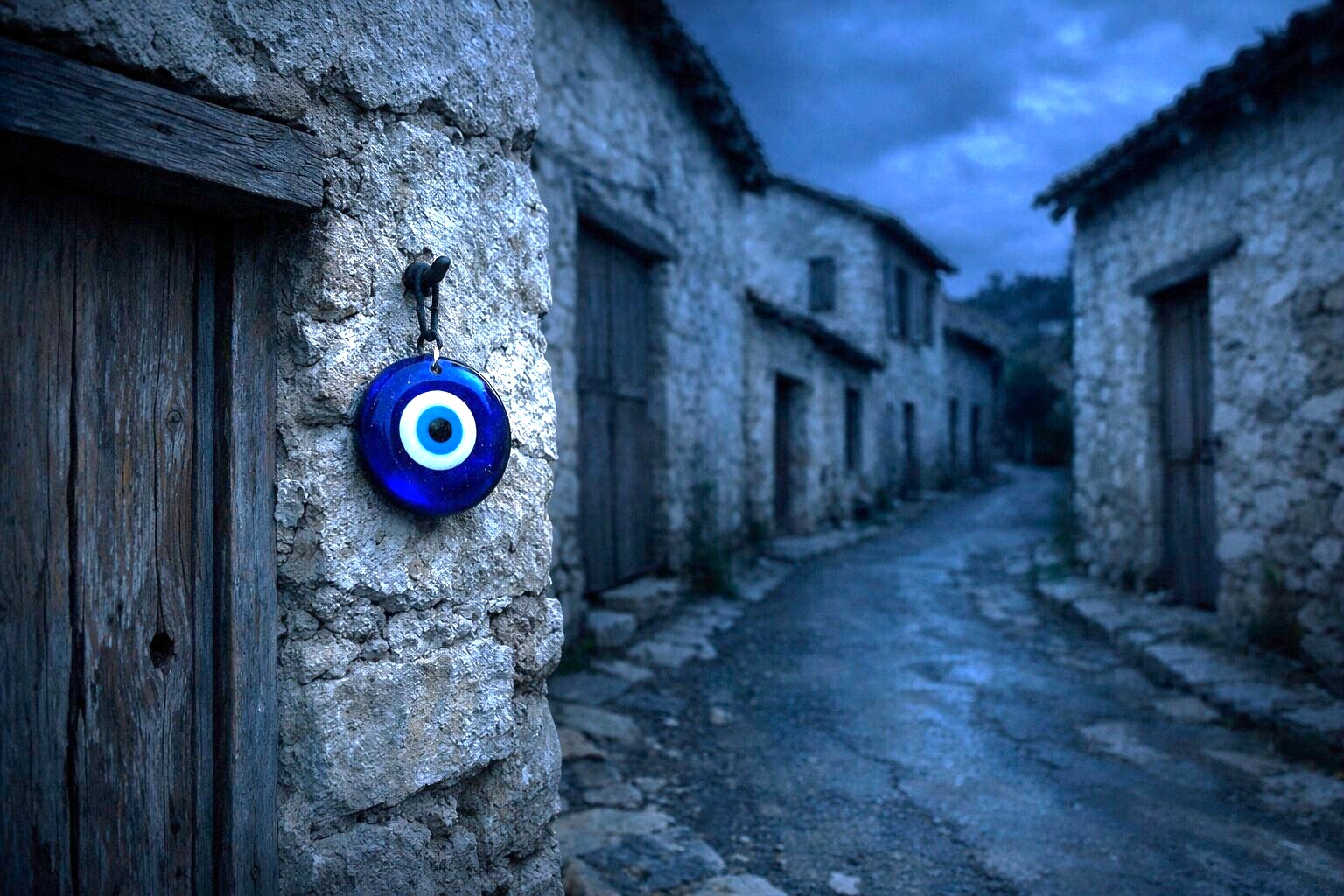
It’s not, of course, the only superstition on the island. Any visitor to Cyprus is likely to return with at least one evil eye souvenir – but unlikely to grasp that το μάτι wards off the consequences of praise or envy; a sort of spiritual insurance.
Of course, most of our younger generation don’t consciously believe. But it’s always worth paying lip service to traditional superstitions. Because if history has taught us anything on this island, it’s that stability is never guaranteed. Not even in the weather!
In Nicosia, Friday is a true 13th: cold, unsettled, with whistling winds and odd sharp showers. Saturday turns warmer and brighter, reaching 21°C. And Sunday and Monday are mostly sunny, calm, and comfortably mild at around 20–21°C.
Limassol also sees a wet and windy 13th, followed by a brighter Saturday after some early rain. Sunday is pleasant with a light breeze, and by Monday, sunny skies start to return, with highs climbing to 22°C.
In Larnaca, Friday brings strong winds and a few showers, though temperatures remain mild at 20°C. The weekend improves quickly, with sunny, warm conditions on Saturday and Sunday. Monday stays mostly sunny, reaching 22°C.
Paphos is hit hard on Friday, with heavy showers and strong winds. Saturday begins with some rain before improving, while Sunday and Monday are calmer, brighter, and comfortably mild at around 20–21°C. And Ayia Napa echoes the western shores, with wind and showers on Friday easing into a brighter weekend with highs of 21°C.
Up in Troodos, conditions improve gradually over the weekend, rising from 9 to 13 degrees on Saturday and Sunday after a bone-chilling 2°C on Friday night – very apt for a Friday 13th!
But back to Tuesdays – and it turns out Cyprus and Greece are not alone in their trevodecaphobia. The same day is also widely considered unlucky across Spain and much of Latin America.
The reasoning, however, differs. Tuesday is named after Mars, the Roman god of war, who is associated with conflict, violence, and upheaval. Combined with the already unsettled symbolism of the number 13, the date became culturally linked with risk and misfortune.
There’s even a Spanish proverb that cautions: En martes, ni te cases ni te embarques. ‘On Tuesday, neither marry nor set sail’. Which seems apt for Cyprus too, given the weekend weather!





Click here to change your cookie preferences