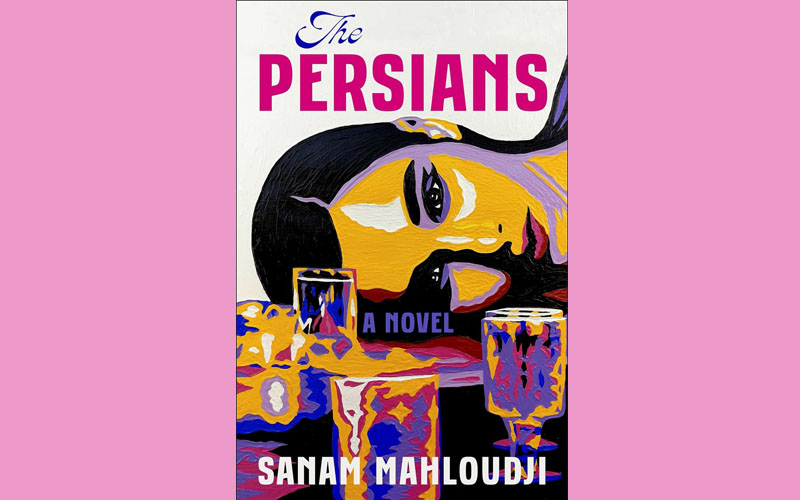
The Persians by Sanam Mahloudji
I’ve now read all of the novels shortlisted for the 2025 Bollinger Everyman Wodehouse Prize for comic fiction aside from the two written by actual comedians (sorry, Sandi Toksvig and Richard Ayoade, but I’m just going to assume your novels are at least trying to be funny and leave this particular literary experiment behind me for now). My conclusion is that I have very little idea how the judging could have worked, and would strongly suggest either an overhaul of the panel (happy to volunteer if you’re reading this, Mr/Mrs BollingerEverymanWodehouse) or some kind of redefinition of the word comic. My confusion is doubled right now, since my most recent bit of reading, The Persians, isn’t very funny or, for that matter, particularly good, and I also found out that the prize was ultimately awarded to Rosanna Pike for A Little Trickerie. To be fair, Pike’s is the best piece of writing on the shortlist. But also probably the least comic.
Anyway, back to The Persians. It’s fine. Telling the story of three generations of aristocratic Iranian women, all living with secrets and traumas spanning either side of the 1979 Iranian revolution, everything is bound together by Shirin, whose arrest and impending court date for attempting to solicit a policeman while on a family holiday in Aspen propels the novel’s plot. In attempting to be the dutiful niece to her aunty Shirin, Bita comes to believe that generational wealth and a law degree are no guarantees of happiness. Matriarch Elizabeth, whose parenting left a lot to be desired, and who lives in Tehran with Shirin’s daughter Niaz, whom she lied to for two decades in order to keep her in Iran, reflects on the secret love that shaped her life and eventually makes the journey to New York to see whether honesty can bring a new start for herself and her family.
There are some comic moments, mostly confined to the early chapters of the novel, and almost all delivered by or about Shirin, whose description of events leading up to her arrest are by far the funniest part of the book. And the depictions of Elizabeth’s early life and pre-revolutionary Iran are deftly handled for the most part. But flitting across so many characters, including the clunkily handled chapters narrated by Bita’s dead mother, make for quite an uneven reading experience, and an ultimately shallow feeling upon the novel’s ending, which doesn’t help itself by attempting to strike a tone of philosophical reflection through some fairly tedious platitudes.
The Persians is not a terrible book. And for a debut novel, there’s enough promise to wonder hopefully about Mahloudji’s future work. But great comic fiction it is not.

Click here to change your cookie preferences