
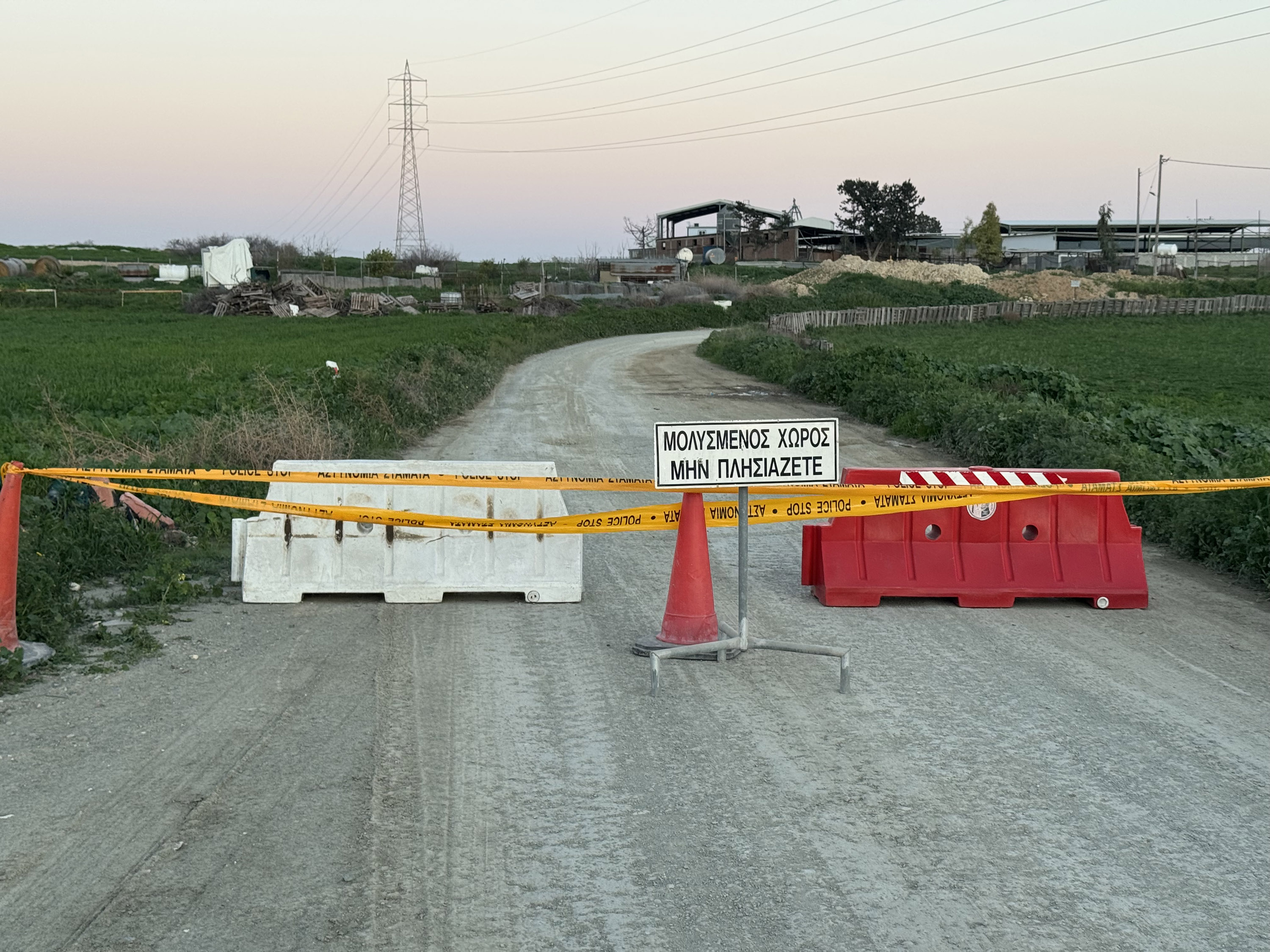
A case of foot-and-mouth disease has been confirmed within the government-controlled areas of Cyprus, after veterinary authorities on Friday detected the disease at a cow-breeding unit in Livadia, in the Larnaca district.
The veterinary services placed the area under lockdown after laboratory confirmation of the highly contagious livestock disease, sealing off a three-kilometre radius around the affected unit and prohibiting the movement of animals and animal products without official authorisation.
All 300 animals at the farm are to be culled as part of standard containment procedures.
“This is a serious but manageable incident,” a veterinary services official said.
“All prescribed protocols were activated immediately to prevent any further spread.”
The case marks a significant escalation, as no infections had previously been confirmed in the Republic despite outbreaks in recent months in the north.
Until now, government authorities had focused on preventive surveillance, biosecurity controls and disinfection measures along the Green Line and at crossing points.
According to officials, the owner of the livestock unit in Livadia has been formally notified, while veterinary teams remain on site overseeing the operation and tracing potential contacts.
The sealed zone includes strict bans on the transport of livestock, milk and meat products unless cleared by veterinary services.
In a statement aimed at reassuring the public, veterinary services stressed that foot-and-mouth disease poses no risk to human health.
“There is absolutely no danger to consumers,” the statement assured.
“Pasteurised milk, halloumi and other animal products can be consumed safely, as they undergo pasteurisation and rigorous controls.”
The confirmation in Livadia comes amid heightened alert levels across the island following outbreaks in the north, where thousands of animals have been vaccinated in recent months.
The European Commission has played a central role in supporting containment efforts there, including the delivery of 500,000 vaccines from the European antigen bank to the Turkish Cypriot community earlier this year.
“This support allows for a rapid and coordinated response to emerging risks,” the commission said at the time, acknowledging that quarantine, movement restrictions and disinfection protocols had already been imposed in affected northern villages.
On Friday, officials acknowledged that the Livadia case represents a turning point yet insisted it does not alter the overall assessment that the disease remains contained.
“Foot-and-mouth disease is highly contagious among animals, but it is not a public health issue,” an official reiterated.
“Our concern is strictly animal health and the protection of livestock production.”
The agricultural ministry is understood to be closely monitoring developments, with additional checks expected at farms in the wider Larnaca district and along the Green Line.
Surveillance teams are already conducting targeted inspections, while farmers have been reminded to reinforce biosecurity measures, including disinfection zones and controlled access to livestock areas.
Authorities have also maintained close coordination with the British bases, police and the national guard to prevent illegal animal movement, which is considered one of the highest transmission risks.
Precautionary disinfection measures remain in place at key crossing points.
Industry representatives have reacted cautiously, warning that any further spread could have economic consequences for livestock farmers and exporters.
However, officials stressed that Cyprus has not faced trade restrictions as a result of the disease, apart from temporary measures imposed by Australia on halloumi exports in transit, which authorities said were being addressed through diplomatic channels.
Foot-and-mouth disease affects cattle, sheep, goats and pigs, often causing fever, weight loss and reduced milk and meat production.
While infected animals usually recover, standard international practice requires culling in confirmed cases to eliminate the virus and protect surrounding herds.
Veterinary services said epidemiological investigations are under way to determine how the virus reached the Livadia unit.
“We are examining all possible pathways at this stage; there is no evidence of wider circulation.” the official affirmed.
“We are dealing with this decisively and transparently,” the veterinary services said.
“There is no cause for alarm, but there is every reason for vigilance.”



Click here to change your cookie preferences