
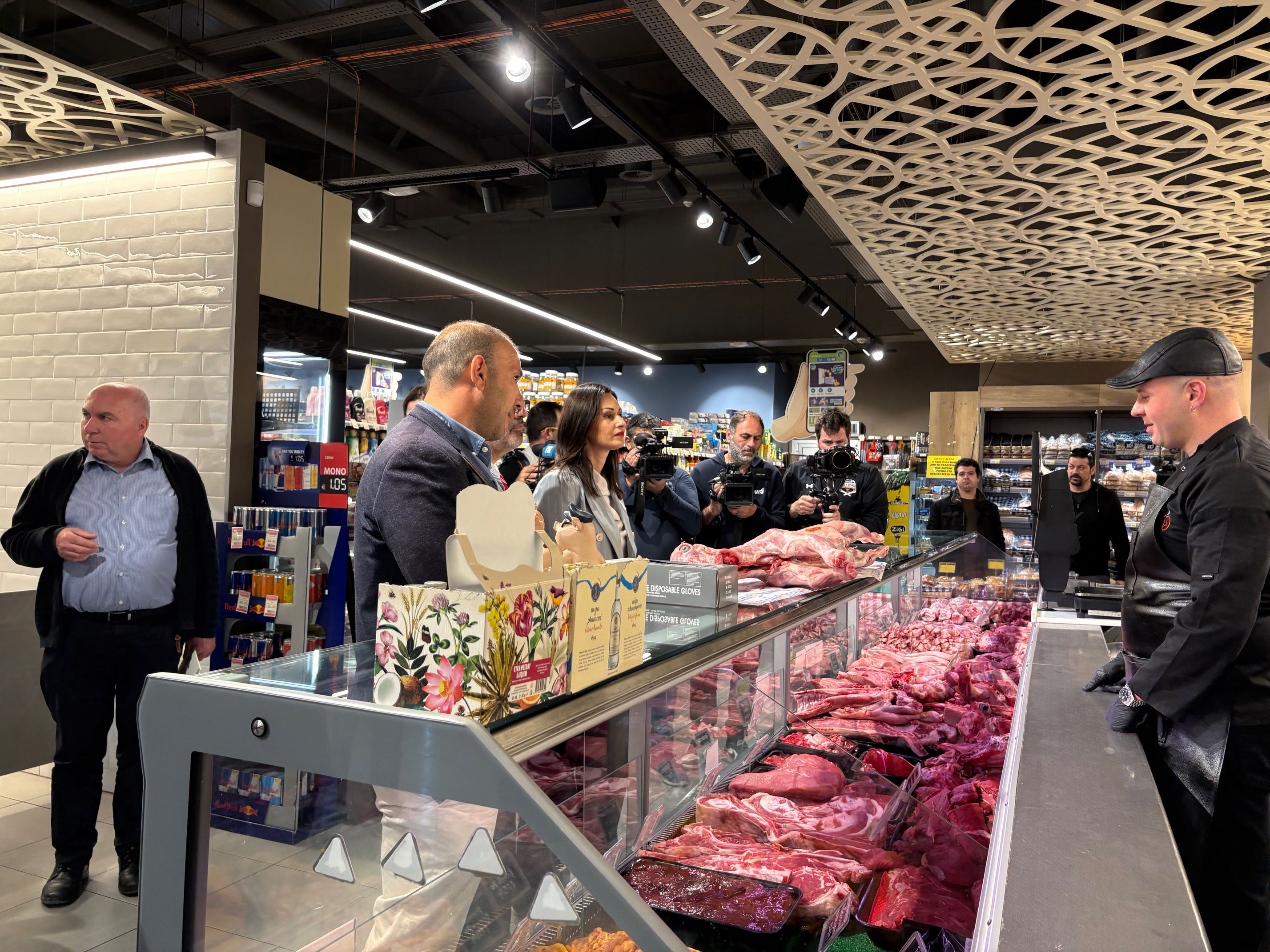
The government’s decision to zero the rate of value added tax on meat, poultry, and fish is having a “very positive impact”, Agriculture Minister Maria Panayiotou said on Thursday.
Speaking to reporters during a voyage around supermarkets – a tradition for agriculture ministers prior to Easter – she said that both supermarket owners and consumers have informed her of the positive impact brought about by the zeroed VAT.
Additionally, she said, despite the ongoing outbreaks of foot and mouth disease at farms around the island, which now number 70 in total, the number of animal carcasses available for consumption this weekend remains “at the same levels as last year”.
However, she did leave the door open for “the possibility of small variations … over the coming days as slaughters continue”.
She also said that food prices are “also at the same levels as last year”, while “no shortages have been observed”, and that teams from the agriculture department have been undertaking checks of produce to ensure their quality.
Vat on meat, poultry, and fish will remain zeroed until September.
Meanwhile, veterinary services department director Christodoulos Pipis, who joined Panayiotou on her tour of the supermarkets, said that over 20,000 sheep and goats and 190 cows have been slaughtered for meat in advance of Easter.
He added that “slaughters are continuing” and that they are “expected to intensify in the coming days”, with it expected that between 35,000 and 40,000 sheep and goats will be consumed over the Easter weekend.
Asked about withdrawals of meat products from the market, he said that products which were withdrawn were taken out of circulation not because they were unsafe, but for reasons “related to the appearance” of the meat, which he said “may not be commercially preferable for the consumer”.
He was then asked whether there has been “hesitation” on the part of consumers to buy local meat, and said that “on the contrary, there is a preference for Cypriot products”.
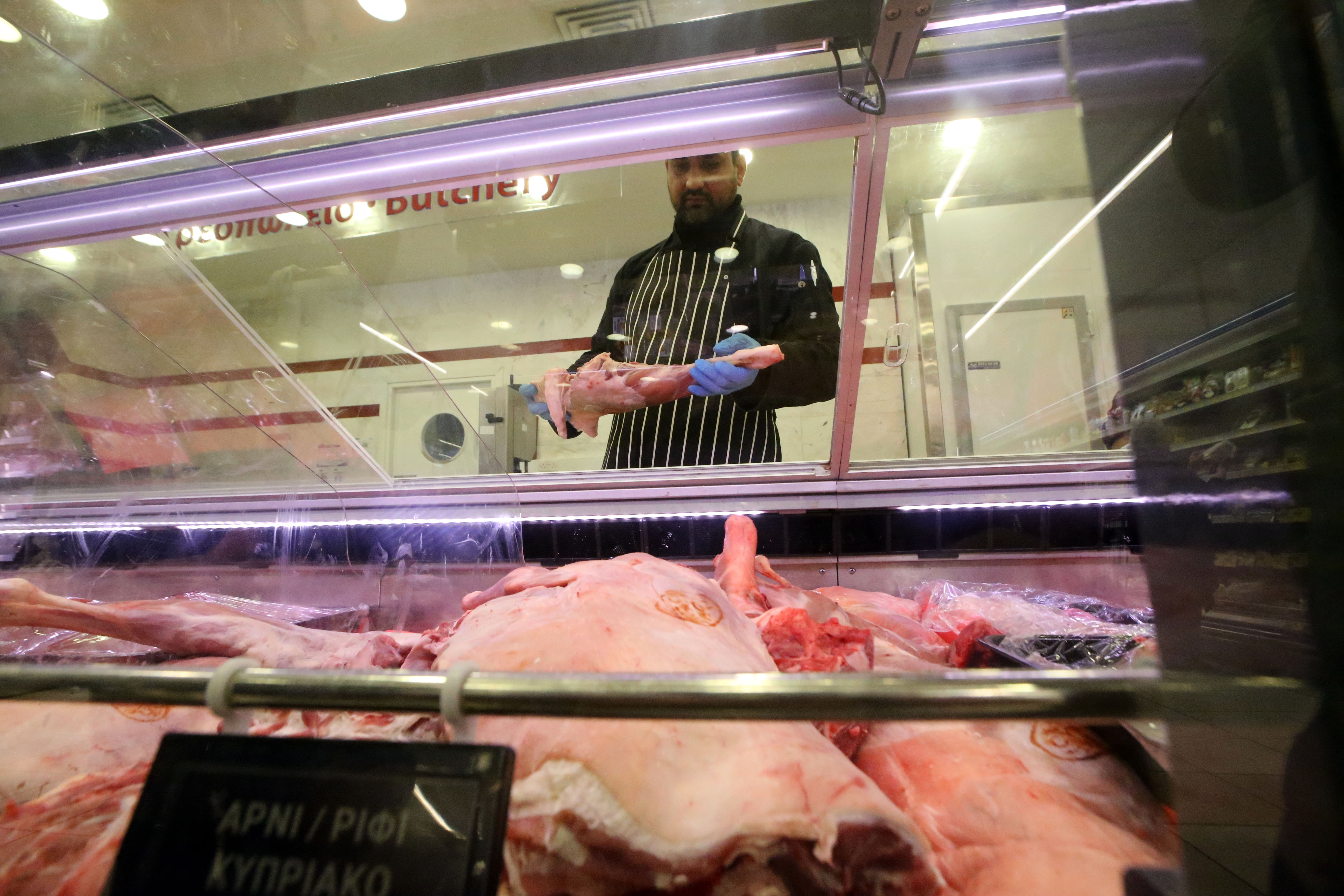
“Supermarket managers have told us that people prefer Cypriot lamb,” he said, though large quantities of meat from other countries, including Greece and Romania, have also been imported.




Click here to change your cookie preferences