
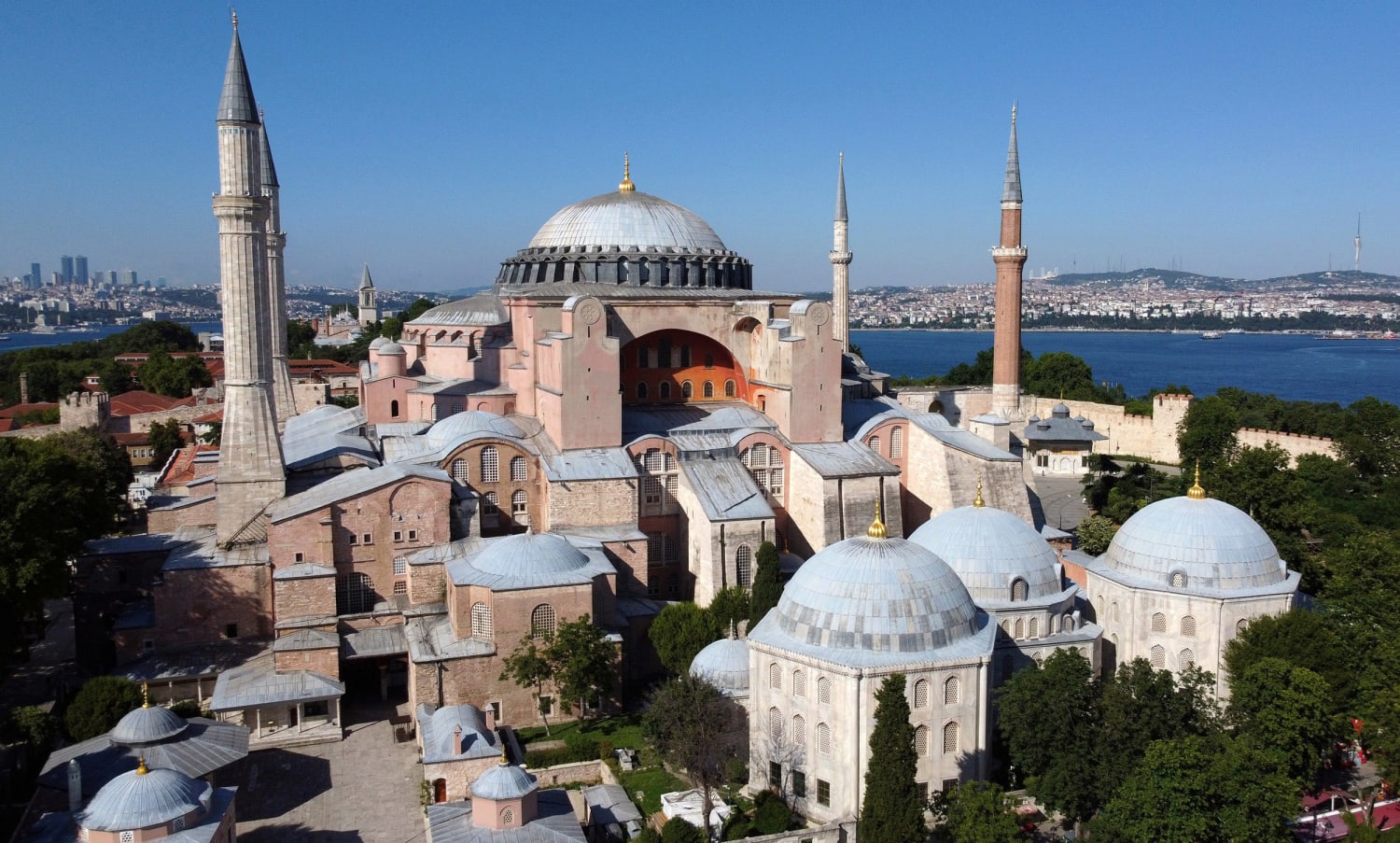
Cypriot delegation head and vice-president of the parliamentary assembly of the Council of Europe, Nicos Tornaritis, called for Hagia Sophia to be returned to museum status during a meeting of the assembly’s cultural committee held in Istanbul on Tuesday.
Tornaritis said the restoration of museum status was necessary to safeguard the monument’s “universal, historical and cultural value”.
He said Hagia Sophia, listed as a UNESCO World Heritage site, should be protected in a way that respects its “special character, aesthetics and symbolic importance for humanity”.
He also said it should be maintained as a space that supports intercultural dialogue, describing it as a site for “mutual respect and peaceful coexistence of peoples and cultures”.
The discussion took place during a committee session held in Istanbul, where members examined cultural heritage issues and related policy questions.
The agenda included the status of Hagia Sophia, which has remained a subject of international debate since its conversion from a museum into a mosque in 2020.
The issue was first introduced to the committee agenda in 2020 by Tornaritis and fellow Cypriot MP Kostis Efstathiou, following the decision by Turkish authorities to change the monument’s status.
Hagia Sophia was constructed in the sixth century by the Byzantine Emperor Justinian, and served as the main cathedral of Constantinople for nearly a thousand years.
Following the Ottoman conquest of the city in 1453, it was converted into a mosque, whereupon four minarets were gradually constructed around the original structure and the interior’s ornate gold mosaics plastered over.
In 1935, under Mustafa Kemal’s secular reforms, it was designated as a museum and remained as such until 2020.
In July 2020, Turkey annulled the 1934 decision that had established museum status, and by president Recep Tayyip Edrogan’s decree, restored its function as a mosque.
The decision was followed by the resumption of regular prayers at the site.
The change prompted condemnation from UNESCO, and several governments, which raised concerns over procedural aspects and consultation with international bodies.
Turkish officials maintained that the decision was an internal matter of sovereignty and stated that the site’s World Heritage status remained unaffected.
The Council of Europe committee declined to issue a resolution on the matter during the session in Istanbul.
Hagia Sophia remains open as a mosque, with regulated access for visitors outside prayer times.
Conservation and access arrangements continue to be monitored by international heritage organisations, including UNESCO, which has previously called for dialogue with Turkish authorities regarding management of the site.

Click here to change your cookie preferences