
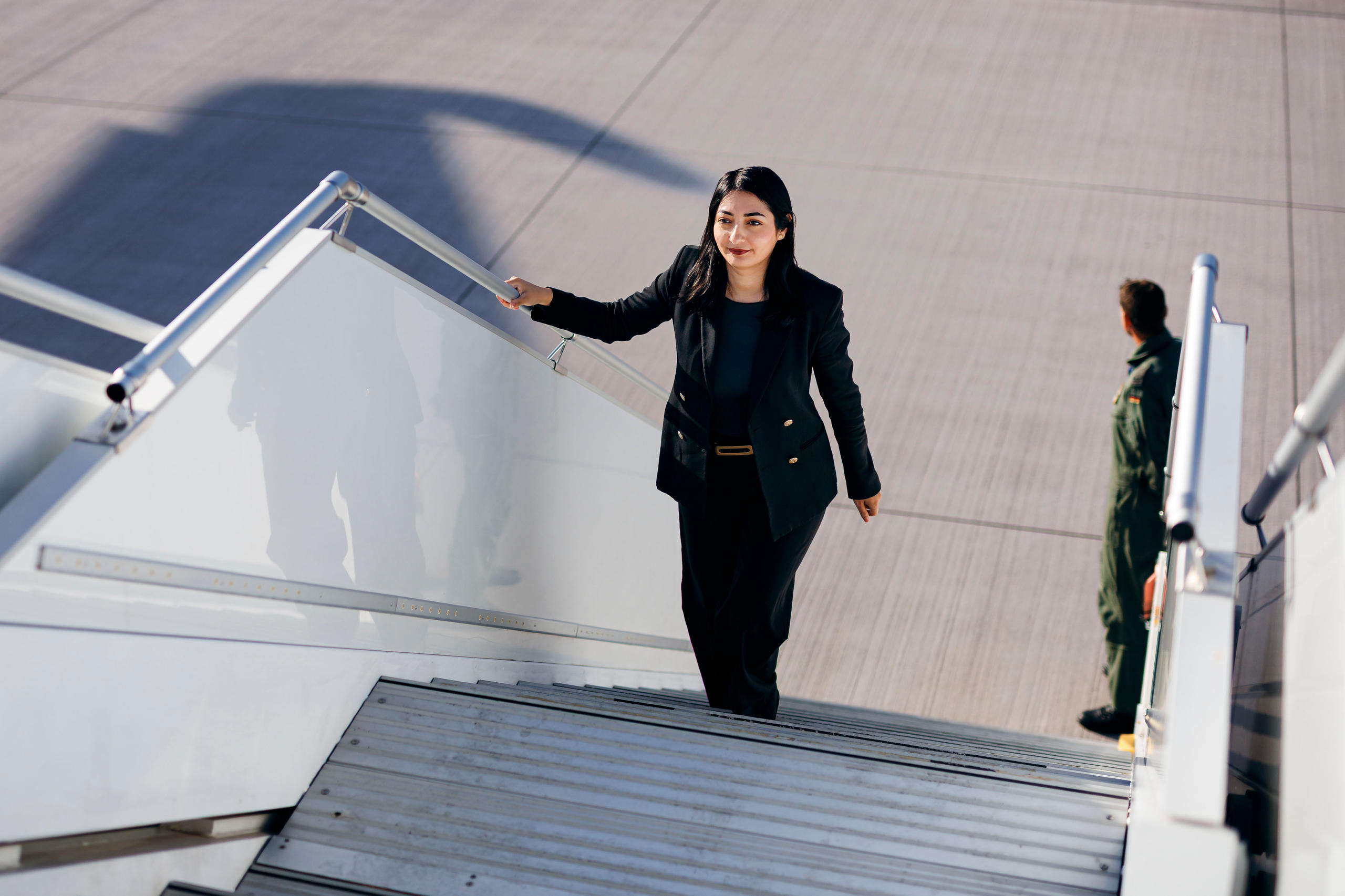
German Development Minister Reem Alabali Radovan on Monday was diverted to Larnaca airport, being forced to abort plans to visit Lebanon after Israel threatened to its attacks on the country’s capital, Beirut.
Radovan was en route to Beirut alongside Norwegian International Development Minister Asmund Grover Aukrust, but their aircraft turned around shortly before approaching Lebanon after Israeli Prime Minister Benjamin Netanyahu ordered attacks on the city’s southern suburbs.
After they landed in Larnaca, her ministry stated that “due to ongoing assessments of the rapidly escalating situation in Beirut, this decision was made for military reasons”.
Both Netanyahu and Israeli Defence Minister Israel Katz had ordered attacks on “terrorist targets” in Beirut on Monday afternoon, saying they had done so “following the Hezbollah terrorist organisation’s repeated and ongoing violations of the ceasefire in Lebanon and its attacks against our civilians and cities”.
However, in the end, Israel did not launch the planned strikes, with United States President Donald Trump writing in a post on social media that following a “very productive call with Prime Minister Bibi Netanyahu”, there would be “no troops going to Beirut” and that “any troops that are on their way have been turned back”.
“He turned his troops around. Thank you, Bibi!” he added.
He went on to say that he had held a “very good call with Hezbollah”, who had “agreed that all shooting will stop” and that “Israel will not attack them, and they will not attack Israel”.
“Let’s see how long that lasts. Hopefully it will be for eternity,” he said.
Prior to her aborted visit, Radovan had stressed that “Germany stands with the people in Lebanon”, and that her government is working “together with partners” the United Nations international children’s emergency fund (Unicef) and the UN development programme (UNDP).
“We are providing swift assistance for people who are suffering the harsh realities of war and international displacement. At the same time, we are supporting the reforms by the government aimed at strengthening the country in the long term,” she said.
She added, “one thing is clear, however: people need more emergency relief”.
“They need peace, stability, and prospects for the future. Displaced persons must be able to return home. For that to be possible, there has to be a reliable ceasefire and an end to the war,” she said.
Cyprus has been one of the driving forces in efforts to build ties between Lebanon and the European Union in recent years, with Lebanese President Joseph Aoun having been invited to April’s informal European Council summit in Nicosia.
Cypriot Foreign Minister Constantinos Kombos had earlier said that “the authorities in Lebanon are doing an amazing job in terms of trying to stabilise the country, and the stability of Lebanon is important for the stability of the region” when Lebanese Prime Minister Nawaf Salam was invited to a European foreign affairs council (Fac) summit in Luxembourg.
On the same day, he had had “reiterated Cyprus’ principled support for Lebanon’s independence, sovereignty, and territorial integrity”, before hailing the ceasefire in Lebanon which has largely held since the spring.
Talks are ongoing between the governments of Israel and Lebanon, with delegations having most recently met in Washington DC last month. They are the first direct negotiations between the two countries since Israel invaded southern Lebanon in 1982.


Click here to change your cookie preferences