
Capital’s two mayors pledge to revive bicommunal Nicosia Master Plan
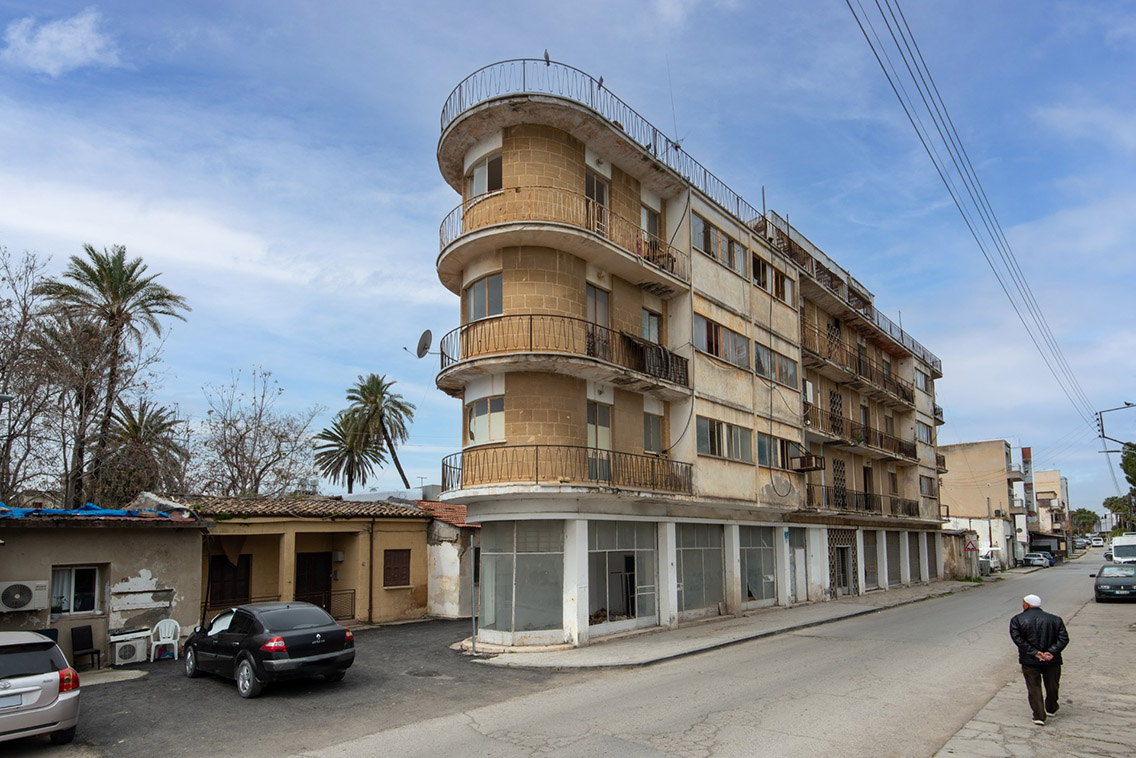
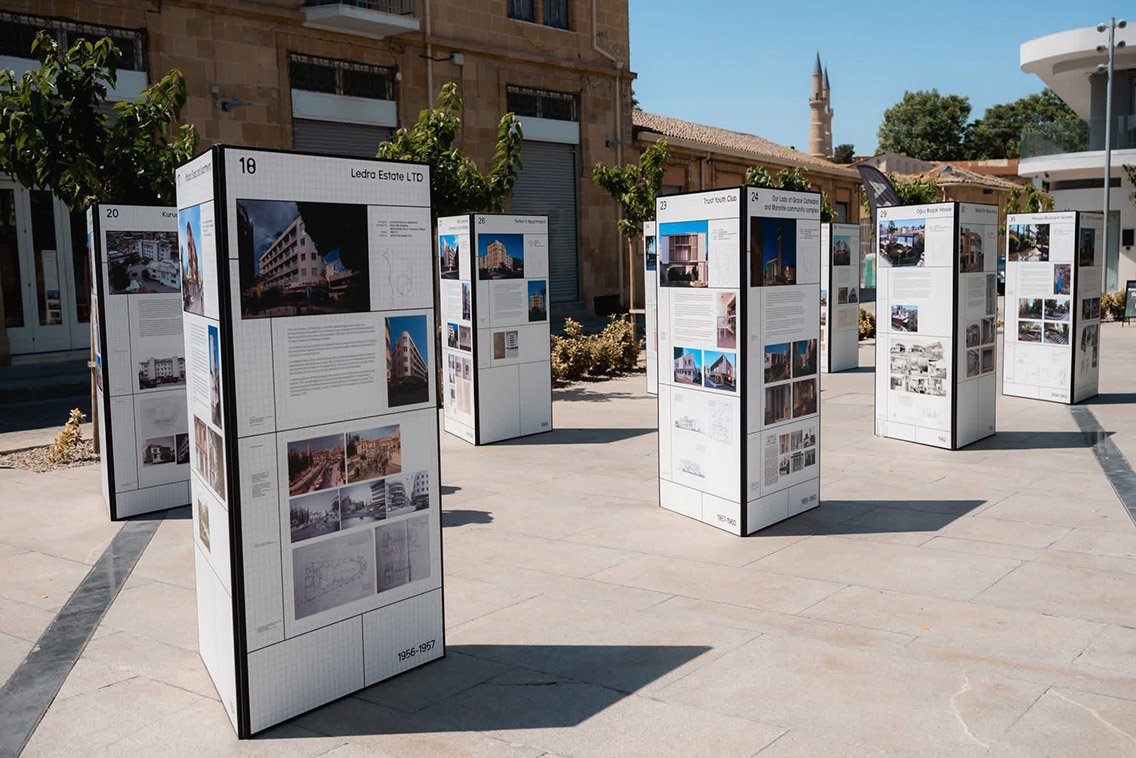
A new exhibition entitled Modern Nicosia to celebrate the city’s often unappreciated modernist architecture is on display at Mayor Lellos Demetriadou Square (former Municipal Market agora) in the centre of the old town.
Inaugurated a week ago by Nicosia mayor Charalambos Prountzos in the presence of former European Union culture commisioner Androulla Vassiliou and participants attending the European Cultural Heritage Summit 2026, the exhibition consists of photographs and drawings showcasing the most outstanding examples of Cyprus architectural modernism located on both side of our divided capital.
The photographs and the accompanying notes detailing the history of the buildings attest to the research zeal of members of the Europa Nostra Heritage Hub in Nicosia, the body created last year as part of a larger European pilot project, the ‘European Heritage Hub’ led by Europa Nostra together with a consortium of 20 partners and supported by the European Union. The project aims to safeguard cultural heritage while contributing to building a more inclusive, sustainable and digital Europe.
Coordinated by architect Natalie Neophytou and urban sociologist Ozlem Unsal, the project Modern Nicosia was conceived to highlight the legacy of modern architecture on both sides of the divide by drawing attention to landmarks of this architectural style across the city. Above all, the aim has been to raise awareness and foster greater appreciation of its significant if often overlooked legacy.
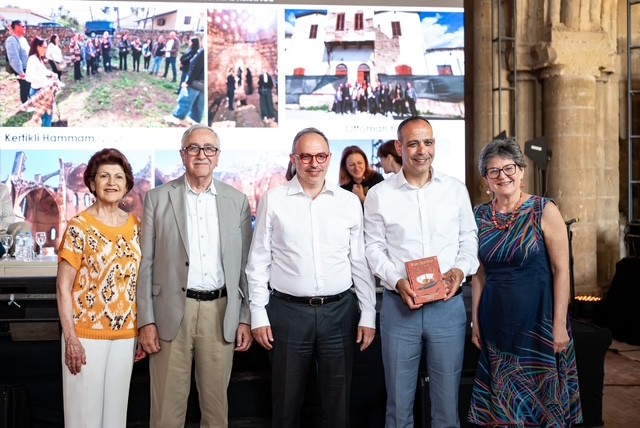
“Actually, making people realise that these buildings are also part of our heritage and part of the history of our city and that they also are worth preserving was a very important part of our project,” says Neophytou, noting how this architectural period marks the time when Nicosia began to expand beyond its walls. “Modernism,” she says “formed the urban fabric of the city that we know today.”
The research team she and Unsal led was made up Greek and Turkish Cypriot conservation architects, urban planners, architectural historians and theorists plus visual anthropologists. They worked voluntarily for some six months gathering information about the island’s leading architects from both communities.
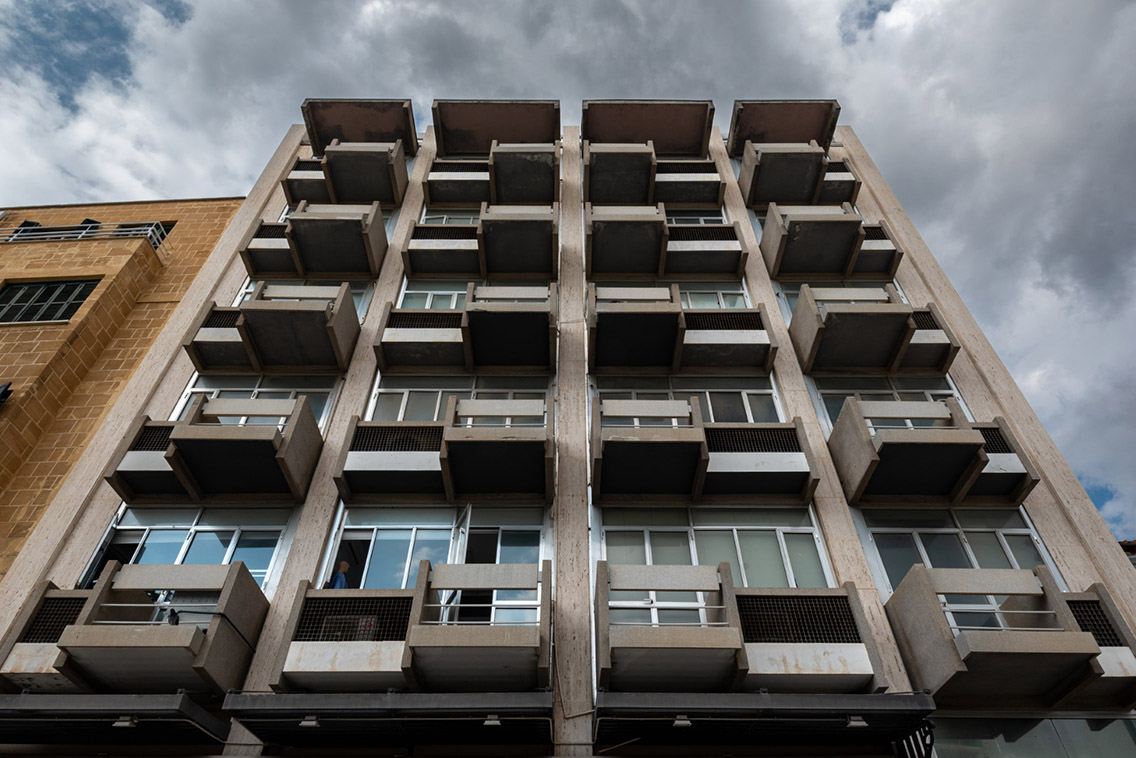
The exhibit display consists of 40 selected buildings, cinemas, restaurants, factories, churches, hotels, hospitals, shops and apartment blocks, from all across the capital. Twenty of the buildings are located within the Venetian Walls, 20 in areas outside.
Among them, we see such iconic examples of Cypriot modernism as the Caglayan bar, constructed by Greek Cypriot chief mason Pavli, the Pallas cinema, next to Paphos gate, designed by Panayiotis Stavrinides, the Jerusalem Patriarchate office building in Ledra street, designed by architects Zembylas and Kythreotis, and the Colocassides estate building designed by Costas Vafeades and Dinos Fissentzides between 1965 and 1973 which stands next to Eleftheria square.
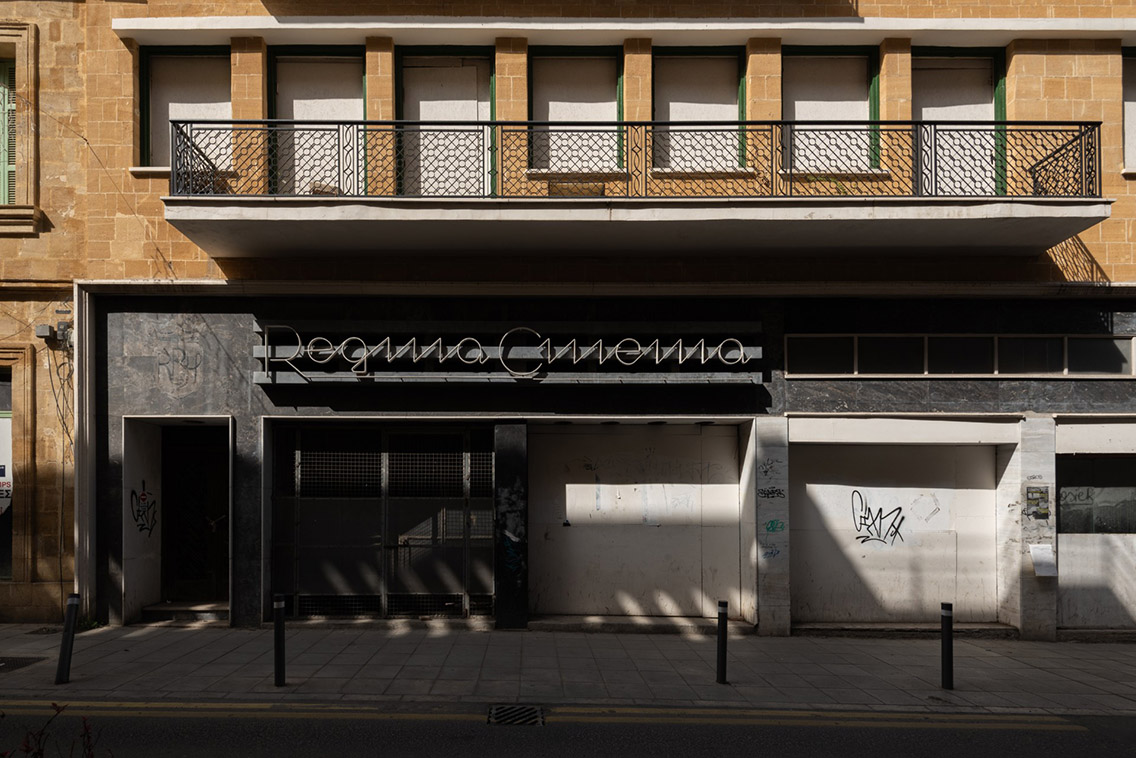
Then there’s the Boyaci shops and apartments attributed to Loucas Hadjilukas which were built in 1954 in Istanbul street, the Oguz Basak house designed by Ahmet Vural Behaeddin and Ercan Hifzi in the 1960s on Shakespeare avenue, the Huseyin Sarper residence designed by Abdullah Onar, close to Caglayan.
All the buildings shown at the exhibition were built betwen the 1930s and the 1970s. Unfortunately, as Neophytou and Unsal point out, despite their architectural significance, a considerable number of them are curently empty and in danger of demolition.
“That is why it is so important for us to reintroduce them and make people aware of their existence,” says Unsal. “And not only because of their architectural value and beauty but also because so many of them showcase our shared heritage. According to our research, certain Turkish Cypriot families worked with Greek Cypriot architects who designed and constructed buildings on this side, and also some buildings in the south were designed by Turkish Cypriot architects. So, these buildings and their stories belongs to all of us.”
Neophytou cautions about the need for care. “We are losing more and more of them and this must end.”
The message that the Modern Nicosia project delivers across the divide is echoed by the two Nicosia mayors Charalambos Prountzos and Mehmet Harmanci. In their speeches at the The European Cultural Heritage Summit 2026, each underlined the importance of Nicosia’s heritage and pledged to re-establish the close cooperation that was forged in the 1970’s by their pioneering predecessors Lellos Demetriades and Mustafa Akinci with the Nicosia Master Plan (NMP).
“We have agreed on several flagship projects which will follow the steps of our visionary predecessors,” Prountzos announced in remarks to the European Heritage Hub Forum 2026 at the Cyens Centre after the exhibition opened in south Nicosia on May 29. “Our number one step is to re-establish the Nicosia Master Plan and utilise an existing mechanism to continue to plan for the city as a whole. The number two step is to integrate the cultural heritage element into the urban design of the city.”
Next day, in the course of a summit panel on “Shared Heritage Shared Future” at the Bedestan in north Nicosia, Harmanci endorsed what his opposite number had declared, confirming that “together with the Greek Cypriot mayor we have decided to revive and re-install the bicommunal Nicosia Master Plan team.”
He added that NMP teams are currently working on devising a concrete mandate, strategy and work programme and that he expects they will be able to make an official announcement spelling out the details in the coming months.
While both sides have lengthy lists of what has to be done to revive the NMP and just which areas of old Nicosia have to be prioritised, both are agreed that the two sites that require the most immediate attention are the Venetian Walls and the Green Line.
“If we don’t renovate the Walls urgently we will lose them, and if we lose them we will lose the spirit of Nicosia,” Harmanci warned, while Prountzos called for focusing on the reintegration of the Nicosia buffer zone into the fabric of the city.
Europa Nostra is an enthusiastic suppoter when it comes to the revival of the NMP.
“The Venetian Walls are an extraordinary project,” the organisation’s secretary-general Sneska Quaedvlieg-Mihailovic declared at the Bedestan session. “We always say we want to tear down the walls. But here, while we want to tear down the walls between the two communities, we also want to protect these physical walls because they are a factor of the unification and not separation of the multicultural Nicosia.”
The European Cultural Heritage Summit 2026 took place in Nicosia between May 26 and 30 on both sides of the divide.
The Modern Nicosia exhibition is in south Nicosia till June 10 and then on June 13 moves to the north – where it will be in Iplikbazari Street, close to the Rustem Bookshop and Evkaf.
Click here to change your cookie preferences