
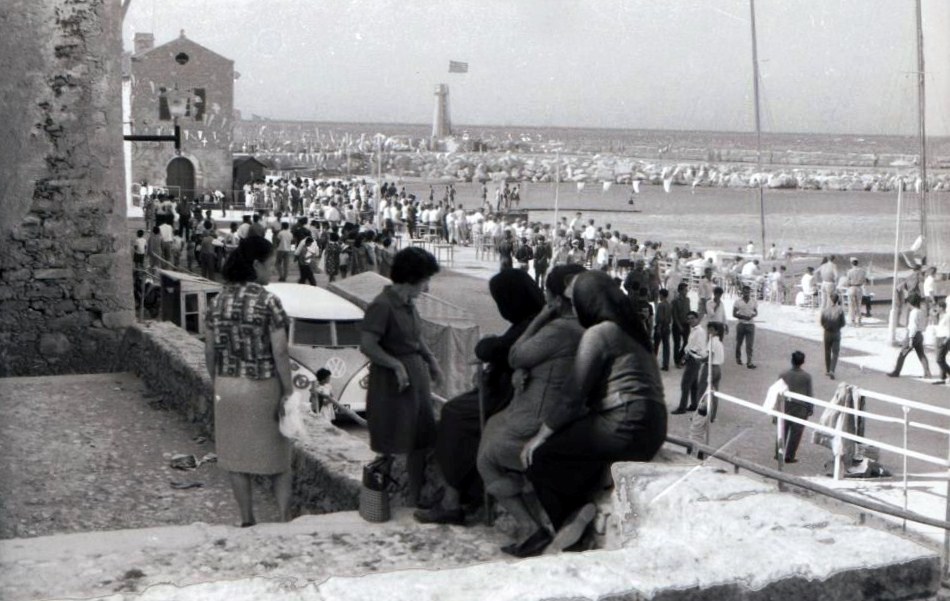
Last weekend marked an age-old tradition for those by the sea. Some things never change
Traditional Cypriot music drifts across Zygi harbour, ice cream melts in children’s hands, and crowds gather in anticipation of the Kataklysmos aquatic games. I arrive just as the event begins, eager to enjoy the traditions of the Flood Festival and experience the revival of customs celebrated in pre-1974 Kyrenia. For the past three years, the municipalities of Kyrenia, Lapithos and Karava with the communities of the Kyrenia district and the Zygi community have organised the event to keep traditions alive.
“The decision was first taken by the Kyrenia Nautical Club in 1982 in Limassol, with the aim of passing on the Kataklysmos tradition to younger generations of displaced Kyrenians,” says Glafkos Kariolou, Vice President of the Club and a well-known figure in the Kyrenian community, as well as the son of the late Andreas Kariolou, who discovered the ancient Ship of Kyrenia.
This younger generation Glafkos mentions, includes me, I realise. My mother’s hometown is Kyrenia but I grew up in Nicosia and my fondest Kataklysmos memories are limited to waterfights. He is right, I don’t know much about the day’s events. Perhaps that is because I grew up in the city. I’ve heard stories of swimmers sliding off slippery wooden poles, lemons thrown into the sea, and a catch-the-goose game I am both intrigued and skeptical to watch.
The Kyrenia Eleftheria ship, a replica of the ancient vessel, stands anchored in the harbour. Children climb aboard as visitors stop to admire it, and crew members steady themselves along its ropes.
Young swimmers gather in caps and goggles as swimming races begin. Butterfly, backstroke and freestyle events follow in quick succession, with children, teenagers and adults competing. The crowd cheers, applauds and comments, and for a moment, strangers become connected through shared spectacle. A bag of lemons is released into the sea for the next game. Swimmers dive and scramble to find a marked lemon, splashing frantically until an arm rises holding one engraved with “Kyrenia”. The crowd erupts.
“It was a huge celebration,” my mother recalls, “people would come in great numbers from the neighbouring villages but also Nicosia. I remember the women would put on their best outfits to go down to the harbour. I was a young teenager then and it always felt like quite the event.”
In Kyrenia, the programme once included kayak races (with kayaks hand-built by the competitors themselves), rowing competitions in traditional wooden boats, sailing contests, underwater diving events, performances, poetry battles, the famous greasy pole challenge and much more.
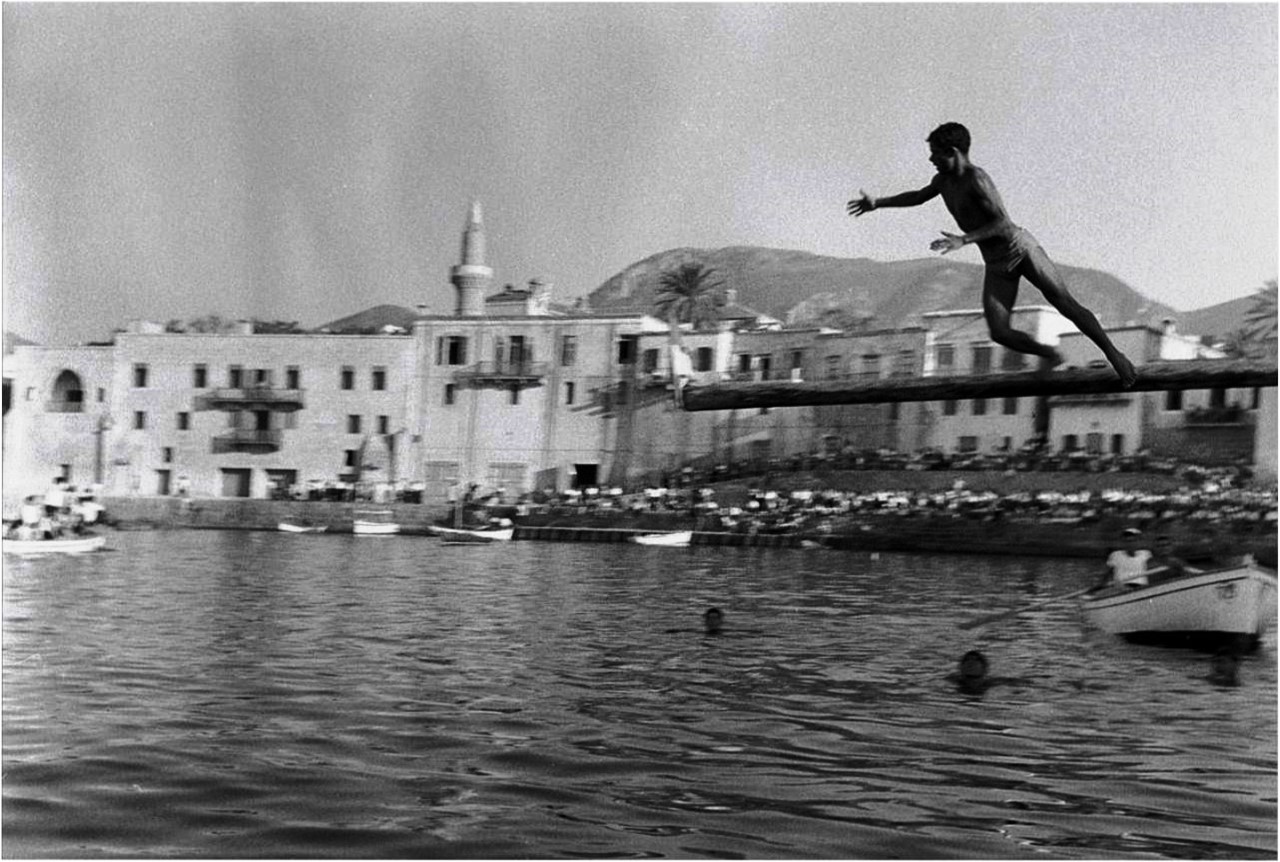
The latter was the most anticipated event. “It was so much fun to watch,” my mother says. But we are getting ahead of ourselves. The goose-catching competition is next. Yes, a real, live goose. There is a cautious anticipation in the air.
The goose is released in the sea and swimmers dive in towards it. Every time someone goes near, it ducks underwater and swims away, only to reappear at another location baffling the swimmers. Someone eventually is fast enough to catch it and thankfully, it is swiftly returned to its owner. This game is likely the only controversial act of the day.
“But this is not hunting in the typical sense,” Glafkos stresses. “It is a ‘Goose Race’. It tests the swimmers far more than the goose itself. They are challenged in terms of swimming speed, in their ability to maintain visual contact and dive underwater. Competitors must also be able to follow it through the air, since the goose can easily take flight, soar over the swimmers’ heads and outwit them.
“However, modern attitudes have led to the disappearance of many traditions, whether good or bad, and it would not surprise me at all if this tradition were to disappear as well.”
Then, it was time for the big event. A bucket of white slime appeared to slather the wooden pole with fat.
Is this how it was done back in Kyrenia as well? “Oh, absolutely! The ‘rules’ were much stricter back then,” Glafkos remembers.
The greasy pole was also much higher and before each attempt, it would be coated with more grease. Competitors had to dip their feet in water beforehand, while boats continuously sprayed the structure to increase difficulty.
Back at Zygi, the first athletes take their turns, desperately trying to balance on the wood. They carefully glide their feet on the pole and before even reaching the halfway point, fall into the water. One of the game’s only rules is that they have to jump when they feel they are losing their balance instead of falling onto the pole.
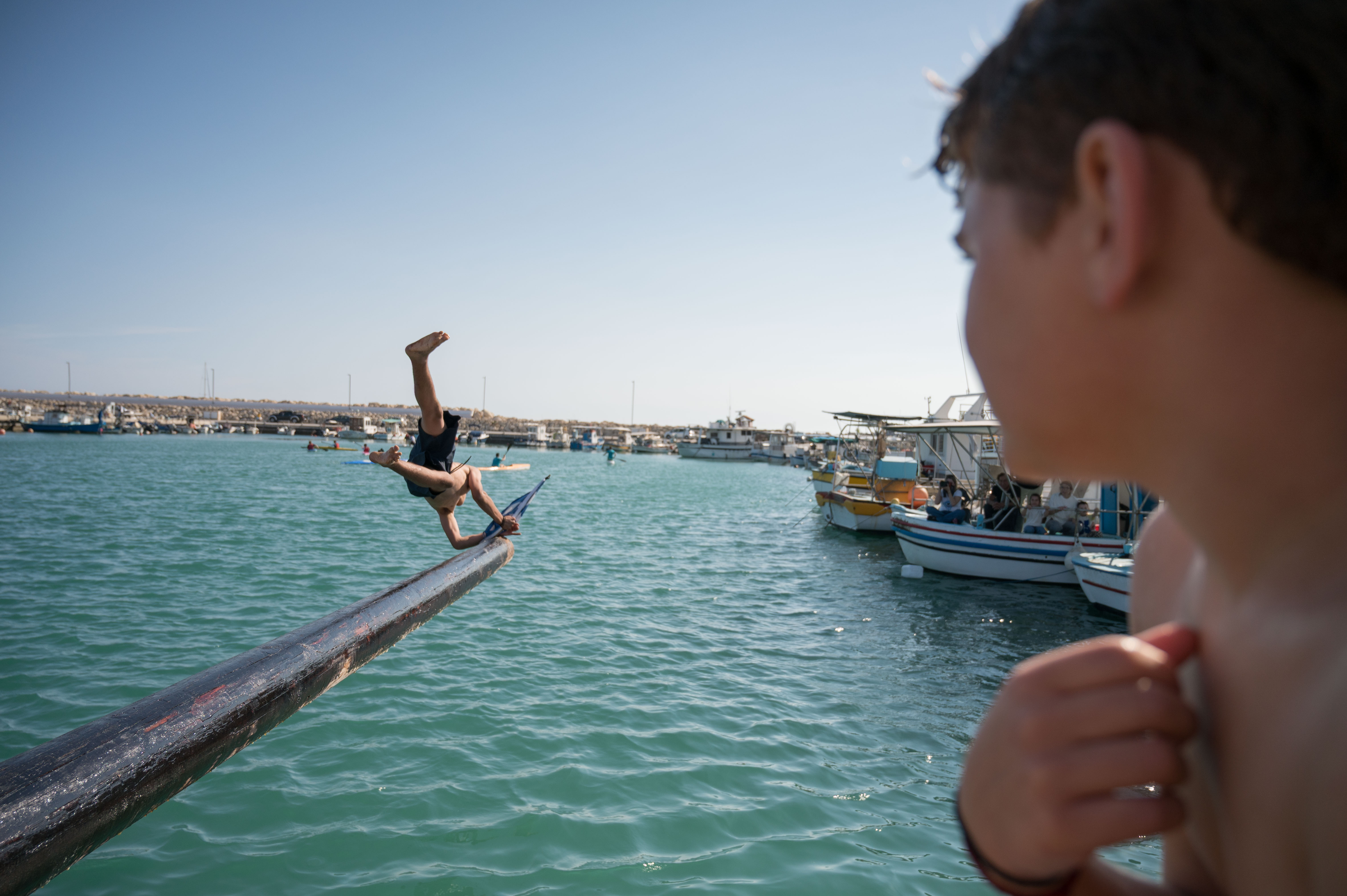
In the first round, none of the athletes manage to reach the end and grab the flag (a Greek flag, not a Cypriot as that’s how it was traditionally done back in the day as well). The task seems too challenging. “Someone will eventually win,” some older people assure me. One after another, they take second and third turns. Visitors discuss techniques. Some say smaller, slender bodies have an advantage. Tall legs lose their balance quicker.
Kyrenians share tales of the past. “‘Vongos Sekkides was unforgettable. He would almost always win the Goose and the Slippery Pole games,” recalls Glafkos. In the end, a boy was able to grab the flag in Zygi.
Sailing boat demonstrations from sea scouts followed at Zygi before a folklore dance, song, music and tsiattista programme continued, concluding the day just like it did back in Kyrenia. As the events come to an end, I look around and see people of all ages coming together. The old seem happy to pass on their childhood’s traditions, the young are eager to play and those in between like me, curious to connect more with a small part of their ancestry.
“The truth is,” my mother tells me, “I haven’t enjoyed Kataklysmos celebrations like that, ever since we left Kyrenia.” Yet she has never attended these revival games. Maybe next year, I’ll take her with me.


Click here to change your cookie preferences