
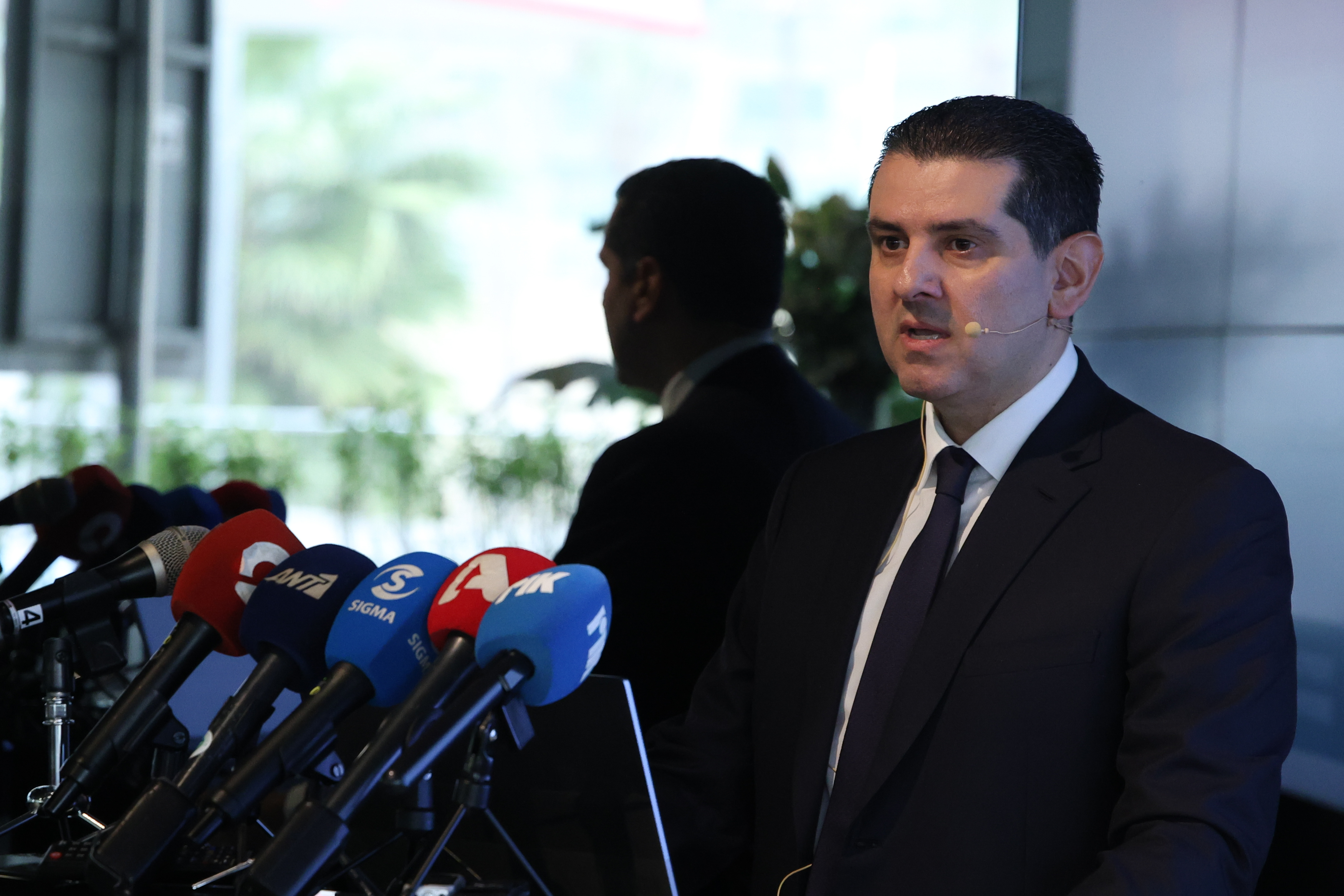
Cyprus’ role in regional and international energy developments has been strengthened in recent years, Energy Minister Michael Damianos said on Tuesday, as he evaluated the day’s Atlantic Council global energy forum, which he attended in Washington, DC.
He told the Cyprus News Agency that the forum had “highlighted the Republic of Cyprus’ strengthened role in regional and international energy developments”, before stressing that the eastern Mediterranean region has “significant prospects” for the energy sector.
To this end, he said the region can “contribute to the diversification of energy sources and routes”.
He also stressed the importance of the “3+1” format of diplomatic deliberations between Cyprus, Greece, Israel, and the United States, saying that the format creates conditions for “joint initiatives with tangible results”.
On this front, he pointed out that he will attend a ministerial meeting in the “3+1” format in Houston, Texas, on Thursday alongside Greece’s Stavros Papastavrou, Israel’s Eli Cohen, and the US’ Chris Wright, with the aim of “further deepening cooperation and formulating specific next steps”.
Those next steps will include the creation of an “Eastern Mediterranean energy centre”, which Damianos said will provide “significant technocratic support” for energy projects and infrastructure issues.
His comments come with the governments of Cyprus and Greece having earlier this year sent a joint letter to the European Central Bank with the aim of securing a new due diligence study to drive forward the Great Sea Interconnector project, which, if completed, will link the energy grids of Cyprus, Greece, and Israel.
The Cyprus Mail was told at the time that should the study deem it appropriate, funding for the project’s completion may be provided by the Luxembourg-based bank in due course.
Damianos has previously said that “from a security of supply perspective”, the completion of the project is “a must”, but pointed out that the Republic of Cyprus will, according to current estimates, find itself responsible for 63 per cent of the project’s overall cost.
“If the project costs €1.9 billion, Cyprus will pay about €800 million. If it costs more, we will still be paying 63 per cent – and that means through consumers’ bills,” he said.
The project itself appears at present to be progressing slowly, though good news did come about in March when French cable construction company Nexans confirmed that an undersea trial of the type of cable which will be used was completed successfully.
However, Nexans had earlier this year formally acknowledged that the delivery schedule for those cables is being renegotiated, pushing the planned completion date into the next decade.
Nonetheless, European Energy Commissioner Dan Jorgensen told the Cyprus Mail last month that the EU “remains committed to defending its interests and those of its member states, as well as to upholding regional stability”, and as such will continue to support the interconnector project.
“The commission supports the development of an electricity interconnection between Greece and the island of Cyprus with the Great Sea Interconnector”, which, he said, “has been awarded the status [of] project of common interest and a €657 million grant”.



Click here to change your cookie preferences