
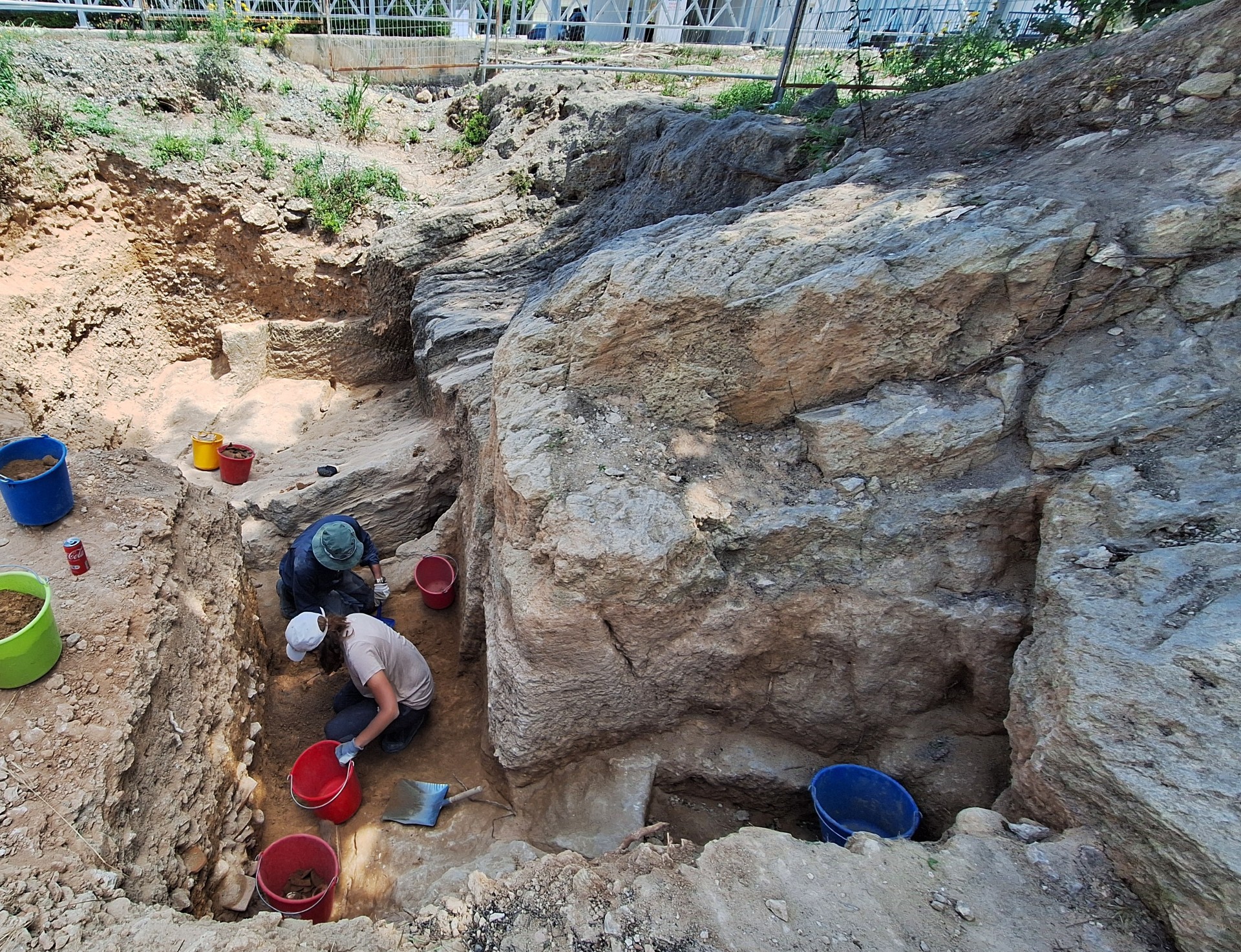
New discoveries at Fabrika Hill in Kato Paphos have provided fresh insight into how ancient Nea Paphos was defended and developed over centuries, following the completion of this year’s excavations by a French archaeological mission.
The excavation, led by Professor Claire Balandier of Avignon University in collaboration with the French School at Athens and the antiquities department, focused on the acropolis of ancient Nea Paphos and sections of the city’s Hellenistic walls.
Among the most significant findings was further evidence confirming the location of a major defensive tower forming part of the ancient city’s fortifications.
Archaeologists identified the remains of a large square tower carved into bedrock near the church of Ayios Agapitikos, concluding that it formed part of the Hellenistic defensive wall protecting the city more than 2,000 years ago.
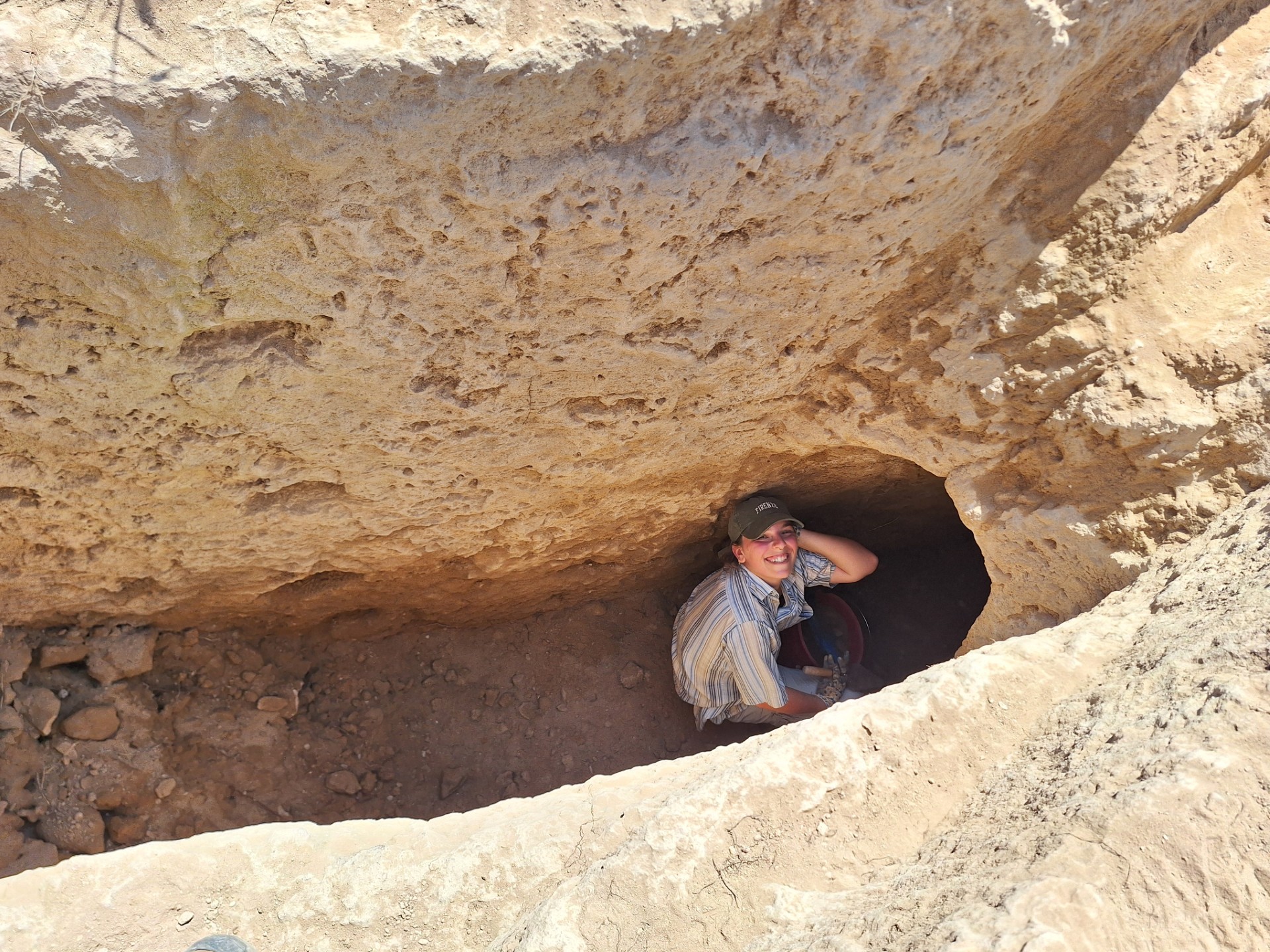
The well in the underground gallery cutting the water channel on the top
Researchers also uncovered part of the final preserved floor inside another defensive tower near the city’s north-west gate.
One of the most important discoveries came from the investigation of an underground water system near the ancient theatre.
Archaeologists found that a rock-cut channel discovered last year extended further than previously known and once carried water above an underground storage gallery dating to Hellenistic times.
The team believes the system was later altered during the Roman period, when a well was dug to redirect water into underground storage before it was transported to a nearby cistern.
Fragments of a large terracotta pipe were recovered during the excavation.
Researchers also uncovered evidence suggesting the water system may have been damaged by an ancient earthquake.
A substantial crack running through the gallery wall appears to have allowed water to escape, potentially leading to the abandonment of the structure.
Nearby, excavators discovered a previously unknown wall standing around three metres high.
Archaeologists have yet to reach its foundations and say further investigation next year will determine whether it dates to the Roman or Hellenistic period.
The excavation also completed work inside one of Fabrika Hill’s underground chambers.
The space was originally carved as a quarry in the early Hellenistic era before being converted into what archaeologists believe was intended to become a tomb.
It was abandoned before use, likely after the area was incorporated within the expanding city. During later centuries it was reused, first in Roman times and eventually as a church during the early Byzantine period.
The discoveries form part of an ongoing international research programme examining the history, fortifications and urban development of ancient Nea Paphos.
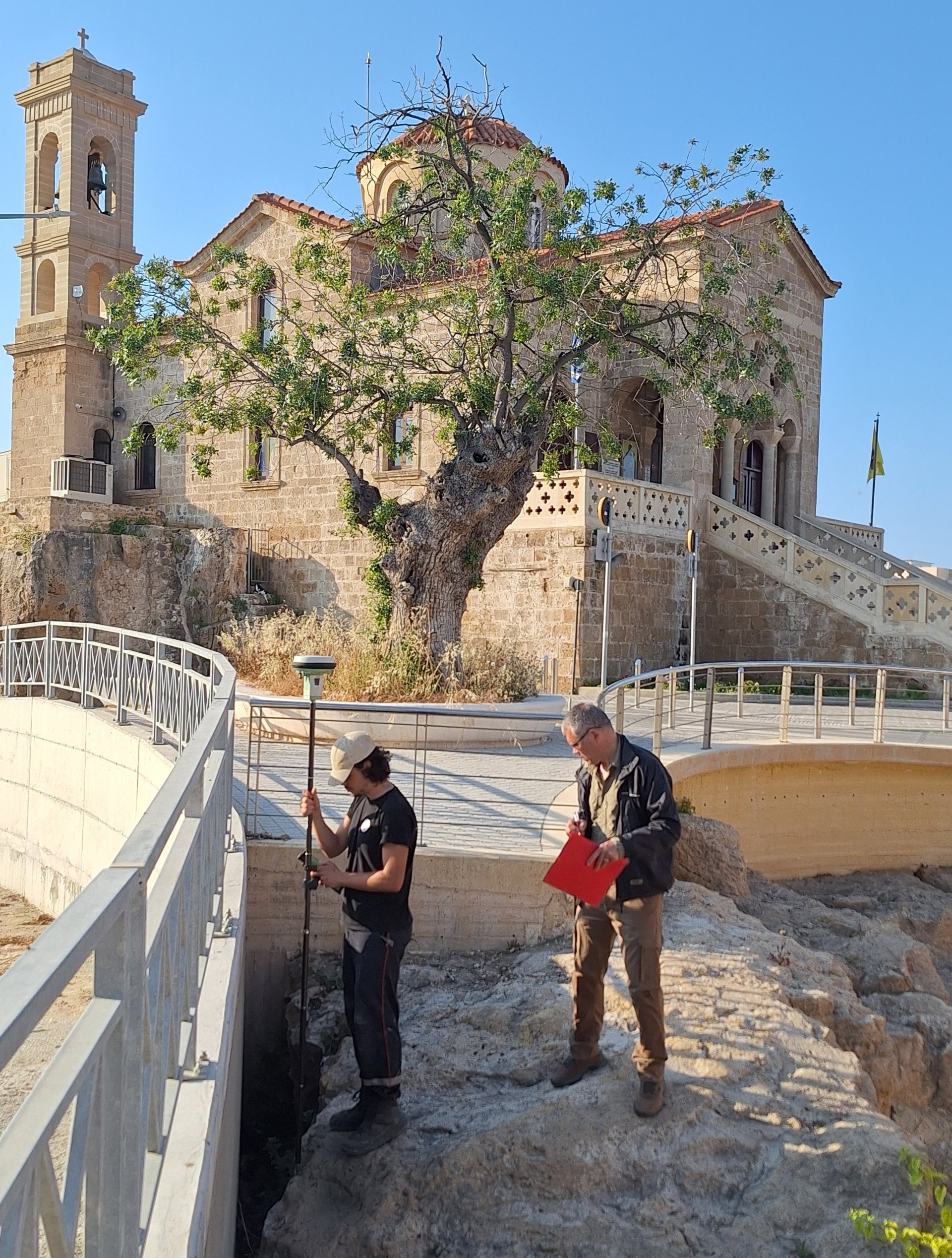
The topographic survey on the remains of the Hellenistic city-wall in front of Panagia Theokepasti





Click here to change your cookie preferences