
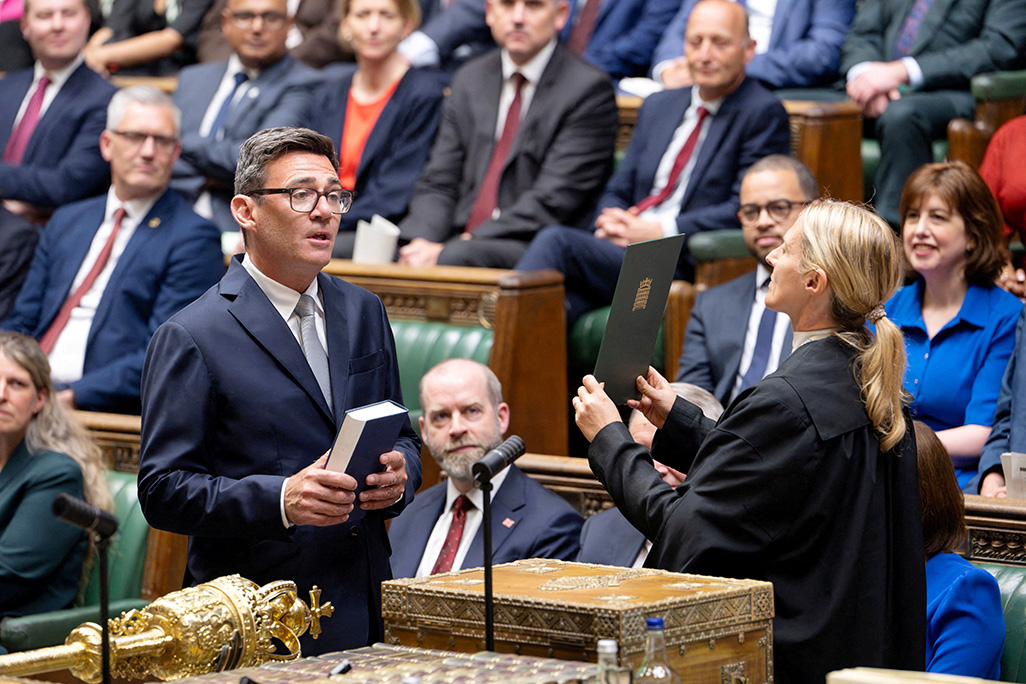
British Chancellor Rachel Reeves said on Thursday she was backing Andy Burnham to be the next prime minister, adding that he would stick to her fiscal rules and provide stability while brushing off reports she could be moved to a more junior post.
Reeves told the BBC she was backing Burnham to be prime minister after he emerged as the only declared candidate to replace Keir Starmer, who announced his resignation on Monday.
Later she went further, saying that Burnham “will be the next prime minister” and had been clear that he was committed to her fiscal rules, which include balancing day-to-day spending with tax revenues and reducing debt as a share of output.
“That is a good thing because it means that businesses here can be confident that that stability, that rigour to policymaking, that tight grip on the public finances… will be continued,” she said at a British Chambers of Commerce conference.
Starmer said he would oversee an orderly transition to a new prime minister from his Labour Party, after bowing to pressure over weak poll ratings and poor local election results.
Burnham, who is the only candidate to have put his name forward to replace Starmer, is widely expected to be installed without a challenge, meaning he could become prime minister by mid-July. If appointed, he would be Britain’s seventh leader in a decade.
Asked if she wanted to stay as finance minister, Reeves said she wouldn’t pre-empt cabinet decisions, which would be a matter for Burnham. Media reports have suggested she will be moved to a more junior role.
Stressing the need to stick to the fiscal rules, Reeves hinted that borrowing could fund increases in defence spending under a long-awaited defence investment plan, which she confirmed would be delivered before a NATO summit beginning on July 7.
Earlier this month John Healey resigned as defence secretary, saying that proposed increases in defence spending didn’t match the threats Britain faces. Starmer defended the plans, saying increased spending would be sustainable and fair, and not based on “irresponsible borrowing.”
Reeves said the defence investment plan would involve “more money spent more effectively,” and that borrowing to invest was “exactly what my fiscal rules allow… because most defence spending is capital investment.”





Click here to change your cookie preferences