
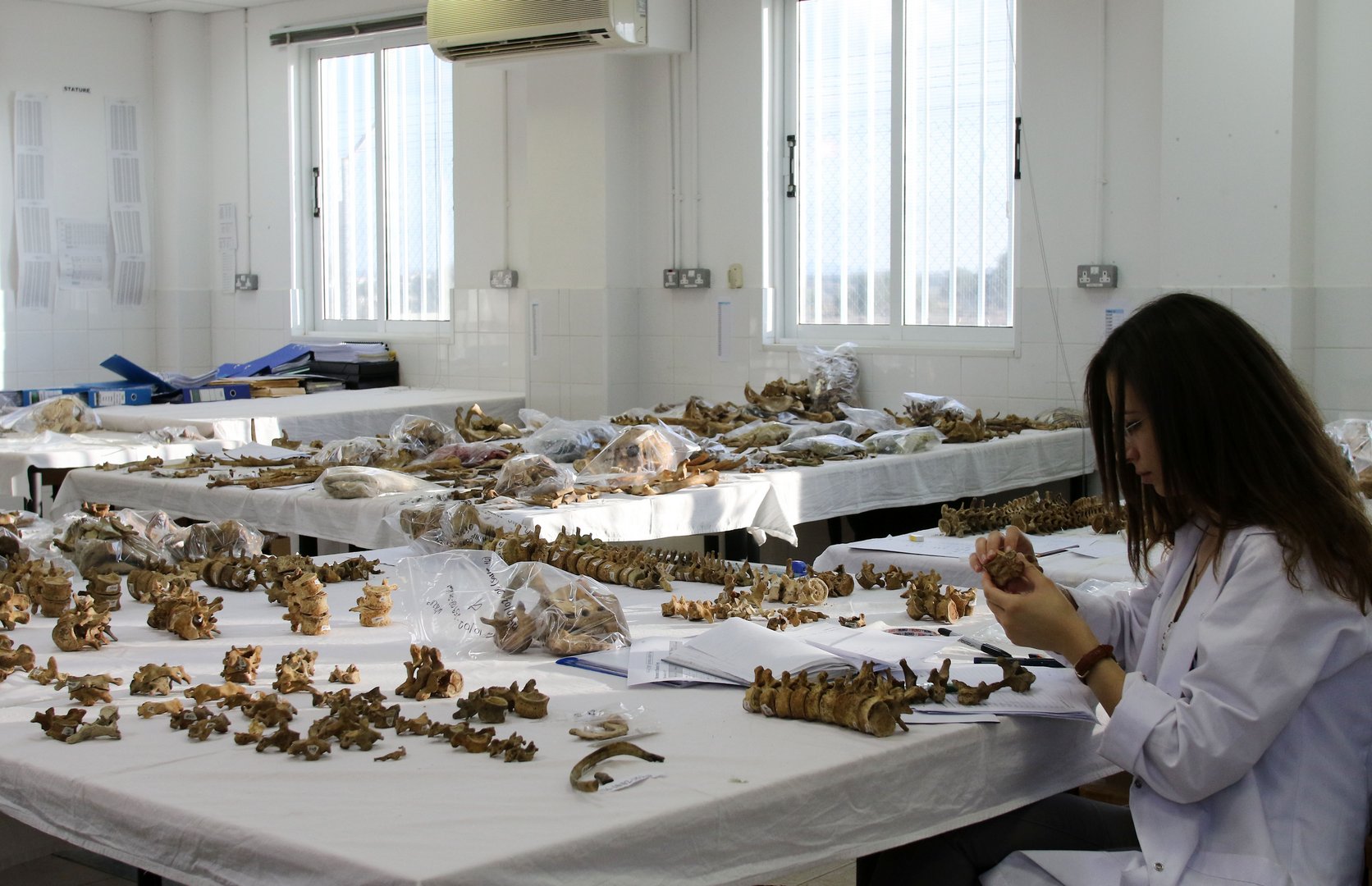
Cyprus has begun using an advanced DNA testing method to identify the remains of Greek Cypriot soldiers and civilians who went missing during the Turkish invasion of 1974 after conventional techniques failed for decades due to the bones having been exposed to chemical substances.
In an announcement issued on Friday, the presidential commissioner’s office explained that the new process uses ‘massive parallel sequencing’, a modern genetic analysis technique capable of extracting information from remains that could not previously be identified through standard DNA testing.
The programme follows a cabinet decision on April 21 to allocate €1 million for specialised genetic testing.
The work is being carried out by the genetics institute (CING) under a scientific protocol agreed with the state’s anthropologists.
Laboratory procedures have already begun, with the first bone samples undergoing analysis.
Initial testing is focusing on skeletal remains considered the most suitable for both anthropological and genetic examination, while further sampling will continue under an agreed scientific strategy.
For decades, the affected remains could not be reliably identified because earlier chemical treatment had damaged the genetic material needed for conventional DNA analysis.
Officials said the new methodology creates “a new scientific possibility” for examining those remains and could provide answers that had previously been beyond reach.
The office said the work will continue through close cooperation between scientific teams, with “absolute respect” for the humanitarian nature of the issue and the families of the missing and the fallen.
It added that the technology offers “a new perspective” for families who have waited for decades to learn the fate of their relatives.
The government said the issue of missing persons remains first and foremost a humanitarian matter.
It reaffirmed its commitment to using every available scientific, institutional and financial resource until answers are provided “to the last family of a missing person.”
Since then, bicommunal teams of archaeologists and scientists have conducted more than 1,700 excavations across the island, exhuming over 1,700 sets of remains.
Using forensic and DNA analysis, more than 1,050 individuals from the official list of missing persons have been identified and returned to their families for burial.
The programme addresses cases dating from intercommunal violence in the 1960s and the Turkish invasion of 1974.
Out of a total of 2,002 recorded missing persons from both communities, around 800 remain unaccounted for.
According to widely cited UN and Council of Europe records, the Turkish invasion of Cyprus resulted in around 3,000 deaths, the displacement of approximately 160,000 Greek Cypriots and 40,000 Turkish Cypriots, as well as documented cases of systemic rape and other serious human rights violations committed during and after the fighting.





Click here to change your cookie preferences