
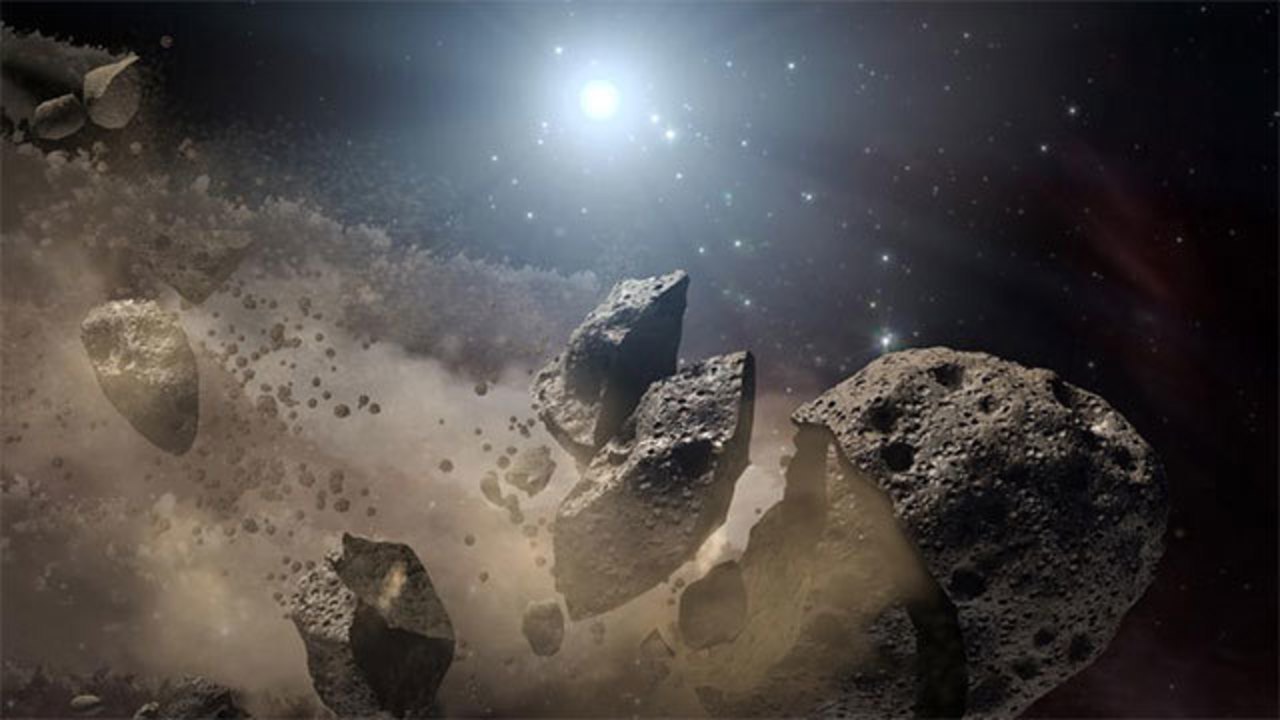
Cyprus is marking Asteroid Day with events on Monday and Tuesday as part of the worldwide programme organised by the Luxembourg-based Asteroid Day Foundation to raise awareness of asteroids, planetary defence and international cooperation in space science.
The events have been organised by Kition Planetarium and Observatory, the national coordinator for Asteroid Day in Cyprus, under the direction of George Troullias.
An event will be held on Monday at the Cyprus Planetarium in Tamassos, while the main event takes place on Tuesday at Kition Planetarium, where Chief Scientist Demetris Skourides will deliver an address on behalf of President Nikos Christodoulides.
More information about the events can be found at Astronomy Cyprus, Asteroid Day and Asteroid Day Cyprus.
Asteroid Day is celebrated annually on June 30 to mark the anniversary of the 1908 Tunguska event in Siberia, the largest impact event ever recorded in modern history.
The initiative was founded by astrophysicist and Queen guitarist Brian May, Apollo 9 astronaut Rusty Schweickart, filmmaker Grig Richters and B612 Foundation chair Danica Remy to promote public understanding about the importance of asteroids through history and the role they play in the solar system.
Kition Planetarium said that over the past years space missions have managed to collect valuable samples from asteroids, opening a new chapter in understanding the origin and evolution of our solar system.
“Although these samples are tiny, their scientific value is tremendous,” Kition Planetarium said.
Scientist are able to link meteorites on Earth to respective parent asteroids in space, providing unique information on the raw materials from which the planets were created approximately 4.6 billion years ago.
“Studying these samples does not only enrich our knowledge about the history of the solar system, but also contributes to planning future space missions, utilising the resources of asteroids and developing technologies that will support future space exploration,” it said.
There are about 50,000 meteorites in museums, universities and research foundations around the world, and each meteorite is a piece of an asteroid.
One of the most important achievements of modern planetary science is Nasa’s Osiris-Rex mission, which successfully brought back samples from carbon asteroid Bennu, which is close to Earth.
“These valuable samples, which came to Earth in September 2023, offer scientists a unique opportunity to study material that has remained almost unaltered for approximately 4.5 billion years, from the time the solar system was formed,” Kition Planetarium said.
The first tests revealed the presence of organic compounds, hydrous minerals and other chemical components, which contribute towards understanding the creation of planets and possibly the fundamental building blocks of life on Earth.
The results of the mission are considered to be a milestone for planetary science and are expected to shed light on the early stages of the solar system.
Asteroid research and planetary defence are today one of the priorities of key space organisations, with Nasa, European Space Agency (ESA) and other space services implementing missions to study asteroids, understand their origin and develop technologies to protect Earth from future risks.
In 2022, Nasa’s Double Asteroid Redirection Test carried out the first ever successful test in diverting an asteroid, by a controlled crash of Didymos asteroid into Dimorphos satellite, changing its orbit.
“This historic achievement proved that kinetic impact can constitute an effective method of planetary defence against potentially dangerous asteroids,” Kition planetarium said.





Click here to change your cookie preferences