
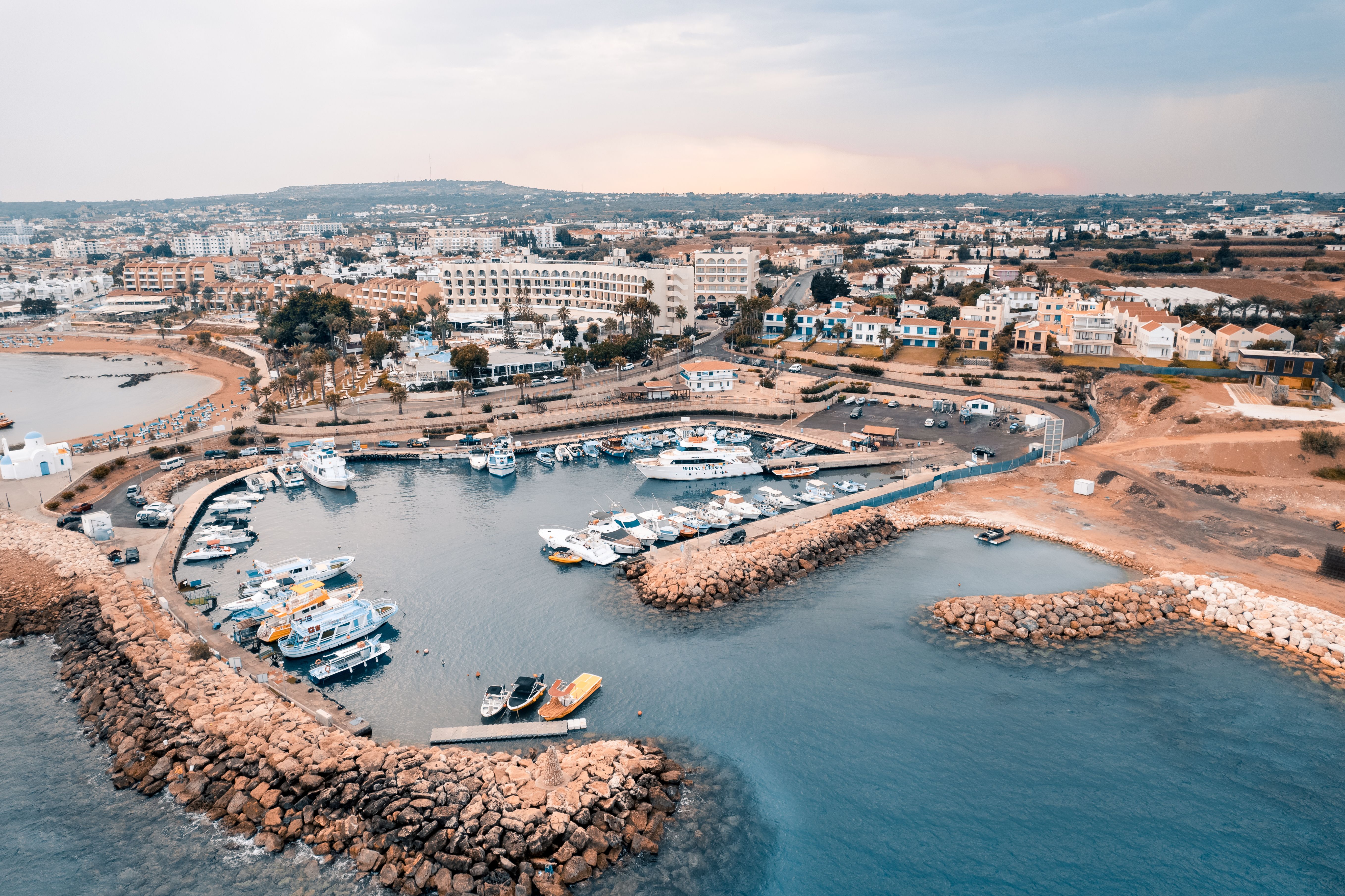
The committee discussed the effects of the volatile regional situation on Cyprus’ tourism industry and possible support measures for affected businesses.
“Under the circumstances and given the intense shock suffered by the tourism economy, the losses reflected in May data have been significantly contained,” he said.
“The most important thing is that Cypriot tourism has returned to a stable path, that the measures taken appear to have worked effectively, and that once again the country’s tourism sector is demonstrating resilience,” he added.
Koumis said 2026 would not be a record year, pointing to significant losses in March and April, but noted that May reduced the decline in tourist arrivals to 4.9 per cent compared with May 2025, while still showing an 8.1 per cent increase compared with 2024.
“Energy is one of the most complex issues of our time,” he said in a recently published piece of analysis, stressing that it extends far beyond production and consumption.
He added that energy is tied simultaneously to security of supply, household costs, infrastructure investment, climate commitments and geopolitical stability, which pulls policy in multiple directions at once.
“Some look at the bill at the end of the month, others focus on new generation units, others worry about emissions and others about strategic autonomy,” he said.
He described complexity not as a detail but as the core of the problem in energy policy design.
Both fields, the ‘Pegasus’ field and the ‘Glaucus’ field, are located in Block 10 of Cyprus’ EEZ, with ExxonMobil and QatarEnergy having already jointly acquired the rights to the natural gas in that block.
The fields’ status as “marketable” was the subject of a joint declaration signed by executives from both corporations and the Cypriot government at the presidential palace, with President Nikos Christodoulides saying that the government was “excited” about the declarations.
“It is clear evidence and a vote of confidence in the prospects of Cyprus’ EEZ, but also in the prospects of the eastern Mediterranean to develop as a potential energy corridor for Europe. We look forward to even more positive announcements in the near future,” he said.
The talks focused on key issues affecting Cyprus shipping, alongside a review of the priorities and main achievements of Cyprus’ six-month Presidency of the Council of the European Union in the field of maritime affairs.
The two sides also exchanged views on upcoming developments in both national and international shipping markets, reflecting ongoing shifts in global maritime trade and regulation.
The council of the stock exchange, acting in accordance with the regulatory provisions of KDP 379/2014, decided that the titles of five specific companies will continue to carry a trading marker in market tables and price bulletins.
Farmakeftiko Kentro A.E. remains marked due to an emphasis of matter in the auditors report, while Aihmi A.E. Investment Consultants is marked because of material uncertainty related to its ability to continue as a going concern.
Aeonic Securities C.I.F. Plc continues to carry a marker due to a qualified opinion from its auditors.
The conclusions were approved in Luxembourg during the EPSCO Council, chaired by Interior Minister Constantinos Ioannou on behalf of the Cyprus Presidency of the Council of the EU.
Titled ‘Housing: Shifting demographics and shaping policies’, the text calls on governments to take closer account of demographic change, urbanisation, climate pressures and economic challenges, as rising costs, limited supply and changing living patterns place growing pressure on households across Europe.
The Council said housing needs are being reshaped by ageing populations, smaller households and rural-to-urban migration, while affordability problems are now affecting people across generations and income groups.
Speaking on CyBC’s Apo Mera se Mera, Damianou said the Presidency had received broad recognition from European partners, something he linked to the preparation, coordination and management shown throughout the six-month term.
“The broad recognition that the Cyprus Presidency has received from our European partners reflects the serious preparation, collective effort and effective management that have characterised these six months,” he said in a statement following the interview.
He added that, particularly in the areas of digital policy, research and innovation, the Cyprus Presidency had promoted an agenda with “tangible results for Europe’s competitiveness and technological autonomy”. For Damianou, the success of a Council Presidency is measured not simply by the number of meetings held, but by whether it delivers on the targets it sets.
The current account deficit expanded to €1.27 billion in the first quarter of 2026, compared with €1.01 billion in the corresponding period of 2025, representing a deterioration of €263 million.
When adjusted to treat special purpose entities (SPEs) as non-residents, the current account deficit stood at €1.37bn, compared with €1.12bn in the first quarter of 2025.
The CBC said the deterioration was mainly driven by a larger secondary income deficit and lower net exports of services, particularly in financial services and telecommunications, computer and information services.
These developments were partly offset by an improvement in the goods balance and a smaller deficit in primary income, the central bank added.
The measure will apply to parcels worth less than €150, which until now were exempt from customs duties, although they were still subject to VAT and customs declarations. The exemption, known as the de minimis threshold, has long allowed low-value goods to enter the EU duty-free, a system Brussels says has created unfair competition for European retailers and made customs checks harder to enforce.
The new customs duty will not be calculated simply per parcel. Instead, it will apply per different type of item, based on the product’s customs classification.
This means a package containing a T-shirt and a pair of shoes would face two €3 charges, while a parcel containing several T-shirts of the same type would normally attract one €3 charge.
The surplus for the January to May 2026 period was equivalent to 1.4 per cent of GDP, compared with a surplus of €544.5m, or 1.5 per cent of GDP, recorded during the corresponding period of 2025.
According to Cystat, total government revenue increased by €282.5m, or 4.8 per cent, reaching €6.2 billion from €5.92 billion a year earlier.
The increase was primarily driven by higher revenue from taxes on income and wealth, which rose by €115.2m, or 8.4 per cent, to €1.49bn, compared with €1.37bn during the corresponding period of 2025.
The initiative falls under the framework of the Enterprise Europe Network and serves as preparatory work for the upcoming Quality Jobs Act, which seeks to align employment standards with the needs of the modern economy.
The chamber explained that the European Commission aims to collect data and real-world experiences from businesses regarding current policies and practices applied to occupational health and safety.
The survey also focuses on the protection of workers’ rights within subcontracting chains, as well as the benefits and costs associated with implementing these policies for individual businesses.
The total amount to be distributed stands at €148,005,238.21, which originates from internal dividend reserves and other non-taxed profits.
Shareholders are set to receive a gross amount of €0.0655980839 per share, excluding the 59,018,043 treasury shares held by the bank.
This payment follows a previous distribution of an interim dividend totalling €111,388,046.88, which was paid out in December 2025.
The combined profit distribution for the 2025 financial year, inclusive of the interim payment, amounts to €259,393,285.09
Stavrianos said the shift is already visible among a small group of organisations that have moved beyond experiments and demos, and are now using AI to reshape their cost base, growth model and decision-making processes. “Every CEO has, by now, seen the demos,” he said, pointing to AI tools that summarise documents, draft emails and answer customer questions.
However, he explained that the temptation over the past two years has been to treat these tools as “useful additions to the technology stack”, somewhere between “a better search engine and a cleverer assistant”. That view, he said, is “becoming increasingly difficult to defend”.
According to Stavrianos, the turning point came in April 2026, when PwC published the results of its global AI Performance Study, based on a survey of 1,217 senior executives across 25 sectors. The study found that “nearly three-quarters of AI’s economic value is already being captured by just 20 per cent of companies”, he said.
The report, released by BIMCO and the International Chamber of Shipping (ICS), estimates that 2.57 million STCW-certified seafarers are currently serving on 85,148 merchant ships worldwide.
However, the figures also point to a growing shortage of officers, with the industry facing an estimated shortfall of 39,100 STCW-certified officers this year, despite a surplus of 56,890 ratings.
The report is published every five years and is regarded as one of the shipping industry’s most comprehensive assessments of the supply and demand balance for certified seafarers. Its latest edition comes at a time when the sector is dealing with fleet expansion, new fuels, digital technologies, geopolitical disruption and a more demanding regulatory environment.
The appointment, which was finalised during a meeting held on June 26, 2026, was made to fill the vacancy that arose following the resignation of Jawaid Mirza.
This move restores the five-member composition of the committee as originally determined by the annual general meeting of shareholders on July 23, 2024.
Following the appointment, the audit committee reconstituted its membership and confirmed its leadership structure.
The meeting, scheduled for 12.15pm, will include elections for the new board of directors for the 2026-2029 term, with outgoing president Thanos Michaelides set to hand over to the association’s next leadership.
President Nikos Christodoulides will address the meeting, which comes at a challenging time for the tourism sector, as Cyprus continues to assess the impact of regional instability and pressure on arrivals.
In his own address, Michaelides is expected to review the performance of Cypriot tourism in 2025, refer to the challenges created by the crisis in the Middle East and underline the need for a comprehensive roadmap for the sector.
This decision follows a directive from the Cyprus Securities and Exchange Commission (CySEC), which acted under the powers granted by Article 70(2)(ig) of the Investment Services and Activities and Regulated Markets Law of 2017.
The affected firms are Tokotis Investments Public Ltd, A. Tsokkos Hotels Public Ltd, Dome Investments Public Company Ltd and Karyes Investment Public Company Ltd.
The commission requested that the council of the stock exchange suspend trading of these shares starting July 1, 2026.
This suspension is set to last until the companies comply with their disclosure obligations, or at the latest until September 30, 2026.
The federation said the presidency had been carried out during a period of heightened geopolitical instability and economic challenges, with the Republic responding to its responsibilities with seriousness, competence and effectiveness.
“Oev congratulates the President of the Republic for the well-organised and effective management of the presidency, as well as all state and public service officials who contributed to this national success,” the federation said.
It added that progress was achieved on a number of important European policy files during Cyprus’ presidency, particularly in areas affecting the competitiveness of the European economy, the strengthening of the Single Market, enlargement, migration, defence and security.
Acting under the authority provided by paragraph 2.2.6 of regulatory decision KDP 379/2014, the council of the exchange decided to retain the (S) warning marker for four issuers.
These companies will continue to be presented with the (S) marker in trading tables and price bulletins on the Alternative Market due to the presence of material uncertainty regarding their ability to continue as a going concern.




Click here to change your cookie preferences