
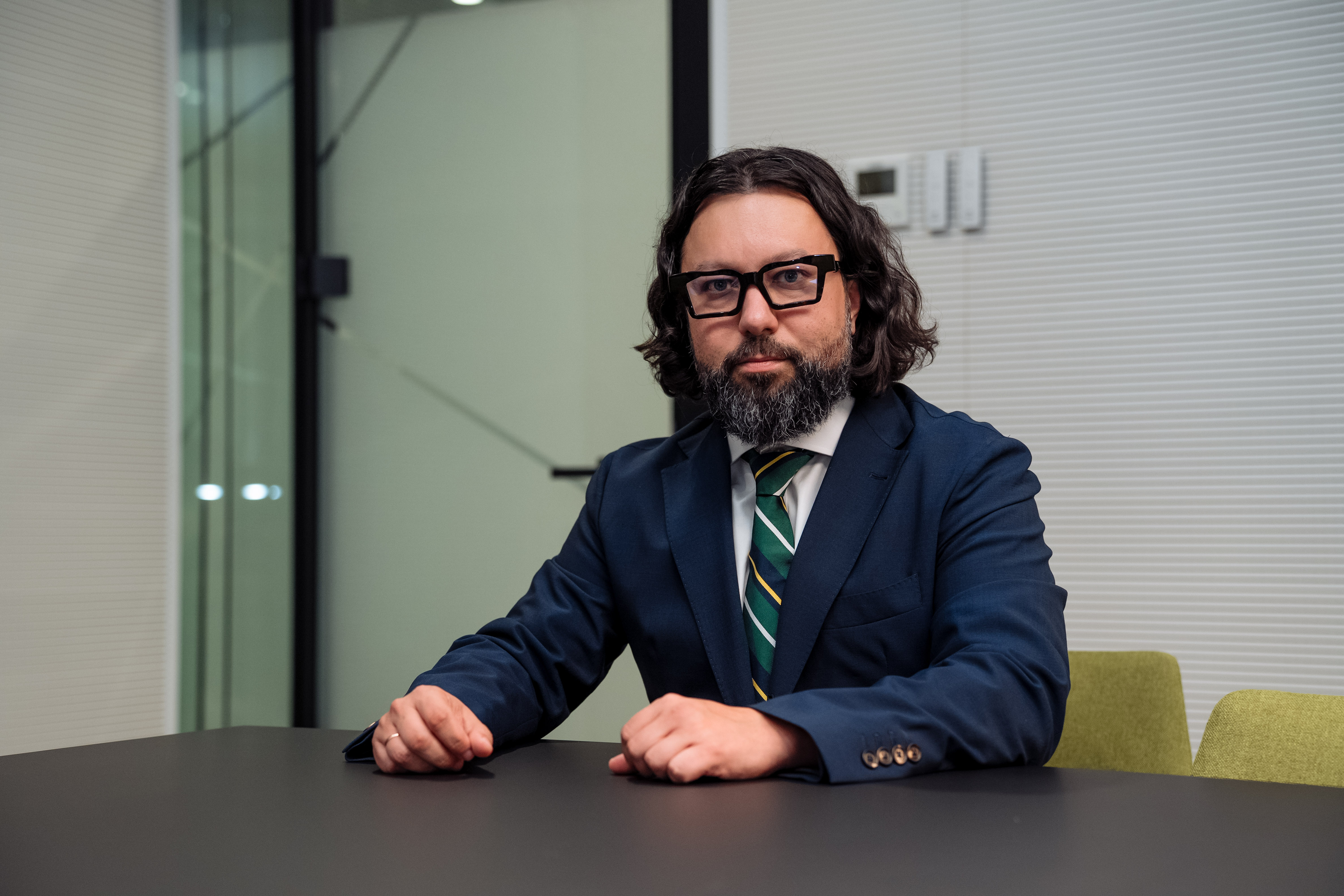
By Bulat Latypov
I did not expect another trip to Astana to bring Cyprus back into focus. But Astana has a strange and useful effect on strategic conversations, it makes geography feel less fixed than we assume.
Standing here, Cyprus does not look smaller or more remote. It looks more consequential. The visit of Nikos Christodoulides to Kazakhstan is therefore more than a diplomatic milestone. It is the first visit of a President of the Republic of Cyprus to Kazakhstan, and it comes at a moment when both countries are trying to move beyond the old shorthand by which they are usually described.
The countries that will matter in the next phase of global economic competition will not be those that merely sit in useful locations. They will be those that make their usefulness strategically legible.
As part of the wider presidential visit, the Kazakhstan-Cyprus Business Forum at the Astana International Financial Centre brings together representatives of both business communities, investment agencies and innovation institutions. The sectors on the table: technology, financial services, fintech, renewable energy, tourism, agritechnology and pharmaceuticals are not peripheral sectors. They are the operating system of the next growth cycle.
The AIFC is not just a venue. It is one of Kazakhstan’s clearest attempts to build a globally readable institutional platform for capital and regional business activity. It reflects a deliberate effort to make Kazakhstan easier for the world to understand, access and revisit. Countries that successfully reposition themselves do not wait to be discovered. They reduce discovery risk. They build the institutions, access and proof points that allow capital and talent to understand what is already happening on the ground.
The Kazakhstan example matters here not because Cyprus should copy it, but because it sharpens the question now facing the country. What would it mean to turn usefulness into strategic inevitability? The opportunity is not to imitate Dubai, Estonia, Singapore or anyone else, but to become much more precise about its own role: a gateway between the EU, the Eastern Mediterranean, and, increasingly, the high-growth economies of Central Asia.
This is the space in which Tech Forward Cyprus operates. As a media-first think tank, our work is built around a simple belief: narrative is not decoration around economic strategy. It is part of economic strategy. If international investors, founders and policymakers cannot understand what a country is becoming, they will underestimate it, no matter how strong its underlying fundamentals are.
The danger would be to treat these days in Astana as a successful diplomatic event and then return to familiar assumptions. The opportunity is to treat them as the beginning of a more deliberate Cyprus-Kazakhstan corridor connecting Europe and Central Asia. This will not happen through official statements alone. It will happen through repeated business missions, sector-specific partnerships, networks, regulatory conversations and the slow conversion of curiosity into confidence. That work is rarely visible. It does not photograph as well as a signing ceremony. But it is what moves the needle.
The island has spent years proving that it can be a reliable hub. The next phase is different. It is about whether Cyprus can define itself as a gateway with a clear role in a more fragmented, more regionalised and more competitive global economy. Kazakhstan is not a distant market in that story. It may become one of the places through which Cyprus better understands its own next chapter. The foundations are visible. The window is open.
Bulat Latypov is a Founding Member of Tech Forward Cyprus and Chief Communications Officer at Freedom24





Click here to change your cookie preferences