
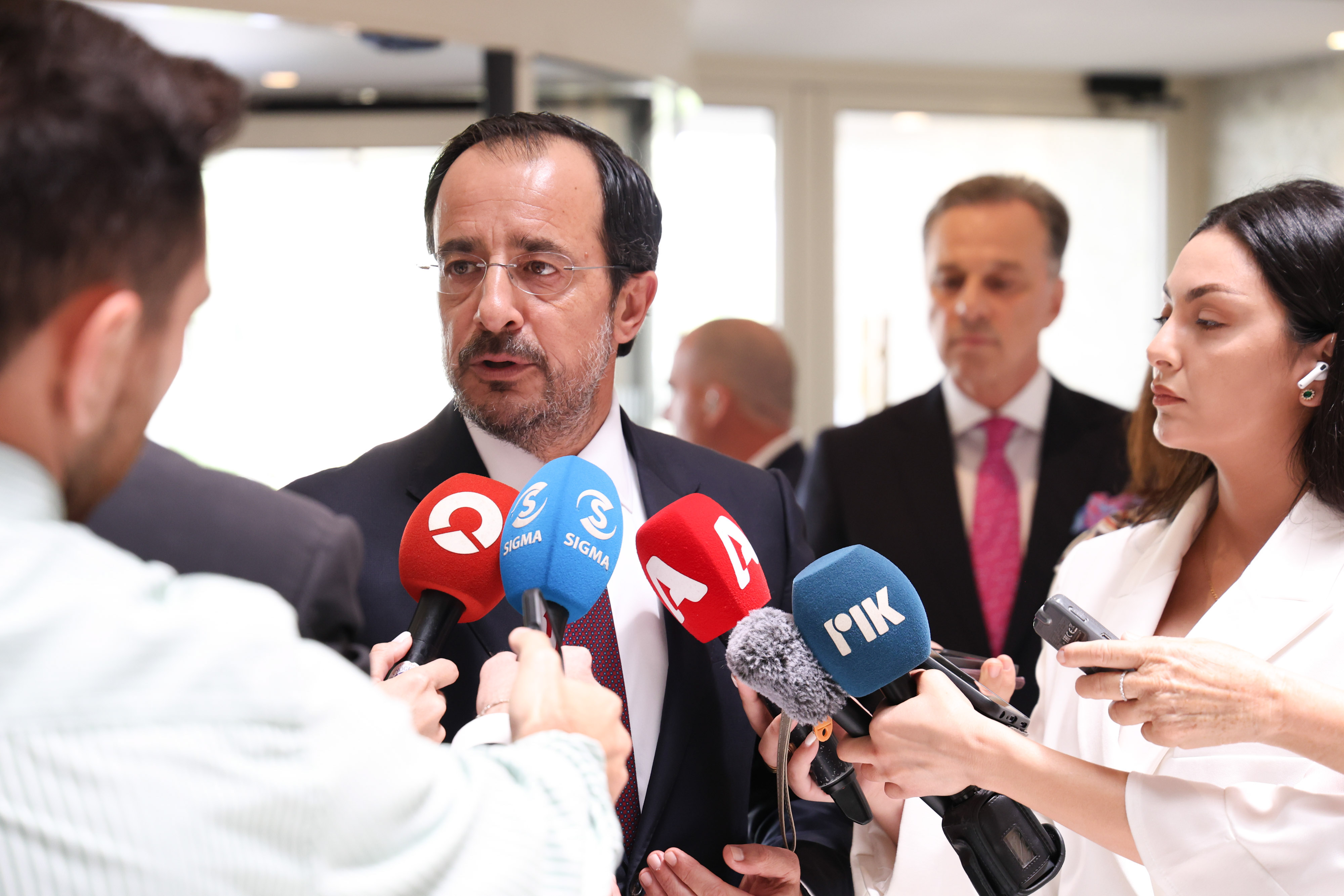
Measures to encourage greater participation and dialogue are crucial to ensuring that citizens feel included and represented, President Nikos Christodoulides said during a roundtable discussion on the current state of democracy held in Athens on Wednesday.
“I do not believe that democracy is in decline, but we cannot ignore that it is being tested,” he said.
Speaking at a meeting organised by the Economist magazine, he said that democracy was currently being tested by the questioning of institutions, new technologies and new ways of communication which, he said, were “drastically changing” the public debate, as well as the relationship between citizens and politicians.
These developments, he added, create the impression that politics are not adapting quickly enough to the concerns of citizens.
“And this, I think, is perhaps the most important challenge facing our democracies today,” he said.
Christodoulides referred to several governmental initiatives aimed at increasing the inclusion of citizens and strengthening their representation in decision-making processes.
In this context, he referred to the institutionalisation of the citizens legislative initiative through which citizens acquire the right to shape policies by collecting 5,000 signatures, as well automatic registration of all eligible voters of 17 on the electoral role and various online services for citizens such as the Ekfracy platform, providing young people the opportunity to submit proposals and suggestions.
He then went on to mention Cyprus’ recently completed presidency of the EU Council, saying that the latter had set the goal of bringing the bloc closer to its citizens and provide answers to the “real problems of our societies”.
“There is a direct link between the quality of democracy and the ability of institutions to adapt, listen and provide solutions,” he said.
The president underlined that the biggest challenge ahead awas to ensure that democracy would not only follow the developments of the digital age but “adapt and utilise its potential.”





Click here to change your cookie preferences