
Romania delayed plans to sink four rock-filled barges into the Danube until Friday citing unsafe conditions, as the race tightens to divert water from the drought-hit river to its only working nuclear reactor and buy a few more days of operation amid low electricity supplies.
Record low water levels on the Danube, used to cool reactor turbines, have already forced the shutdown of one reactor, and authorities have taken unprecedented measures to keep the country’s only other reactor running, including detonating a rock obstruction earlier this week.
Romania’s government has prepared a system to cut power for industrial consumers in stages and with prior notice if needed, Prime Minister Ilie Bolojan said on Thursday, adding no such cuts were expected for the next 5-7 days or as long as the nuclear reactor kept running.
The two reactors at Cernavoda, operated by Romania’s Nuclearelectrica ROSNN.BX, account for a fifth of the country’s electricity production. Hydropower plants are also suffering from the drought, and energy imports are limited by similar conditions in neighbouring countries.
The blast and riverbed dredging bought some time, but a Nuclearelectrica executive said the company could shut the remaining reactor in five to six days unless the sunken barges work.
“If the barges generate a water surplus this deadline extends to nine to 10 days,” Romeo Urjan, the plant’s director, told private television station Digi24.
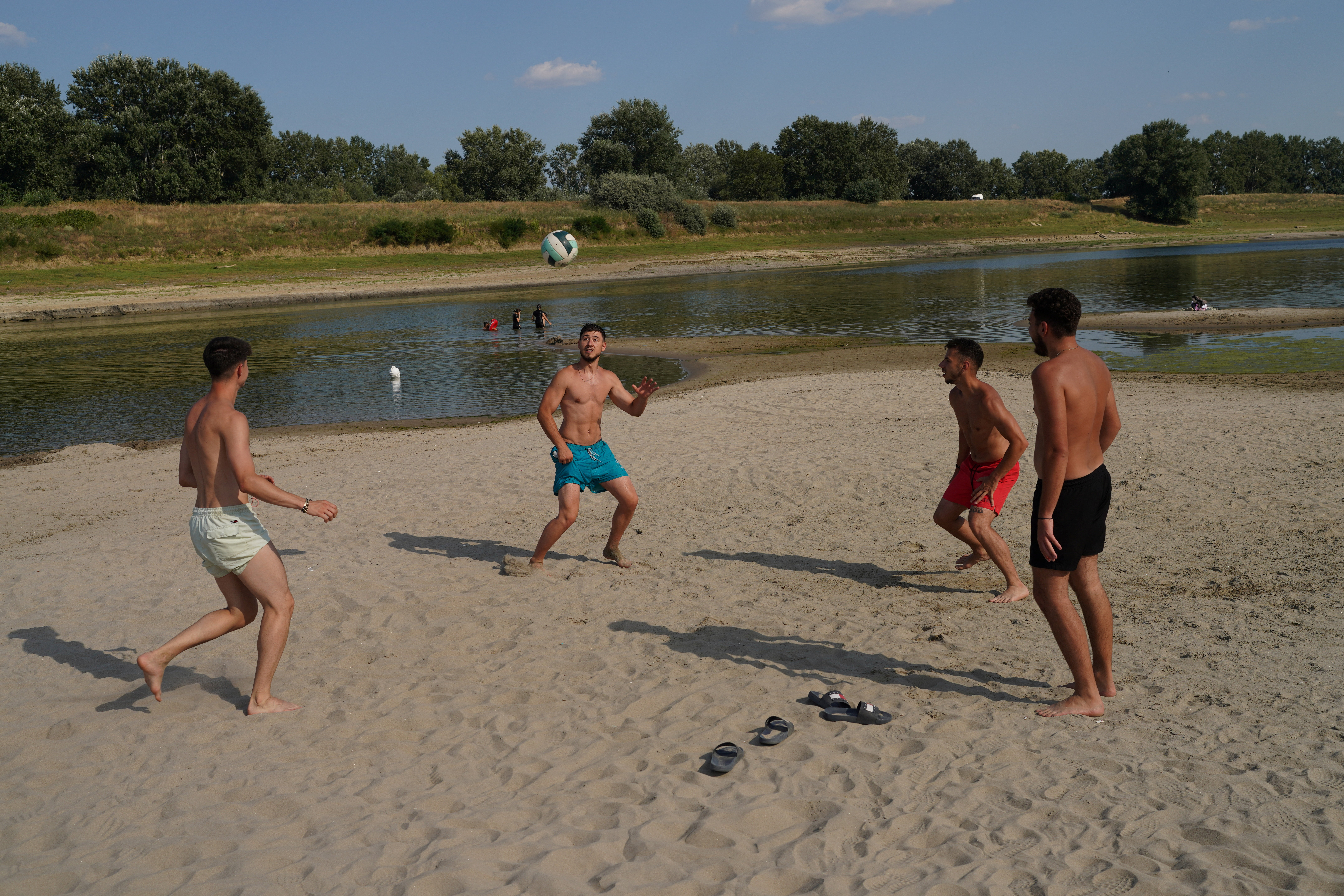
The Danube’s flow in Romania fell to an all-time low on Thursday of 1,400 cubic metres per second, about a third of its usual August average.
Romania’s Cernavoda nuclear plant and Hungary’s Paks plant both use Danube waters for cooling, forcing Bucharest and Budapest alike to increase their power imports and urge households and businesses to reduce consumption.
Romania’s state water management agency had initially planned to begin controlled submersion of the four barges one at a time on Thursday, aiming to establish a barrier and redirect water from a river branch toward the plant. Urjan said the impact would be felt a day later.
“That is an extraordinary response, but it should not be mistaken for an energy strategy,” ING Bank said of the Danube works in a note.
“Blasting rock out of a riverbed may keep a reactor operating for a few more days, but it does not create new generation capacity, reinforce cross-border interconnections or accelerate storage deployment.”
EU member Romania relies on a mix of gas, coal, hydro, nuclear and renewables for electricity generation but needs billions of euros in investment to replace ageing facilities and boost battery storage and grid interconnections.





Click here to change your cookie preferences