
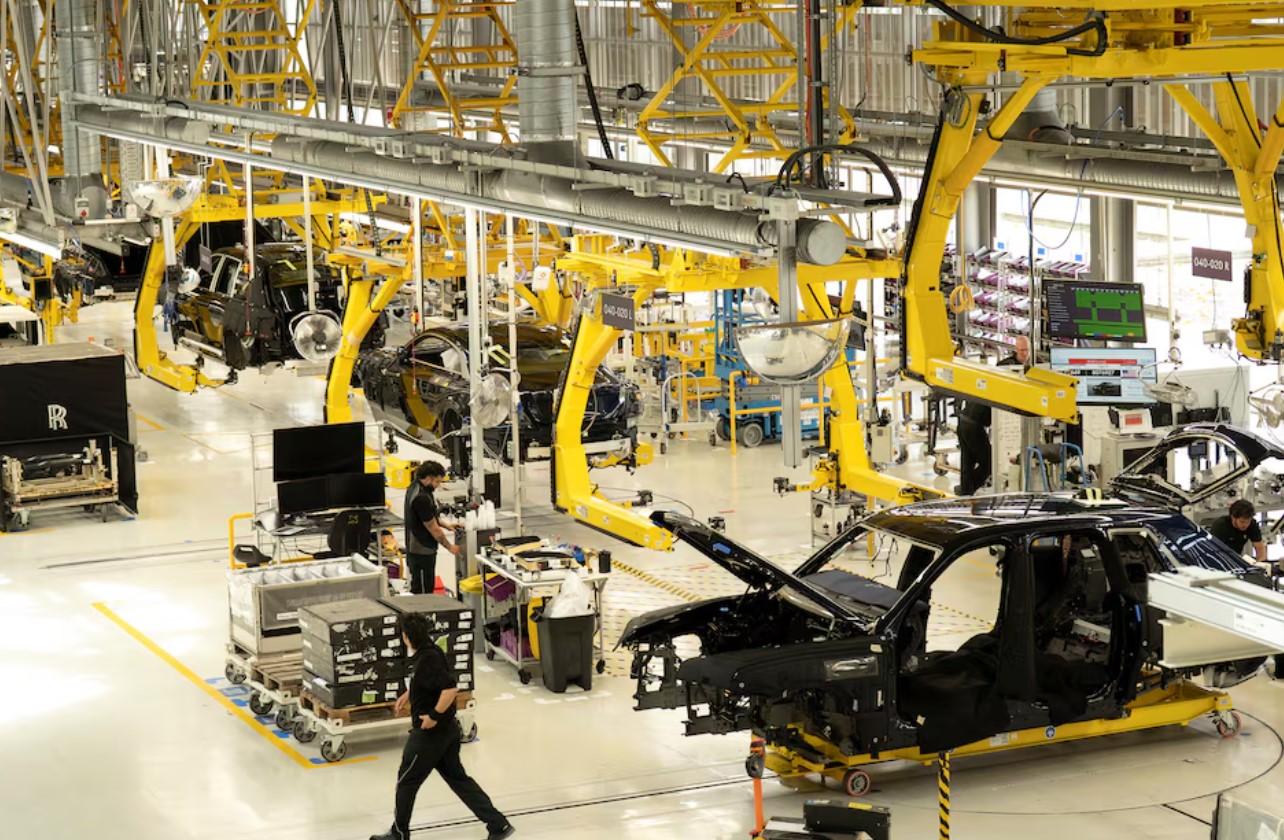
British manufacturing activity expanded for a ninth straight month in July but at the slowest pace in four months, according to purchasing managers’ data that points to a renewed impact from the Iran war towards the end of last month.
The S&P Global Purchasing Managers’ Index for Britain’s manufacturing sector fell to 51.9 in July from 52.5 in June, in contrast to an earlier provisional or flash reading of 52.8, which was the third highest reading of the past four years.
“The month-on-month fall in the level of the PMI was due to a steep reduction in stocks of purchases, slower jobs growth and a sharp easing in the rate of increase in vendor lead times,” S&P Global said.
- The manufacturing PMI’s output component rose to 52.9 from 52.6, representing the broadest growth since September 2024 but a smaller increase than the flash reading of 53.6
- Readings above 50 represent growth, while those below it represent contraction
- The data was collected from July 9 to July 28, while the cut-off for the flash reading was July 24
- A truce between the United States and Iran broke down in mid July and Iran-aligned Houthis in Yemen declared a naval blockade on Saudi Arabia on July 20, pushing oil prices above $100 a barrel on July 23 and July 24
- Manufacturers reported the smallest rise in input costs since February while employment levels stagnated
- Small manufacturers reported a mild downturn in production volumes in July while medium and larger ones reported growth
- Official data showed a 2.3 per cent annual rise in manufacturing output in May, the biggest increase since March 2024




Click here to change your cookie preferences