
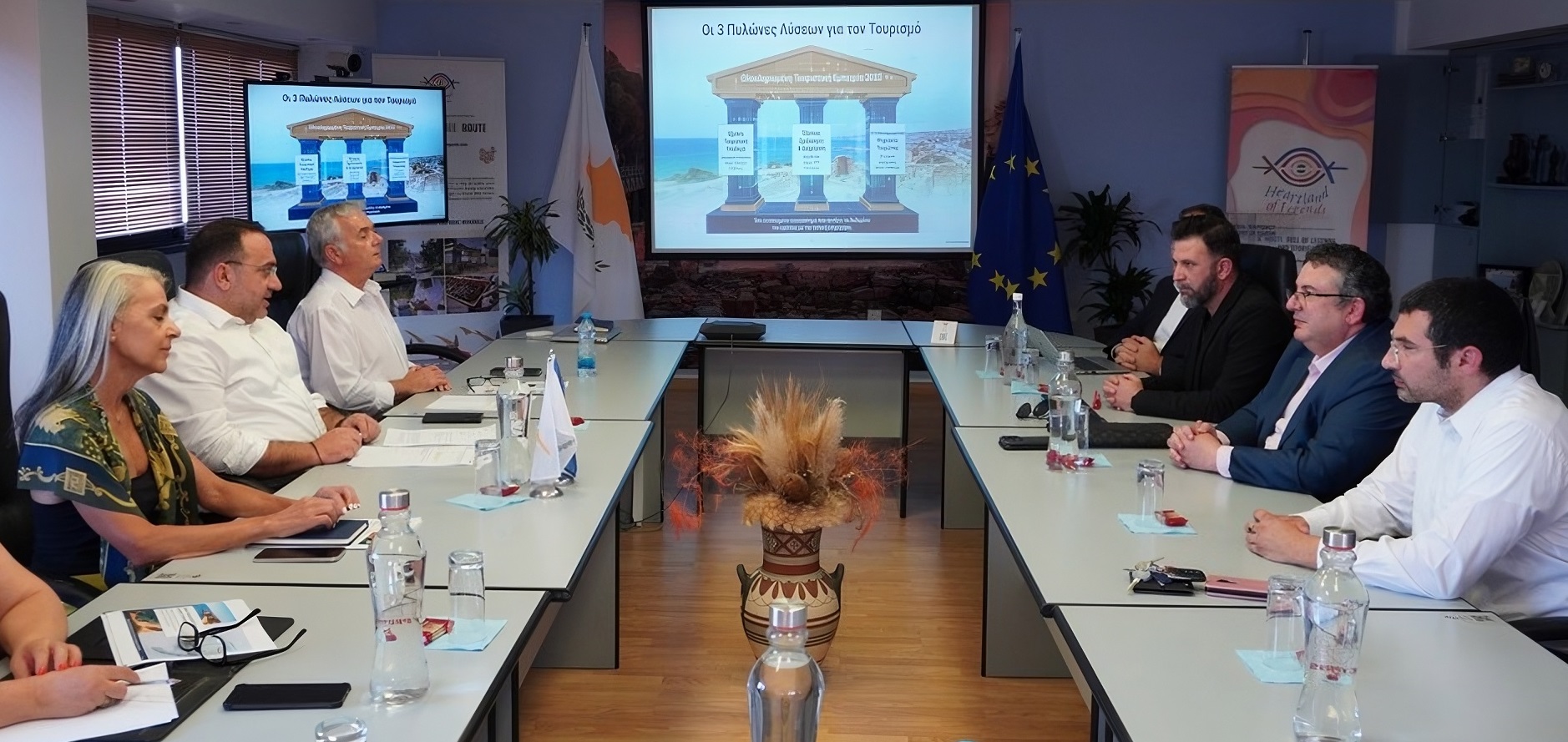
Cyprus is looking to make artificial intelligence a central part of its tourism strategy, with Tourism Deputy Minister Kostas Koumis and Chief Scientist for Research, Innovation and Technology Demetris Skourides discussing how the technology can improve services and strengthen the island’s competitiveness on Thursday.
The meeting focused on linking tourism with AI as Cyprus seeks to accelerate the digital transformation of the country as a tourism destination, according to the Deputy Ministry of Tourism.
Skourides’ team presented a strategy titled “Smart Tourism 2032: the Cyprus Artificial Intelligence Strategy”, as part of the ongoing public consultation on the country’s national AI strategy.
The consultation is due to conclude on August 31, 2026, with the tourism strategy forming part of the wider effort to determine how AI should be developed and applied across the economy.
The proposed tourism strategy aims to establish Cyprus as a “Living Lab”, combining advanced technology with the island’s traditional hospitality.
It is built around three interconnected areas, namely smart tourism infrastructure, smart destination planning and management, and an empowered digital tourist.
Particular emphasis is also being placed on small and medium-sized tourism businesses, which are expected to play an important role in the adoption of new technologies across the sector.
Koumis said AI had already begun changing tourism in visible ways, affecting everything from the way visitors gather information to how they organise trips and how destinations promote themselves.
“AI has entered the tourism sector dynamically and has already brought visible changes to a series of tourism-related functions, such as information gathering, trip planning and destination promotion,” Koumis said.
He explained that the government and the Deputy Ministry of Tourism wanted to make full use of AI in cooperation with Skourides’ team, with the dual aim of improving Cyprus’ competitiveness and the experience offered to visitors.
“As a government, and as the Deputy Ministry of Tourism, we aim to fully utilise artificial intelligence, together of course with Skourides’ team, with the aim both of increasing our country’s competitiveness as a tourism destination and of improving the tourism experience,” Koumis stated.
He argued that improving tourism services was increasingly inseparable from the new functions created by advances in AI.
“The improvement of tourism services is now linked to the functions that have emerged through the development of artificial intelligence, something that Cyprus as a destination should make the best possible use of,” he said.
The strategy’s focus on a digitally empowered tourist reflects the growing role of technology throughout the visitor journey, from researching destinations and planning travel to accessing services while in Cyprus.
The proposed approach also seeks to ensure that the country’s tourism businesses are involved in shaping the wider national AI framework rather than simply adapting to changes introduced elsewhere.
“In any case, as the Deputy Ministry of Tourism, we believe it is right for our country’s tourism ecosystem to be fully informed, to participate in the consultation and certainly to make full use of all those support functions that arise from technological development and the strengthening of artificial intelligence,” Koumis said.
The government sees the technology as an opportunity not only to modernise tourism operations but also to improve the way Cyprus presents itself and interacts with visitors.
The proposed Smart Tourism 2032 strategy therefore places AI within a broader effort to combine technological development with Cyprus’ existing tourism strengths, particularly its reputation for hospitality.
The initiative comes as the government conducts its wider public consultation on the national AI strategy, with stakeholders invited to contribute before the August 31 deadline.





Click here to change your cookie preferences