
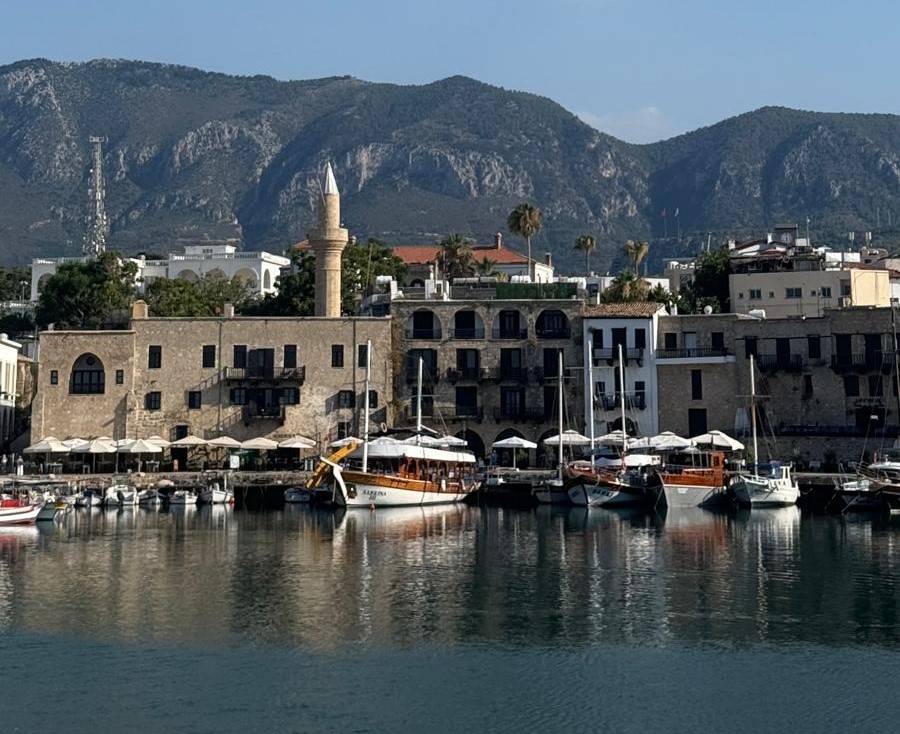
At least 150,000 people currently live in Kyrenia, the town’s Turkish Cypriot mayor Murat Senkul has said, stressing that the overall population of the north is likely much larger than numbers quoted by the central Turkish Cypriot administration.
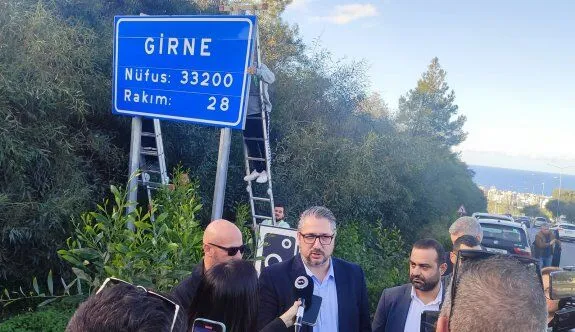
He was asked by newspaper Yeniduzen about his decision upon being elected in 2022 to remove a roadside sign on which it was written that the town’s population was 33,200.
“What else could I have done besides taking down that sign? If I had just added the number one in front of it and it said 133,000, that would have been fraudulent. You cannot hang something at the entrance of a town and present it as official data when you do not know the actual number,” he said.
He added that “we had to remove it to raise awareness” of the town’s burgeoning population.
“Looking at concrete data like water consumption, meter numbers, households, and the amount of rubbish collected, Kyrenia’s actual population is between 150,000 and 160,000. Nationwide, the actual, de facto population is around 800,000 during the quietest periods and 900,000 during the busiest,” he said.
He then offered criticism for ‘prime minister’ Unal Ustel, who had said in July last year that the north’s population was at the time 590,000, excluding foreign students and Turkish soldiers, and then last week that it is “around 500,000”.
“Has the population decreased? No. They give contradictory figures and make themselves look ridiculous because they are ashamed to admit they do not know. The interior minister [Dursun Oguz] has also admitted that they do not have accurate information,” he said.
Regarding the reasons why the north’s population has grown to such an extent, he stressed that “there is no longer a state-sponsored population transfer from the Republic of Turkey to Cyprus like there was in the 1980s”.
Instead, he said, “people are coming from Turkey, Pakistan, Bangladesh for individual economic reasons because they think the country is European Union territory”.

“We need to separate the number of citizens from the actual population. A state which does not know its population cannot plan. To how many people will you provide healthcare, education, and transportation services?” he added.
He then said that a lack of knowledge of a place’s population can also present more danger in the event of a natural disaster or a war.
“If there is an earthquake tomorrow, and the example of Hatay on February 6 [2023] is clear, or, God forbid, a war breaks out, for how many people will you prepare food supplies, and how many shelters will you prepare? Will you plan for 33,000 people, a projection of 47,000, or 150,000? Will you ask for identity cards at the entrance to the shelter?” he asked.
He added that “this lack of seriousness nullifies the state’s authority”, before calling on the Turkish Cypriot authorities to hold a census.
The north’s statistics institute had in February announced the population there stood at 489,308, despite mobile communications data suggesting the figure is more than double that.
The institute released what it described as a “projection” of the north’s population as of the end of 2024, with the last comprehensive census having been carried out in 2011.
However, mobile communications data paints a very different picture, with the north’s telecommunications authority having announced in December last year that as of the end of September last year, there were 1,133,583 mobile subscribers in the north, of which 945,810 were active.
The telecommunications authority stated that this corresponds to a mobile penetration rate of 276 per cent – a figure which would, if true, leave the north with the second-highest mobile penetration rate on earth. This figure falls to 232 per cent based on the projection released on Monday, but even that figure remains the second highest on the planet.

According to statistics provided by the World Bank, only Hong Kong, with a mobile penetration rate of 319 per cent, has a higher rate than that officially provided by the north.
The Republic of Cyprus’ rate, per the same statistics, is 156 per cent, and is thus a little over half the number stated by the north’s telecommunications authority, while the European Union’s mobile penetration rate is 124 per cent and the overall global rate is 110 per cent.
Turkey’s rate is 106 per cent, Greece’s rate is 111 per cent, and the United Kingdom’s rate is 123 per cent.
Were the north to have a comparable mobile penetration rate to the Republic of Cyprus, it would have a population of around 725,000. Were it to have a mobile penetration rate comparable to that of Turkey, it would have a population of around 1.1 million.





Click here to change your cookie preferences