
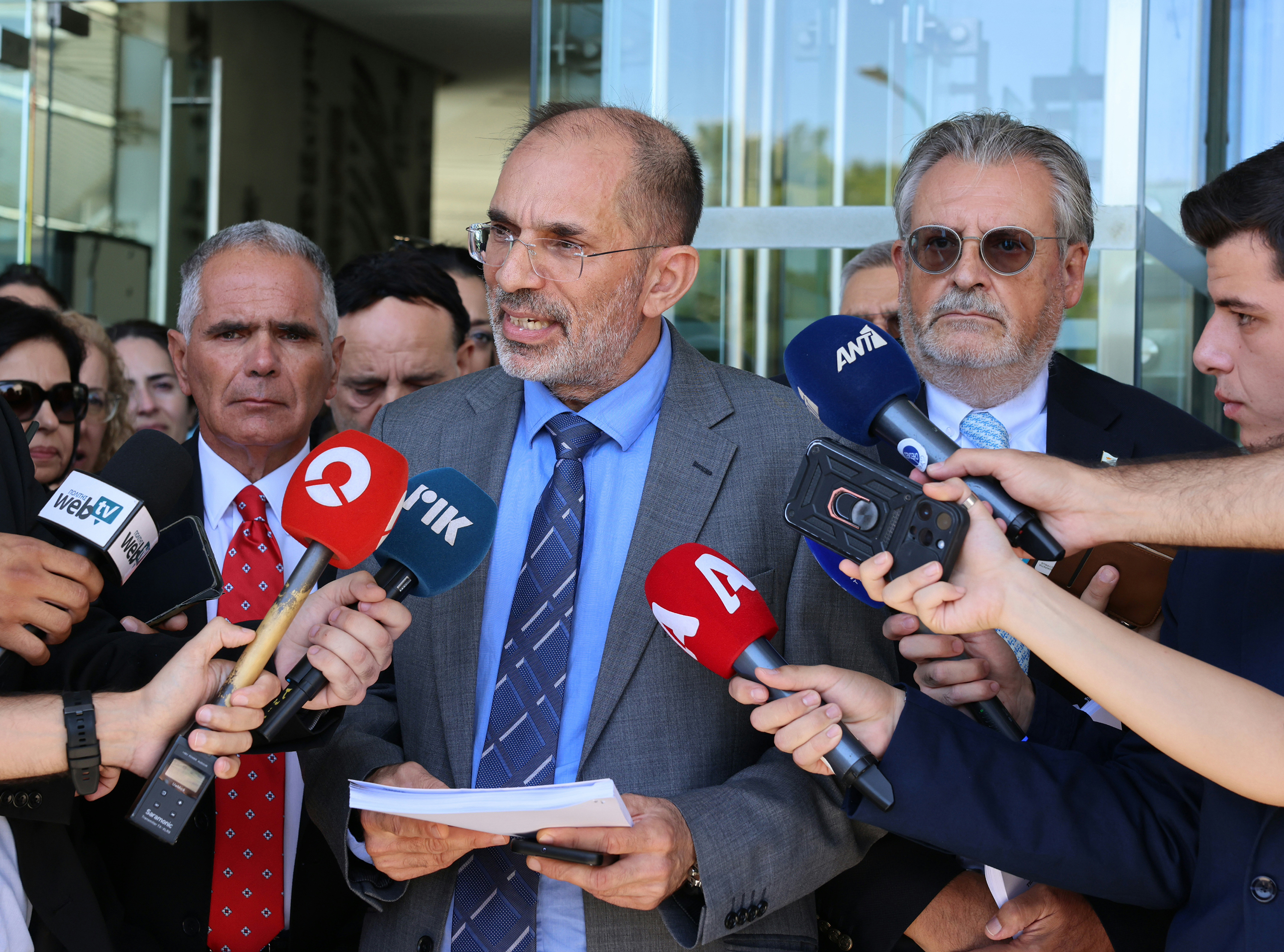
The European Court of Human Rights (ECtHR) has notified Cyprus of part of former auditor-general Odysseas Michaelides’ appeal against his dismissal, concerning an alleged violation of his right to freedom of expression.
In a social media post on X, Michaelides described the development as positive, while acknowledging that it does not prejudge whether the case will ultimately be admissible or the court’s final ruling on the substance of his complaint.
The notification concerns the ECtHR’s article 10, which protects freedom of expression.
“This is the part that concerns the core of the case,” Michaelides said, referring to whether his removal from office violated this freedom in relation to public statements and actions on matters of public interest while carrying out his duties.
He also argued that his dismissal could have a wider effect on the willingness of officials to speak publicly while performing institutional roles.
Michaelides said the court had raised two questions for examination. The first was whether his dismissal constituted interference with his freedom of expression. The second was whether any such interference was provided for by law, pursued a legitimate aim and was “necessary in a democratic society”.
Michaelides’ appeal follows his dismissal by the Supreme Constitutional Court in September 2024.
An eight-judge panel unanimously found that he had conducted himself inappropriately and was unfit to continue serving as auditor-general.
The court’s judgment highlighted his conduct in office, particularly his repeated disputes with attorney-general George Savvides.
The judgment found that Michaelides had repeatedly sought to undermine legal opinions issued by Savvides, including by presenting his own interpretations of legal matters that contradicted those of the attorney-general.
It also stated that Michaelides had gone beyond the role of an auditor, saying he had effectively assumed the role of a judge by drawing conclusions from his statements and reports.
The court further referred to obscene material published on a Facebook page dedicated to supporting Michaelides.
Although the page did not belong to him, the judgment said it bore his name and photograph.
Michaelides rejected the judgment and has since characterised his dismissal as politically motivated.
Shortly after his removal, he said he had been ousted because he could not be silenced and described the ruling as an attempt to place restrictions on the audit office.
Michaelides has also faced separate allegations concerning his involvement with the Facebook page.
Former audit office employee Andreas Hasapopoulos, who ran the page, has alleged that Michaelides supplied material for publication, including posts critical of politicians.
Hasapopoulos has said he possesses WhatsApp messages which could support his claims.
The allegations concern evidence Michaelides gave during his 2024 court case, when he said he had “no connection whatsoever” to the page and could not decide what material was published on it.
No finding has been made against Michaelides in relation to the later allegations, and he has denied having control over the page while questioning Hasapopoulos’ credibility.
Michaelides has previously said his ECtHR appeal would cover three areas, including due process, his right to reputation and freedom of expression.
The latest notification concerns only the freedom of expression aspect of his appeal and does not amount to a ruling in his favour.
He described himself as “modestly optimistic” and said he had “absolute respect” for the process now under way.





Click here to change your cookie preferences