
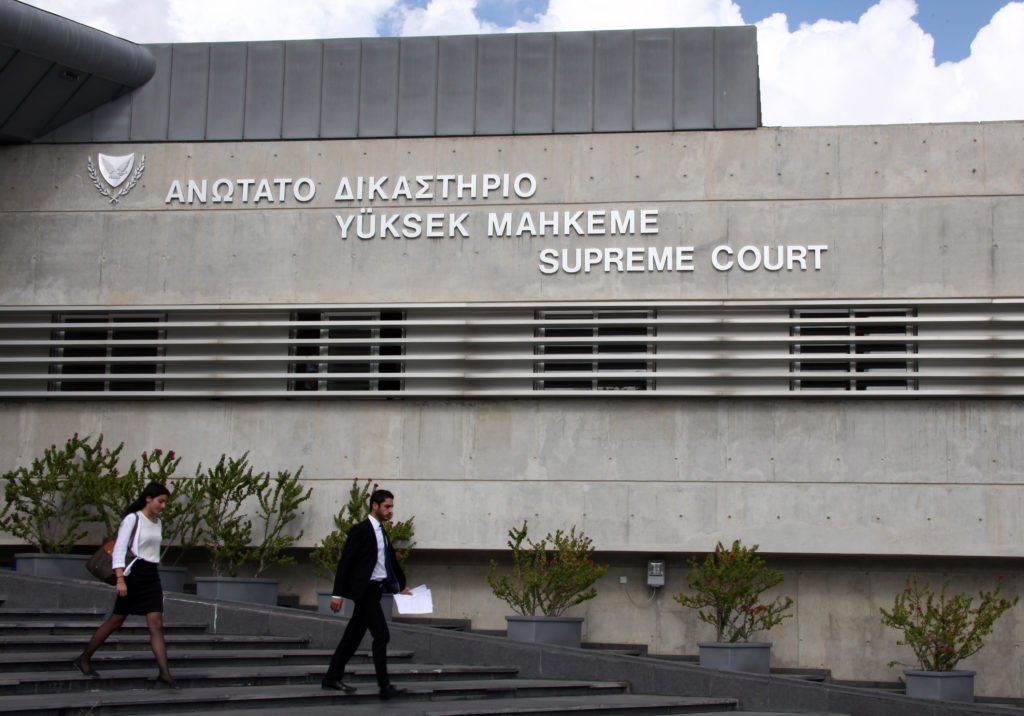
The Supreme Court has found that the state failed to properly investigate the disappearance of two men abducted in 1974, ruling that their families suffered violations of their human rights and awarding €100,000 in compensation on Friday.
Loizos Hadjigeorgiou and his son Giorgos were unarmed residents of the village of Strongylos in Famagusta, who were abducted on August 15, 1974.
The court unanimously overturned a 2017 Nicosia district court ruling that had rejected a lawsuit brought by their family against the state in 2009.
It found violations of Articles 2 and 3 of the European Convention on Human Rights, concerning the right to life and protection from inhuman or degrading treatment.
The Supreme Court said the case required a different approach from other missing persons cases during the Turkish invasion as evidence indicated that the two men had been abducted by Turkish Cypriots who were also citizens of the Republic, rather than as part of a foreign military operation.
That meant the authorities had a duty to carry out a “targeted, specialised and intensive investigation”, including examining whether anyone could face criminal responsibility for the abduction and disappearance.
The court said treating the case simply as another missing persons case from the 1974 hostilities was “insufficient”.
It also rejected the argument that the state’s duty to investigate depended on the discovery of the men’s remains.
The obligation arose from the circumstances of their disappearance, the court said, and did not require their bodies to be found first.
The court further found that there had been information about people allegedly involved in the abduction.
One of those individuals had crossed into the government-controlled areas in 1984, while another had also reportedly been seen there after the invasion.
The judgment said there was no indication that the Cypriot authorities had taken effective action in response to that information.
The court also stressed that the Commission on Missing Persons (CMP) could not replace a state investigation.
Its role is to establish whether missing people are alive or dead and, where possible, recover and identify their remains. It does not investigate criminal responsibility for disappearances.
The Supreme Court said the authorities could not avoid their responsibilities because of the difficult conditions following the invasion, including “generalised unrest and administrative difficulty”.
It also found a violation of Article 3 because the families had spent decades without answers about the fate of their relatives.
The court said the failure to properly investigate had left them in “a constant state of anguish and mental suffering” and stressed that the burden of finding out what happened could not be placed on the families themselves.
The €100,000 compensation was awarded for the relatives’ moral suffering. Loizos Hadjigeorgiou’s wife and Giorgos’ mother received €25,000, while the five other appellants received €15,000 each, along with legal costs.
The family’s lawyer Antonis Georgiou said the ruling clarified the state’s responsibilities where civilians disappear in life threatening circumstances and there is evidence that could allow an investigation into possible crimes.
He said the decision could also have implications for other missing persons cases where there is specific evidence about individuals who may have been involved in criminal acts.





Click here to change your cookie preferences