
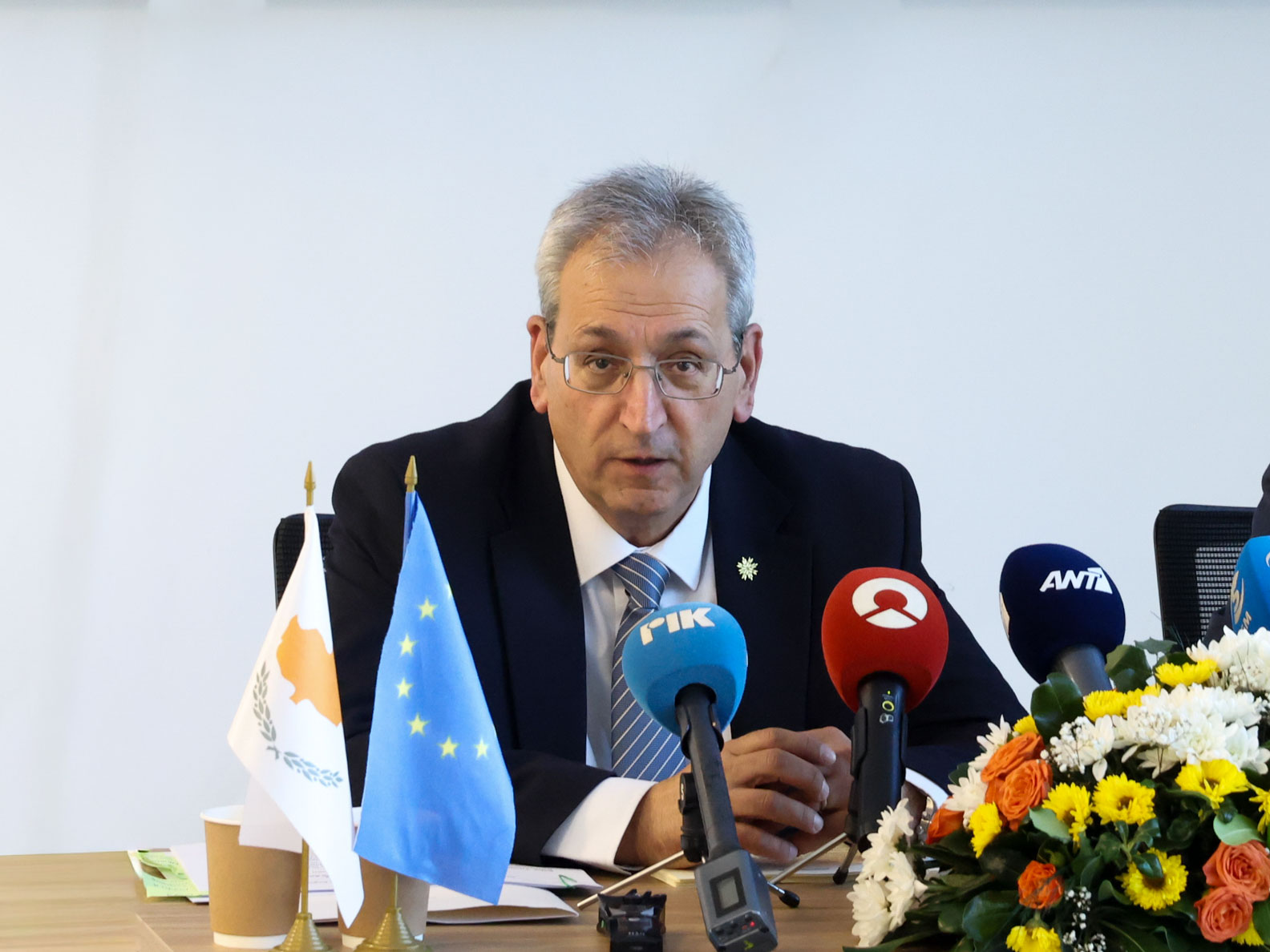
A bill to establish minimum wages is set to be forwarded to the House by the end of the year, Labour Minister Marinos Mousiouttas said on Sunday.
In response to a question by Limassol MP Dimitris Souglis, Mousiouttas said the for harmonization with EU Directive 2022/2041 on adequate minimum wages is “under new legislative review by the Legal Service”.
Referring to the delay in harmonisation, the minister said the procedure took into account a lawsuit before the EU Court of Justice following the appeal of Denmark, which disputed the legal basis of the directive.
“The adoption of the relevant decision of the Court was an important development for the further advancement of the harmonisation process,” it said.
Mousiouttas said the provisions of the Minimum Wages Law of 2022 and the relevant Decree are already being implemented in Cyprus, which, “constitute an important measure for the protection of workers” and are part of the wider framework of policies to promote adequate minimum wages.
In addition, he said a bill on salary transparency is expected to be brought to the Council of Ministers in September, and an action plan to strengthen collective bargaining is expected to be completed by November.
Answering a parliamentary question by Famagusta MP Giorgos Koukoumas, he said the bill for harmonisation with EU Directive 2023/970 on equal pay and pay transparency is expected to be submitted for approval by the Council of Ministers in September and, subsequently, to be submitted to the House of Representatives for voting.
The bill has already been discussed by employers organisations and union and the draft forwarded to the Legal Service for legislative review.
Based on the draft, the first time limit for employers to submit data on the gender pay gap is June 6, 2027.
To promote salary transparency, the ministry has also proceeded with infrastructure projects, including the eValueJobs project, amounting to €52,117, which was completed in June, and the Support Measures for Wage Transparency project, totaling €1.1 million, which will be implemented by December 2027 and includes an information system for employers’ submission of data on the pay gap.
Regarding collective agreements, the minister responded to another question by Souglis, saying that about 40 per cent of employees are covered by collective agreements, including the private and wider public sectors.
He said the Cypriot system of labour relations is based on free collective bargaining and tripartite cooperation, pointing out that “there is no special legislation that makes all sectoral collective agreements universally binding for all employers in a sector”.
Today, collective agreements are applied, among others, in the hotel, construction, furniture and carpentry sectors, vehicle workshops and the mosaic industry, as well as in other sectors.
Corporate collective agreements also exist in banks, ports, fleet management companies, manufacturing and service companies, as well as in organizations in the wider public sector.
At the same time, the ministry is in dialogue with the social partners for the preparation of an action plan aimed at increasing the coverage by collective bargaining, in the context of the voluntary industrial relations system of Cyprus.
The action plan “is expected to be completed by November 2026” and then sent to the European Commission.





Click here to change your cookie preferences