
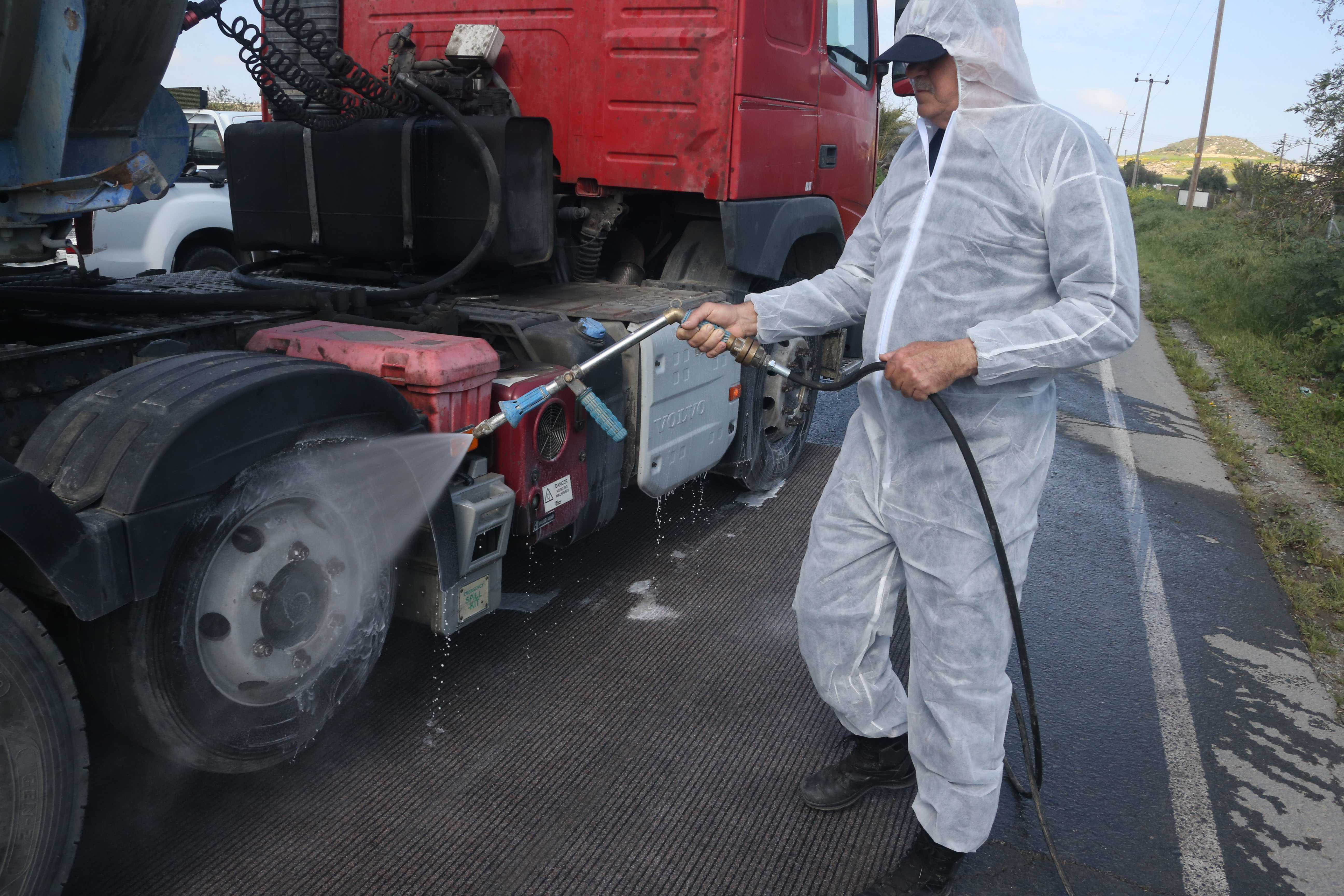
An official on Tuesday blamed certain livestock farmers for any delays in restarting business in areas affected by foot-and-mouth disease (FMD) due to their failure to properly disinfect their premises.
“The reboot of affected farmers depends on them,” veterinary services director Christodoulos Pipis said.
He was speaking at the House agriculture committee, discussing the ‘day after’ for Cyprus’ livestock farming sector, devastated by the highly contagious disease.
Amid the measures to contain the spread of FMD, authorities have culled 52,632 sheep and goats, 24,483 pigs and 3,018 cattle.
This corresponds to 11.5 per cent of the sheep and goat population, 7.8 per cent of pigs, and 3.5 per cent of cattle.
To date, a total of 121 farms have tested positive for FMD.
In parliament, Pipis said that there are certain livestock farmers who – because they intend to leave the business – have not carried out the mandated disinfections of their units.
As a result, they are preventing other businesses in close proximity who are keen to start back up.
If disinfection is done piecemeal, Pipis warned, the risk of re-infection increases.
The veterinary services can only slap fines on those refusing to disinfect, or initiate criminal proceedings against them. But the latter action could take years to resolve in the courts.
A representative of the Union of Municipalities suggested that authorities proceed with disinfections of their own volition, and then bill the farm owners.
Weighing in, permanent secretary of the agriculture ministry Andreas Gregoriou said only a handful of farmers are not cooperating. They would not prevent livestock farming from rebooting overall, he asserted.
Gregoriou said also that on Friday stakeholders would come together at the presidential palace to discuss the findings of a scientific report describing how livestock farming can be reconstituted.
The dossier was compiled by a scientific committee headed by Stavros Malas.
According to media reports, the dossier lays out far-reaching changes to livestock farming. One key recommendation concerns siting – such as that farming units need to be spaced out at least 300 metres.
The dossier found that 84 of the 121 infected units were in very close proximity to each other – contributing to the rapid spread of FMD.
The government will have to grapple with major compensation to farmers who want out.
Under a roadmap devised by the veterinary services, infected farming units wishing to restart operations would be able to do so between November and December – provided no new cases of FMD are detected in the interim.





Click here to change your cookie preferences