
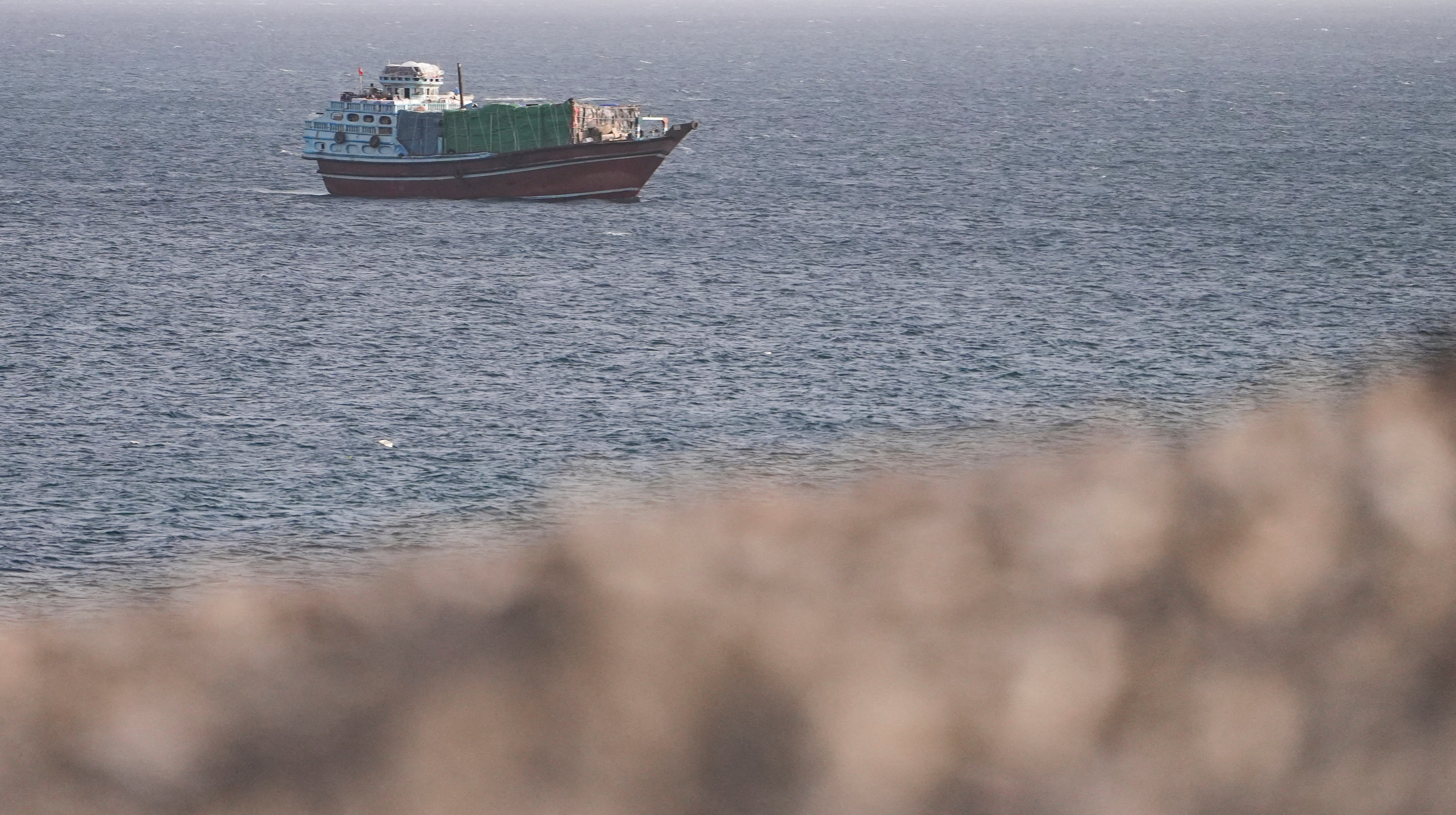
The Middle East’s oil map is being rewritten at sea, as attacks around the Strait of Hormuz and Red Sea push exporters towards pipelines, alternative ports and longer tanker routes that were once treated largely as back-up options.
The problem is that some of those escape routes are now coming under pressure too.
Saudi Arabia’s East-West oil pipeline, which carries crude across the kingdom to the Red Sea port of Yanbu and allows exports to avoid Hormuz, was temporarily shut following a drone attack over the weekend, Reuters reported on Monday. The disruption came as shipping through Hormuz remained a fraction of normal levels.
That has brought into sharper focus a change which has been building for months. Oil producers are no longer looking simply for the cheapest way to get crude to market. Increasingly, they need more than one way out.
The scale of the problem can be seen in the latest EIA figures. Oil flows through the Strait of Hormuz averaged just 4.9 million barrels per day in the second quarter of 2026, down from 21.6 million barrels per day in the final quarter of 2025, before the Middle East conflict began.
Hormuz has long been one of the world’s most important energy passages. In the first half of 2025, around 20.9 million barrels of oil a day moved through the strait, equivalent to roughly 20 per cent of global petroleum liquids consumption and about a quarter of oil traded by sea.
The collapse in traffic during 2026 has therefore forced Gulf producers to make far greater use of routes that bypass it.
For the United Arab Emirates, that means Fujairah. The UAE’s 1.8 million-barrel-a-day Abu Dhabi Crude Oil Pipeline carries crude from fields inside the Gulf to the port of Fujairah, which sits on the Gulf of Oman outside Hormuz. A second pipeline with capacity of 1.5 million barrels per day is planned for 2027.
Saudi Arabia has an even larger alternative. Its East-West pipeline carries crude from the kingdom’s eastern production centres across the Arabian Peninsula to Yanbu on the Red Sea.
The pipeline has capacity of around 7 million barrels per day, of which about 5 million barrels can be used for exports, according to the US Energy Information Administration. Saudi Arabia has relied increasingly on the route since disruption in Hormuz intensified.
However, moving oil west solves only part of the problem.
Once crude reaches Yanbu, it still needs access to international markets. For cargoes heading towards Europe, that brings the Red Sea, Bab el-Mandeb and ultimately Suez back into the picture, precisely the waterways which have themselves been hit by repeated security problems.
The International Maritime Organisation (IMO) has continued to warn shipowners over attacks in the region. On August 12, it confirmed fatalities after the cargo ship Tihamah was struck off Yemen, while renewed attacks in July prompted IMO Secretary-General Arsenio Dominguez to urge operators to carry out detailed risk assessments before sending crews through the area.
The result is an awkward geography for energy exporters. Avoiding Hormuz can push oil towards the Red Sea, but instability there can send ships back towards the much longer route around the Cape of Good Hope.
That detour costs more in fuel and keeps vessels at sea for longer. For tanker owners, however, longer voyages can also tighten the supply of available ships, as each vessel is tied up for more days completing the same trade.
The shift is already visible in the numbers. EIA estimates show oil movements around the Cape of Good Hope at 9.4 million barrels per day in the second quarter of 2026, while flows through the Suez Canal and Egypt’s SUMED pipeline stood at 5.8 million barrels per day.
SUMED has become particularly important because it offers another way of moving crude towards the Mediterranean. The pipeline links Ain Sukhna on the Red Sea with Sidi Kerir on Egypt’s Mediterranean coast and can carry around 2.5 million barrels per day.
But pipelines do not remove tankers from the equation.
Oil arriving at Fujairah still needs ships to carry it onwards. Crude reaching Yanbu has to move by sea towards Europe or Asia. Oil crossing Egypt through SUMED needs another tanker once it reaches the Mediterranean.
What changes is the starting point of the voyage, and, increasingly, its length.
For shipping companies, this means route planning has become inseparable from war-risk insurance, crew safety, security assessments and the possibility that yesterday’s alternative may become tomorrow’s danger zone.
That is particularly relevant to Cyprus, whose flag and large shipmanagement sector leave it directly exposed to changes in international shipping conditions.
The danger became tangible in July when the Cyprus-flagged GFS Galaxy was struck while passing through Hormuz, badly damaging its engine room and forcing the crew to abandon the ship.
Shipping Deputy Minister Marina Hadjimanolis has also warned that the industry is facing more than a temporary interruption to normal trading patterns.
Speaking in Limassol in June, she described current developments as a “turning point for global shipping”, pointing specifically to tensions in the Gulf and Hormuz and the need to protect freedom of navigation and seafarers.
The human cost remains the most serious part of the crisis. By late August, the IMO had verified at least 70 attacks on international shipping since the Middle East conflict began on February 28, with 19 seafarers killed. Up to 400 vessels carrying around 6,000 crew members were still unable to leave the Persian Gulf safely.
And the risks do not stop there. Somali piracy has returned to the Gulf of Aden and western Indian Ocean, adding another layer of security concerns along routes linking Asia, the Middle East and Europe. The IMO recorded 24 attempted or actual piracy and armed robbery incidents in the Red Sea and Gulf of Aden region in just three months earlier this year.
For oil producers, the lesson is increasingly difficult to ignore. A pipeline can bypass a strait, a tanker can sail around Africa and crude can be shifted from one export terminal to another, but there is no single route free from political or security risk. For tanker markets, that could mean more miles, more complicated voyages and greater demand for ships.
For crews, it means something far less abstract. The map may be changing, but many of the new routes still run uncomfortably close to the world’s conflicts.



Click here to change your cookie preferences