
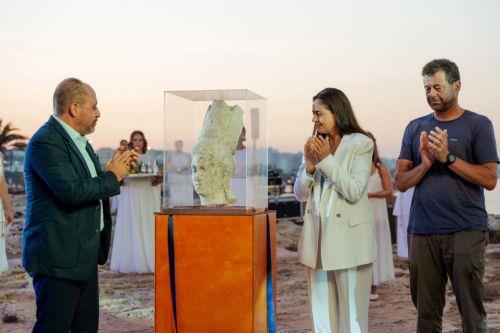
A replica of the ancient Aphrodite of Lefkolla has been officially welcomed to Paralimni, giving the area an opportunity to reconnect with its ancient roots, Deputy Minister of Culture Clea Papaellinas said.
Speaking at an official ceremony in Protaras on Sunday, Papaellinas described the event as “an important moment, of symbolic value and substantial significance for our country”.
She stressed, however, that what had arrived in Paralimni was a replica. The original marble head, known in archaeology as the Aphrodite of Lefkolla, remains at the Neues Museum in Berlin, where it has been held for more than a century and a half.
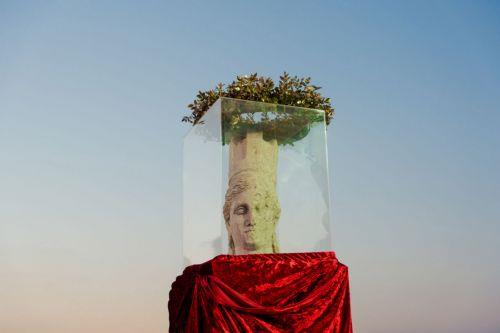
“We are not celebrating a return today in the narrow sense of the word,” Papaellinas said. “We are, however, celebrating something equally substantial: the return of the knowledge, memory and identity of a place to the place itself.”
The replica was brought to the area following research by Paralimni-Dherynia municipality and cooperation with the Neues Museum and Humboldt University of Berlin.
Papaellinas said the importance of the initiative went beyond the physical object, allowing residents to see an archaeological find originating from their own area.
“It is a reminder that ancient Lefkolla is not an abstract reference in history books, but part of the land on which Paralimni is built today,” she said.
According to Papaellinas, the head also provides evidence about the significance of the Paralimni area in antiquity.
The goddess is depicted wearing a turreted crown, a feature also found on coins issued by kings of ancient Salamis.
“This is not accidental,” she said, adding that Lefkolla, in the area of present-day Paralimni, was not on the margins of the ancient Cypriot world but formed a recognisable and significant part of the territory of the kingdom of Salamis.
The area was part of a broader network of worship and political authority extending across the eastern part of Cyprus, she added.
“The local history of Paralimni, in other words, is not a small, isolated history. It is an integral part of the wider history of Cyprus.”
Click here to change your cookie preferences