
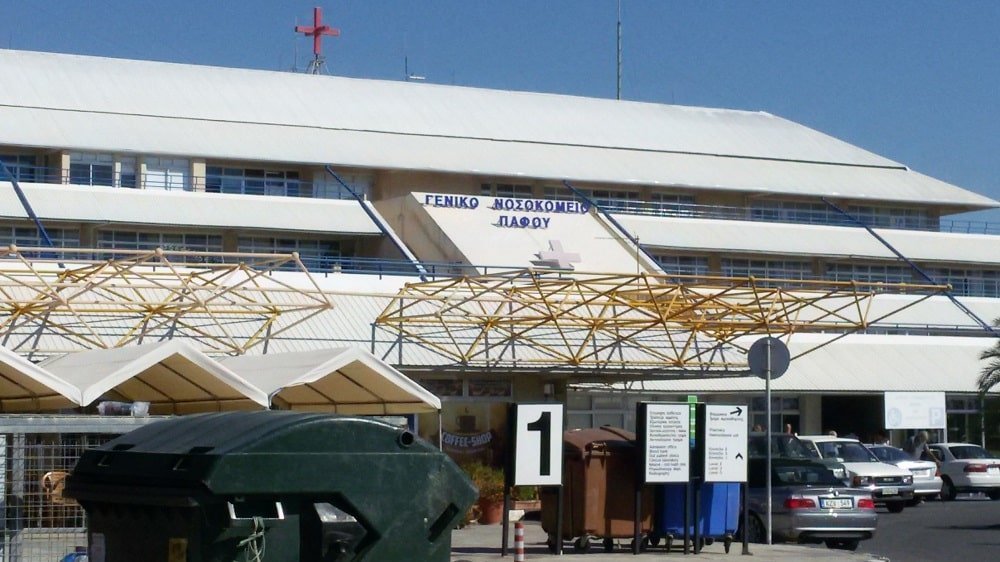
A body remained refrigerated for 1,040 days at the Paphos general hospital morgue instead of the prescribed 30 days, an Audit Office report into the facility made public on Wednesday said.
Since 2023, complaints have been made about rancid decomposition odours, the accumulation of dead bodies and poor hygiene, while no corrective measures had been taken.
“Such conditions are not just about the due respect to the dead and their families. They touch upon hygiene, work environment safety and, in a broader sense, the protection of public health,” the Audit Office said.
The report was compiled after an unannounced inspection in May 2026, following press reports that the refrigerator had broken down and the morgue’s operation had been temporarily suspended by state health services Okypy.
The Audit Office said the inspectors had not been able to enter the morgue during the visit due to ongoing disinfection procedures, and that the findings were based on interviews with staff from the hospital, the health ministry, Okypy, the electromechanical services department and correspondence.
“The evidence examined indicated that bodies had remained in the refrigerator for extended periods. Thus, it is determined that international standards on storing bodies were not being implemented at the Paphos general hospital,” the report said.
It added that this could lead to the wrong identification of bodies and difficulties in finding the bodies when the need arose.
Inadequate maintenance of critical equipment
The Audit Office said that the correspondence indicated that Okypy had been ignoring the fact that the operation of morgues fell under its responsibilities and that there was inadequate maintenance of critical equipment.
“From the evidence given to us, we were not able to confirm that the maintenance of the refrigerator equipment was being made as often as provided for in the contract,” it said.
The inspectors also found that there was no warning system in place for faults and that any problems were made evident by bad smells in the hospital.
Furthermore, there was no alternative place to store bodies in the event of a fault and the morgue was understaffed.
The Audit Office recommended following international standards for storing bodies, including automated monitoring systems, fault warning systems and alternative storage facilities.
It also called for an agreement between the health ministry and Okypy to clearly set out the responsibilities for running the morgue.
The report includes a response from Okypy that on the day of the fault, the morgue was being used for keeping bodies in refrigerators and freezers. It clarified that the refrigerator had broken down but the freezer was still working, and that no postmortems were being carried out.
It added that bodies can be refrigerated for up to 30 days. Beyond that time, they should be transferred to freezers.
Okypy added that the maintenance coordinator for the morgue was the electromechanical services department, under the transport ministry.





Click here to change your cookie preferences