
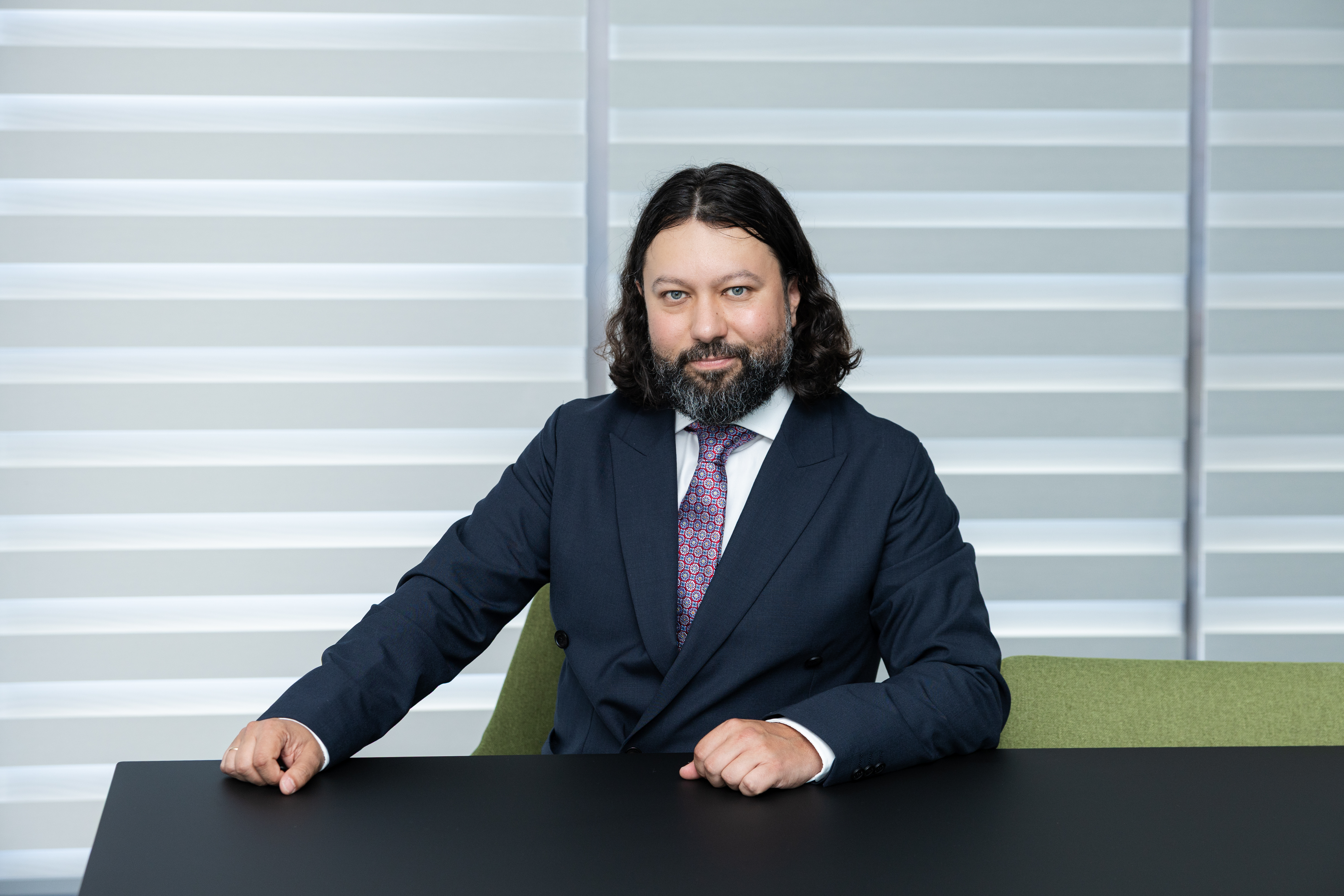
By Bulat Latypov, Chief Communications Officer, Freedom24
I should say plainly, before anything else: I work for Freedom24, whose parent company, Freedom Holding Corp, is run by Timur Turlov — one of three candidates on the ballot when FIDE delegates choose their next president in Samarkand on 26 September. So read what follows knowing that. I’m not a neutral observer of this election, and I won’t pretend to be one. What I want to argue for here is a principle, not a ticket.
The 46th Chess Olympiad opened in Samarkand this week, but the contest that will actually reshape the sport happens off the board. On 26 September, delegates from FIDE’s member federations choose between three tickets: Jan Henric Buettner and Malcolm Pein, Wadim Rosenstein and Gordon Tang, and Timur Turlov and Viswanathan Anand. Each federation gets one vote, and whichever ticket wins will run an organization that looks very different from the one that existed even a decade ago.
That difference is the real story. Chess has outgrown the infrastructure built to govern it. Sponsorship money that used to come from a handful of individual patrons now comes through corporate partners with their own reporting obligations. School programmes that used to be a teacher’s side project now involve education ministries and measurable enrolment numbers — Kazakhstan alone reports over 60,000 students and 1,500 schools in its chess curriculum. National federations that used to run on volunteers now negotiate broadcast rights, government funding and platform partnerships. None of this is bad. But it raises the bar for what a federation, at every level, needs to be able to do: keep clean books, explain how decisions get made, and be clear about where a leader’s personal opinion ends and the institution’s position begins.
One federation, one vote is a democratic principle worth protecting. But political equality and operational equality are not the same thing. Every federation has the same constitutional status, yet some have full-time staff, legal counsel, data infrastructure and decades of institutional experience, while others operate with a handful of volunteers and no dedicated budget. A federation cannot make full use of its formal rights if it lacks the administrative capacity to participate effectively in the international system. This is not a distant problem — it applies directly to smaller European federations, which face precisely this gap between formal standing and practical capability.
That last point became concrete in Europe this week. On 16 September, Zurab Azmaiparashvili, recently re-elected president of the European Chess Union, said publicly that he personally supports Rosenstein’s candidacy. He was careful to say it was his own view, not a decision by the ECU or its member federations. A day later, the ECU issued its own statement: no institutional endorsement had been made, and the union remained neutral in its service to all 54 members.
It would be easy to read that exchange as an awkward moment for the ECU. I’d argue it’s closer to the opposite. An organization that lets a personal opinion sit unchallenged is a bigger problem than one that corrects the record within 24 hours. The ECU had already put itself in a position to do that — it adopted a code of conduct earlier this year, built on FIDE’s own electoral principles, specifically to keep campaigning fair and voters free from pressure. The clarification wasn’t a crisis; it was that code doing its job.
The reason this matters beyond one statement is that the same test is coming for a lot of federations with far less capacity to pass it than the ECU does. A well-resourced continental body can issue a same-day clarification and move on. A smaller national federation often doesn’t have a communications team, a legal reviewer or an established code of conduct to fall back on if a president’s personal statement gets mistaken for policy. Those federations have the most to lose if the line between “what our president thinks” and “what our federation does” is left undefined, because they’re the least able to survive being on the wrong side of a dispute they never chose to have.
There is another measure of institutional maturity: continuity. A serious federation should be able to change its leadership without having to reinvent its relationships, systems and priorities every electoral cycle. Projects should belong to institutions, not personalities. Partnerships should be documented. Data should remain accessible. Development programmes should have measurable objectives that survive a change of office. Too often in sports governance, a new administration arrives and institutional memory disappears along with the outgoing team. That is not a governance failure of any one person — it is a structural problem that the chess world has yet to solve systematically.
The future of chess sponsorship should also be about architecture, not personalities. A federation should be able to tell its members what a partnership is designed to achieve, over what period, under what responsibilities and with what measurable outcomes. Sponsors need visibility and value; federations need independence and predictability. A mature commercial model should provide both.
That’s the standard worth applying to everyone involved in this election, including companies like ours. Freedom has been the Cyprus Chess Federation’s general partner since 2023, and that partnership has helped bring events like the Women’s Grand Prix and this year’s Candidates Tournament to the island. I think that’s a good model for what sponsorship can do — but I’d rather it be judged, not taken on faith, against the same standard I’m describing here: is the money accountable to clear terms, and does the federation stay in control of its own decisions? Every corporate partner in chess, ourselves included, should be comfortable being asked that question directly.
None of this tells member federations which ticket to vote for on 26 September, and I won’t pretend my own view on that is neutral. What I’d ask delegates to weigh, regardless of which ticket they choose, is which candidates have actually built the habit of drawing that line — in their own federations, before they’re asking for anyone else’s vote. The Olympiad will produce medals. The election will produce a president. The more useful outcome would be an organization that’s harder to blur into any one person’s opinion, no matter who’s holding the pen.


Click here to change your cookie preferences