
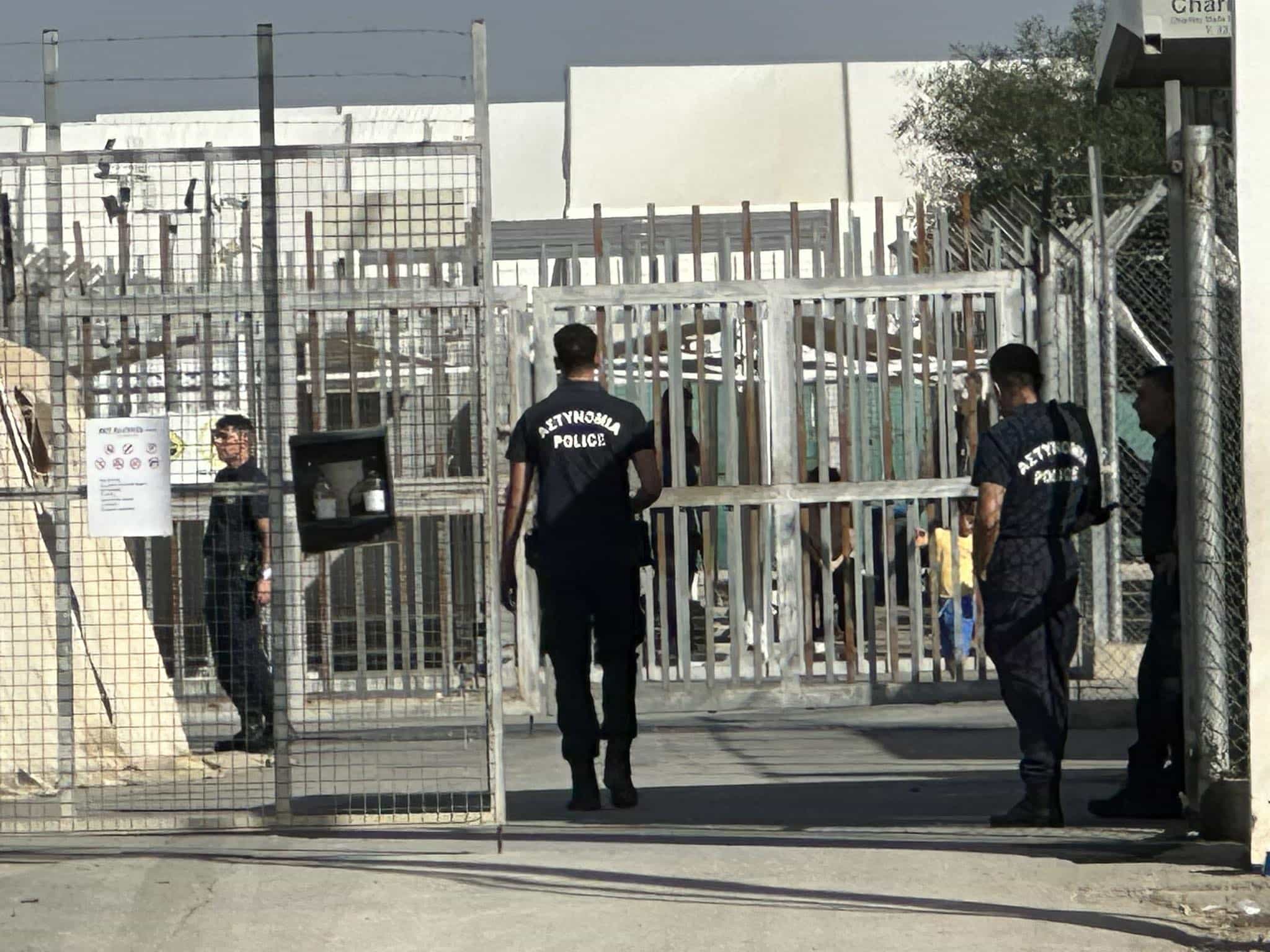
Cyprus recorded the second-highest number of asylum applications relative to its population among EU+ countries in the first half of 2026, despite an overall 17 per cent decline in applications for international protection across Europe, according to a report published by the European Union Agency for Asylum (EUAA) on Thursday.
Cyprus recorded 1,732 applications per million inhabitants between January and June, more than twice the EU+ average of 710 applications per million.
Only Greece recorded a higher rate, with 2,254 applications per million inhabitants, equivalent to approximately one application for every 444 people.
Ireland followed Cyprus with 1,132 applications per million inhabitants, Italy with 1,127, Spain with 1,104, Switzerland with 1,067 and Belgium with 1,028.
The EUAA said Cyprus stood out even further when asylum applications were considered alongside other forms of protection.
At the end of June, Cyprus was hosting 27 beneficiaries of temporary protection per 1,000 inhabitants, placing it among countries with particularly high numbers relative to their populations.
The agency described Cyprus as an “extreme case”, as it ranked near the top on both measures.
“This underlines the importance of considering asylum applications together with other forms of protection when comparing pressures across countries,” the report said.
The comparison is particularly significant because countries with relatively few asylum applications may nevertheless be hosting large populations under other forms of protection.
Poland, for example, recorded just 87 asylum applications per million inhabitants, but hosted 26 temporary protection beneficiaries per 1,000 people. Slovakia recorded only 12 asylum applications per million but hosted 27 temporary protection beneficiaries per 1,000.
Across the EU+, comprising the 27 EU member states, Norway and Switzerland, approximately 332,000 applications for international protection were lodged between January and June.
This represented a 17 per cent decrease compared with the corresponding period in 2025 and was the lowest first-half total since 2021. Excluding the pandemic-affected years of 2020 and 2021, it was the lowest first-half figure since 2019.
The fall, however, was not uniform across nationalities. The largest decreases were among Venezuelans and Syrians, followed by Colombians, Ukrainians and Turkish nationals. These outweighed increases among Sudanese, Bangladeshis, Haitians and Somalis.
Afghans lodged the highest number of applications in the first six months of the year, at around 39,000, despite a seven per cent decrease compared with the same period in 2025. They were followed by Venezuelans with around 33,000 applications and Bangladeshis with 20,000, while Egyptians and Turks lodged around 12,000 each.
Sudanese and Syrians accounted for around 11,000 applications each.
Some of the sharpest changes were recorded among Syrians, whose applications fell by 57 per cent compared with the first half of 2025 and by 85 per cent compared with the same period in 2024, reaching their lowest January-to-June level on record.
The EUAA linked the sharp decline in Syrian applications to developments following the fall of the Assad government in December 2024 and subsequent large-scale returns.
It cautioned, however, that the scale of returns should not be interpreted as meaning conditions in Syria had become uniformly safe or that the displacement crisis had been resolved. The report pointed to continuing insecurity, damaged infrastructure, limited livelihoods and substantial humanitarian needs.
At the end of June, around 770,000 asylum cases were awaiting a first-instance decision across the EU+, eight per cent fewer than a year earlier.
However, the EUAA said the remaining caseload was becoming older, with around 565,000 cases, or 73 per cent, pending for more than six months.



Click here to change your cookie preferences