
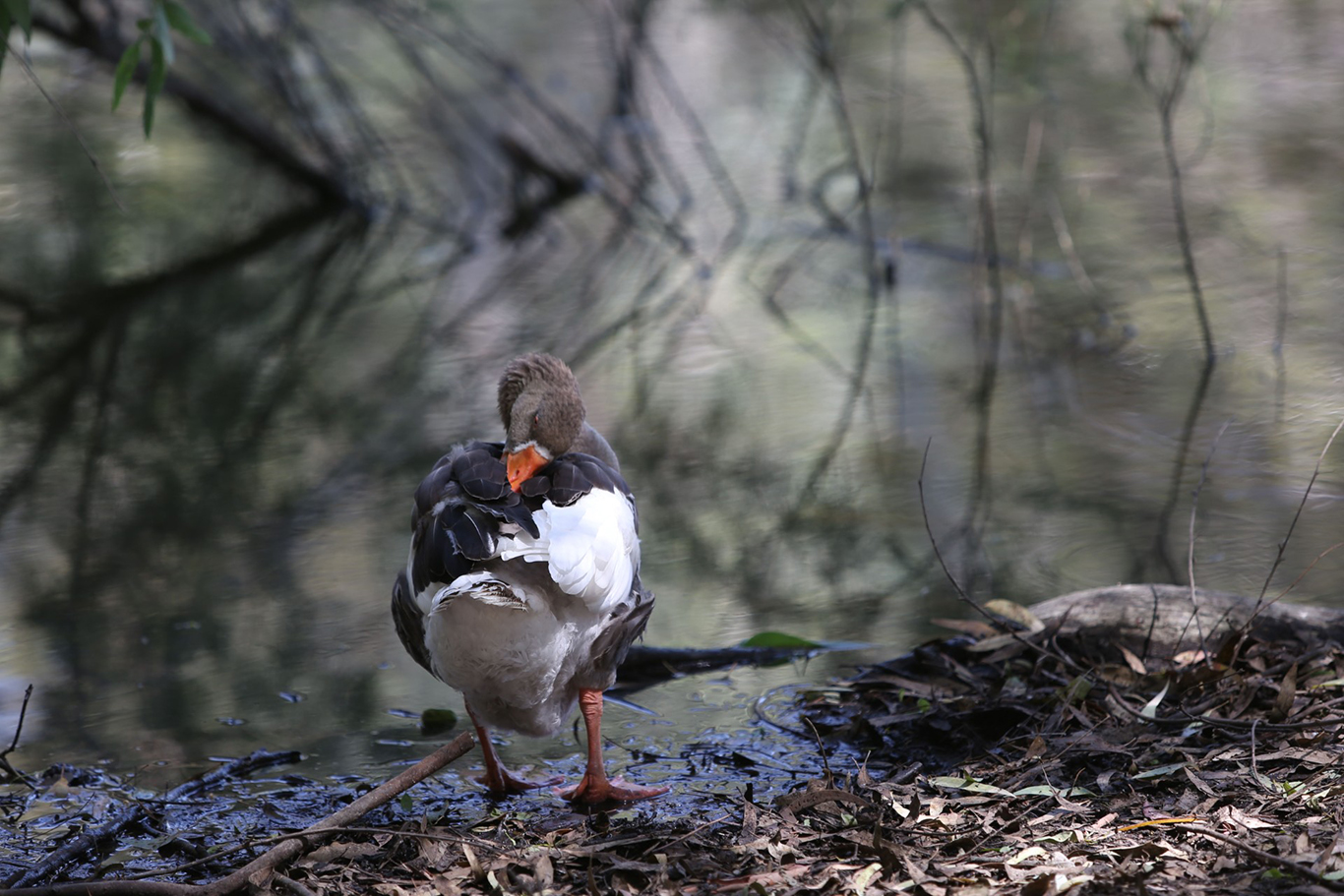
There have not been any recorded incidents of human-to-human transmission of the virus that was detected in birds at Athalassa park earlier this week, infectious disease expert Petros Karayiannis said on Wednesday.
“There is no reason for concern,” he told the Cyprus News Agency.
Regarding the possibility of the virus mutating if it infected humans, Karagiannis said that “no such thing has been observed”.
“We did not see any change for the worse, that is, making it more easily transmitted to humans and from human to human, and the latter is not observed at all,” he said, adding that the virus was difficult to mutate.
Karayiannis said that humans could be considered as so-called “dead-end hosts”, emphasising that there has been no further transmission and expressing the hope that this would continue to be the case.
“There is a risk to humans, of course, but it is not so much from wild birds that transmission occurs, but from domestic birds,” he said.
He reiterated that the risk from the two specific cases at Athalassa park in Nicosia remained “very limited”, adding that transmission to humans mainly concerned people with close contact with domestic birds such as on poultry farms.
“It usually affects people who work there and do not wear the appropriate protective clothing, gloves, masks, protective glasses and shoe covers to protect their shoes,” he said.
When asked about the transmission of the virus to other birds, he said that this only occurred if they came into contact with the secretions of an infected bird.
“If it is infected and sheds secretions, the poultry can become infected that way,” he said.
Regarding the second suspected case involving a duck at Athalassa park, which was made public on Wednesday, he said that the birds were in an open area, suggesting that the presence of the virus could be linked to the movement of wild birds.
“Wild birds, during their migration to warmer areas, stop somewhere to drink water or eat. By extension, they may leave the virus either through their faeces or through their secretions at that particular point, and that is how these ducks may become infected,” he said.
Karayiannis said that as of now, it is not known whether the virus is already circulating more widely in Cyprus.
“This will be seen if we suddenly start seeing more dead birds somewhere else,” he said.
He suggested avoiding the lake for “a few more days” and emphasised that visitors were not facing any danger.
“They are not in danger, because it is an open space,” he said.



Click here to change your cookie preferences