
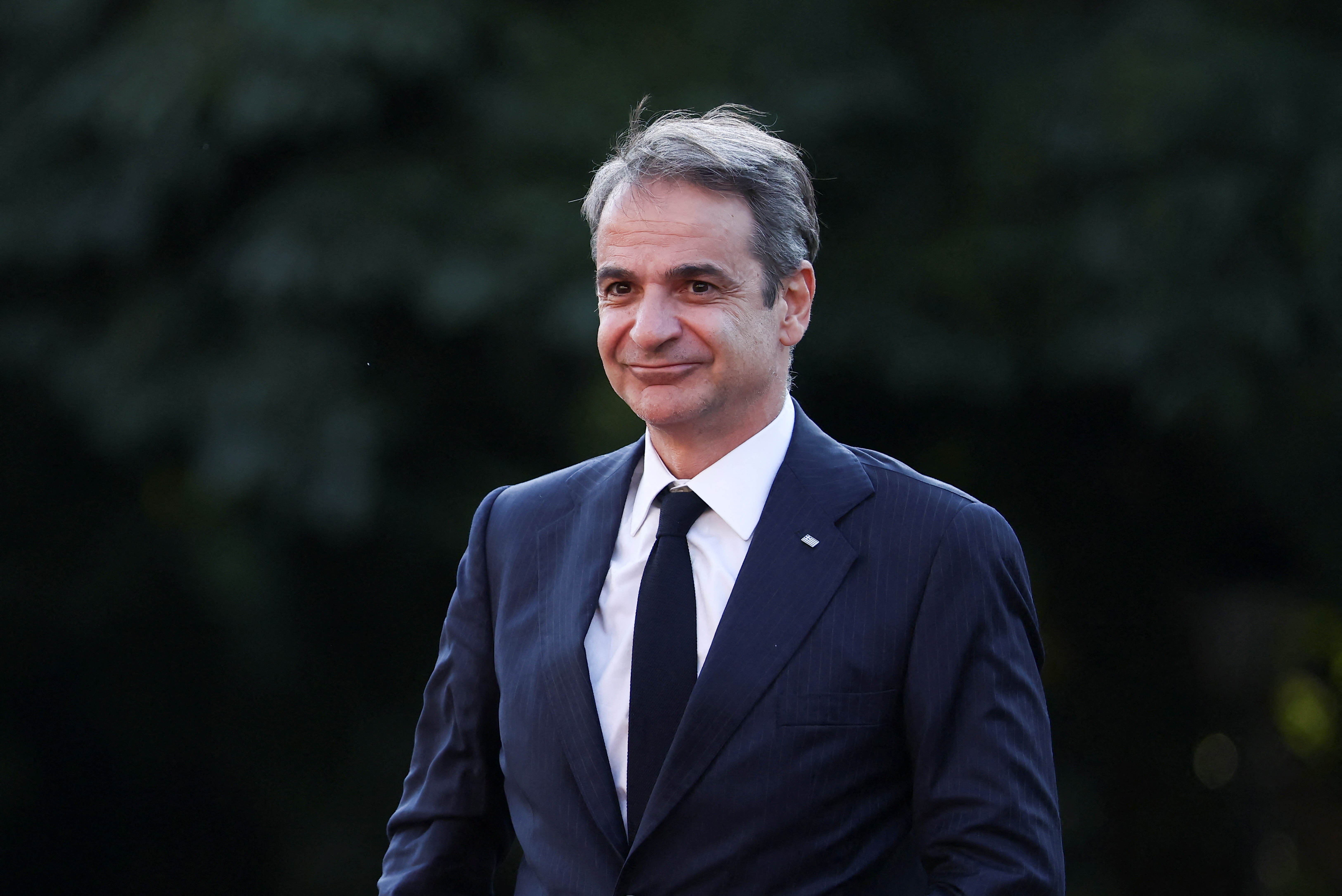
The Great Sea Interconnector project is “no longer merely a Greek and Cypriot project” but a “European project”, Greek Prime Minister Kyriakos Mitsotakis said on Friday, of the cable which, if completed, will link the energy grids of Cyprus, Greece, and Israel.
“It was European from the very start, as I would remind you that it received over €600 million in European subsidies, and now of course, with the participation of France and the French investment firm Meridiam as the project’s majority shareholder, you can see that this project is also of political and economic interest to the friendly nation, France,” he told television channel Skai.
He also made reference to United States Secretary of State Marco Rubio’s comments on the matter a day prior, saying that “Rubio also stated clearly that the United States supports these interconnection projects”.
“They support them, I believe, for the right reasons. Specifically, because the project could eventually extend as far as Israel, something which is obviously of particular interest to the United States,” he said.
Rubio had on Thursday said that the US intends to undertake “diplomatic efforts” to ensure that progress is made towards the construction of the Great Sea Interconnector, with these efforts set to be geared towards expressing “how important this is to us and why it is important” to “all parties”.
“I hope we can find solutions,” he said, before adding that “some of these issues are obviously not best resolved through the media”, and that “it is best to do this privately and quietly in the diplomatic arena”.
Asked about the prospect of the US mediating between the states involved in the project and Turkey, he said that “I always avoid discussing sensitive issues in the media because it makes it difficult to resolve them”.
“That being said, we are in constant contact with Turkey, which is a Nato member and has dealt with many other issues, for example hosting talks between Russia and Ukraine in the past. Our relationship with Turkey is a relationship in which we have invested, and perhaps that investment will help us in terms of these discussions,” he said.
‘The waters in the Aegean have a light breeze’
Mitsotakis on Friday stressed that “Greece has a strategic alliance with the United States, which is reflected in the agreements we have signed”.
“Greece is a member of the European Union and a member of Nato. Greece, at the same time … is a country which has built a very strong network of relations with the Arab world, with India, and with Israel,” he said.
Regarding Greece’s immediate neighbourhood, he said that “the waters in the Aegean have a light breeze, let’s say, a slight ripple”, but that “that is not unusual either”.
“Just as the weather changes and we have periods of calm and sometimes, we have gales, the same thing happens in meetings with the Turkish president,” he said.
His comments come with it expected that in the coming weeks, the Greek government will issue a navtex, a message used to transmit information to seaborne vessels, to warn sailors of plans to conduct seabed surveys for the laying of cables between Cyprus and Crete as part of the interconnector project.
Navtex expected to be issued for disputed waters in Mediterranean
That navtex is expected to concern planned surveys in disputed waters which are claimed by both Greece and Turkey, and these conflicting claims have impeded attempts to carry out seabed surveys between Cyprus and Greece before.
In 2024, Turkish naval vessels were deployed after the Italian research vessel the Ievoli Reulme strayed into what Turkey believes to be its own waters.The naval vessels escorted the research ship away from Turkey, but not before Greece, too, dispatched a number of its own naval vessels, including the frigates the Nikiforos Fokas and the Aittitos, to the area.
The dispute about the ownership of the waters stems from the question of whether islands generate their own exclusive economic zone (EEZ) or not.
Greece and Cyprus, citing the United Nations convention on the law of the sea (Unclos), state that they do, while Turkey, which is not a signatory to Unclos, states they do not.
As such, according to Turkey’s position, beyond the 12 nautical miles of territorial waters to which Turkey believes both islands are entitled, the sea between Cyprus and Crete is Turkish.
By contrast, the position held by Greece and by the Republic of Cyprus is that, given that islands generate a full EEZ, the EEZs of Greece and Cyprus border one another south of Kastellorizo, Greece’s easternmost inhabited island.




Click here to change your cookie preferences