
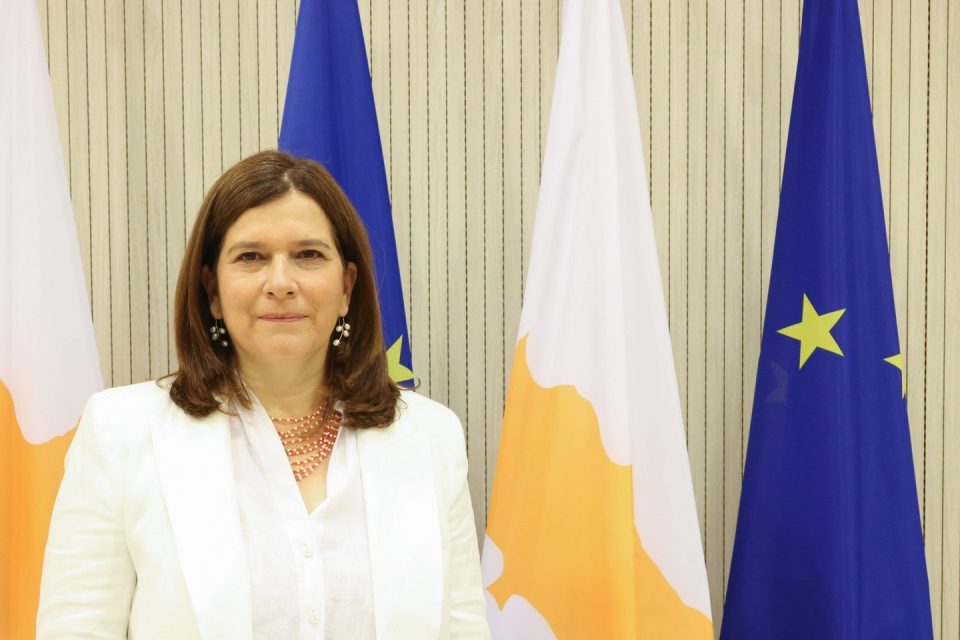
Key pillars of a European policy seeking to connect the past with the future, culture with innovation, and identity with security will feature as Cyprus prepares to take over the presidency of the EU council, deputy minister of culture Vasiliki Kassianidou said on Monday.
Highlighting culture as the “connecting link” between member states, Kassianidou said the new European programme Agora EU, with a budget of €8.5 billion, is not merely a funding tool but a strategic investment in Europe’s creativity and unity.
She said this new programme is one of the most important matters Cyprus will handle. Agora EU replaces and upgrades the Creative Europe programme, incorporating the CERV programme, which concerns democracy and other principles.
She also called for European cooperation over the “open wounds of history,” such as the illicit trafficking of cultural goods – an issue that has particularly concerned Cyprus for decades.
The island will also oversee the Commission’s new motto: Europe for Culture, Culture for Europe. In this way, Kassianidou said a new emphasis is being placed on culture, which is brought to the forefront as “the connecting link that unites European countries” through shared values and roots.
Regarding the illegal sale of cultural items, the deputy minister stressed this is “one of the great wounds of the Turkish invasion, as 51 years later we are still trying to repatriate objects.”
She referred to the recent opening of the Byzantine Museum in Cyprus, where “all the mosaics from Kanakaria and other wall paintings, which had been detached from churches and sold in pieces, including the heads of saints” are exhibited.
She added that this issue is “very topical now, because Ukraine is facing similar problems due to the Russian invasion,” noting that “Cyprus’ experience shows that the destruction of cultural heritage is not easily resolved, but one must fight or manage the problem for a very long period of time.”
Concerning Artificial Intelligence (AI), Kassianidou expressed her concern about how it might affect the creative industries.
“We must see how it will be used as a tool and not as something that comes to replace actors, creators,” she stressed, estimating that some form of “legislation from the European Union, and not only from each member state separately, which will protect the rights of creators” is essential.
At the same time, she expressed concern about how restrictive such a framework might become: “The worry is that the European Union should not fall behind, and on the other hand that what will be introduced should not be so restrictive that it becomes a brake for Europeans, at a time when other countries such as the US, China, or others do not have such restrictions, especially regarding copyright.”



Click here to change your cookie preferences