
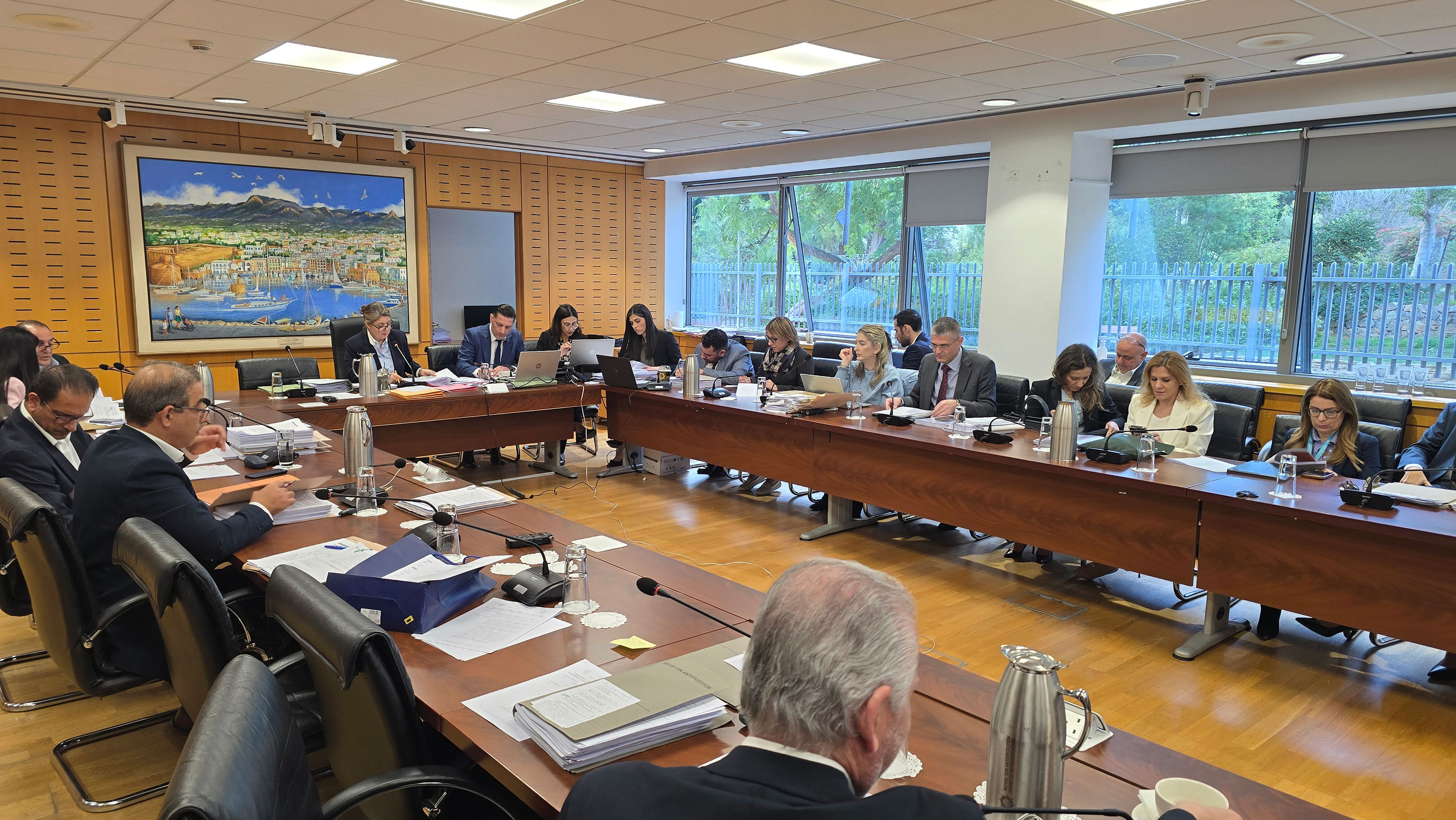
Major disagreements came to the fore in parliament on Monday, as MPs and interest groups continued debating six government bills comprising the proposed tax reform.
One point of contention relates to the government plan to raise the tax-free threshold from €19,500 to €20,500. Critics say this is nowhere near enough, as it doesn’t factor in the effects of inflation – considering the tax regime was last revised some 20 years ago.
Pasydy trade union, representing public-sector workers, proposed raising the tax-free threshold by far more than €1,000. Both Pasydy and the PEO union also want to tinker with the tax brackets.
Another issue raised by Pasydy is an apparent discrepancy in tax relief between private individuals and corporations.
A union rep said that if an individual has an income of €28,000, under the government plan they would get a tax benefit of just €200; whereas a company posting the same income would benefit to the tune of €2,275.
Tax Commissioner Sotiris Markides pushed back at the calls for raising the tax-free threshold beyond what the government blueprint provides.
For each €1,000 increase in the threshold, he said, the state loses some €30 million in tax revenue.
Meanwhile the Institute of Certified Public Accountants, the bar association and the Cyprus International Businesses Association (CIBA) all voiced opposition to plans to raise corporate tax to 15 per cent from the current 12.5 per cent.
A representative of the accountants described the change in the corporate tax as “making up half of the tax reform” – meaning authorities should tread more carefully.
He cited a University of Cyprus study showing that of the 250,000 companies registered in Cyprus, only 31,000 filed declarations with taxable profit – the rest declared losses.
As much as half of tax revenue from corporations derives from only 280 companies, while 30 per cent of tax revenue comes from 30 companies, the representative said.
And of these 30 companies, very few are owned by Cypriots.
This demonstrates that “Cyprus lives on foreign money and that welfare policies depend on the tax paid by these companies”.
Citing the same study, a CIBA representative said Cyprus is a small, open economy where €2 billion is collected from corporate tax, plus €400 million from the defence contribution.
“So we need to think if there will be an impact on GDP [from the changes].”
Akel MP Aristos Damianou called the proposed overhaul of the tax system “imbalanced”.
He said the reform “favours people on higher incomes, further widening social inequalities instead of reducing them.
“A large cross-section of society – such as workers, pensioners – don’t benefit.”
Akel intends to submit a comprehensive counter-proposal to the government plan. The party proposes raising the tax-free threshold, adjusting the tax brackets, and increasing tax credits for families with dependent children.
It also proposes that provident funds be fully exempt from income tax, a permanent slashing of VAT on electricity from 19 per cent to 5 per cent, and zero VAT on essential goods.
The House finance committee will continue discussing the tax reform on Friday.

Click here to change your cookie preferences