
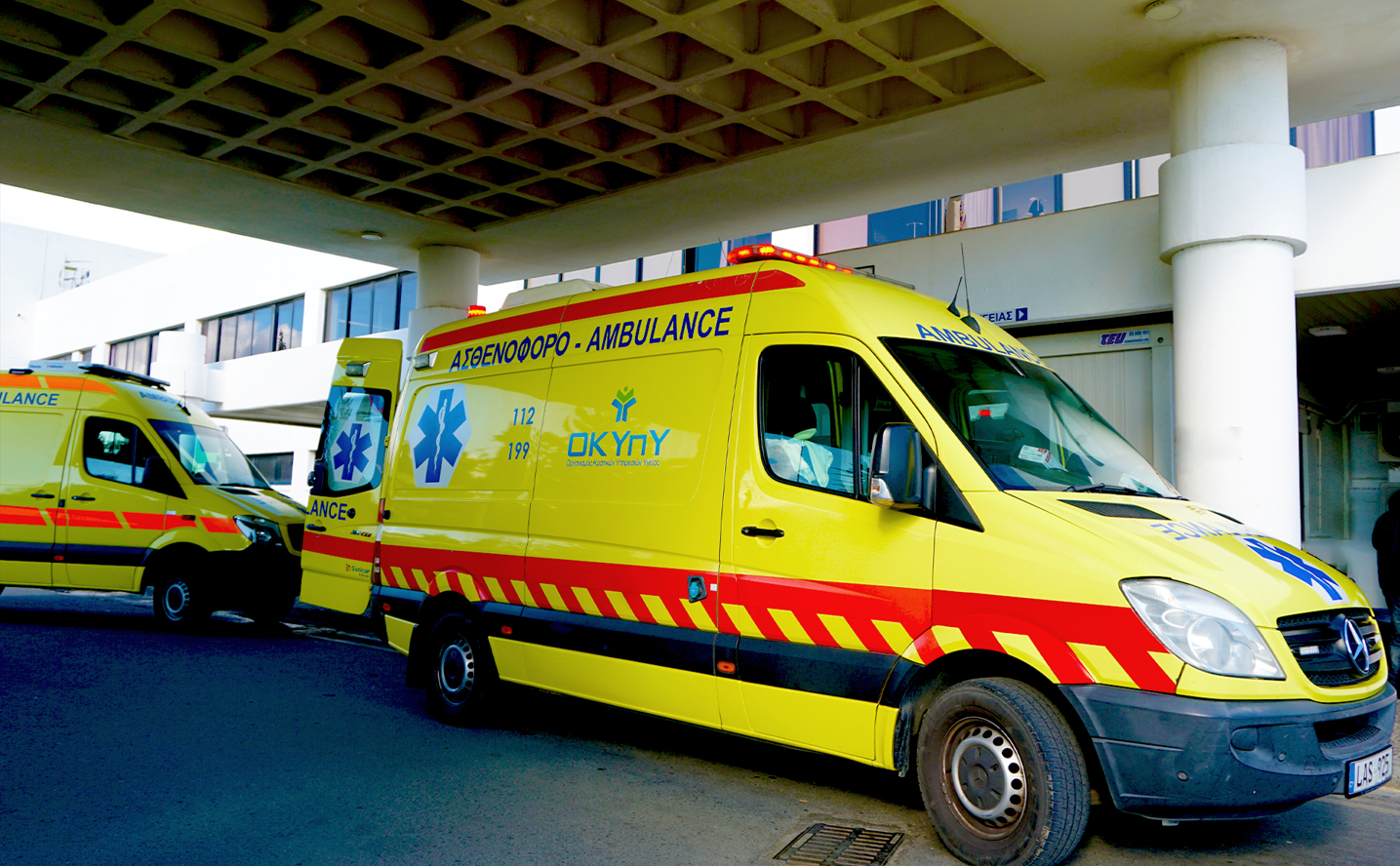
As number of transports soars, debate on how best to manage it heats up
The long-running effort to create a national ambulance agency took a big step forward last month, with the House health committee debating a bill aimed at establishing it.
The bill, approved by the cabinet in December, comes as the number of non-emergency patient transports has exploded, from 5,000 in 2020 to 45,000 in 2025, according to the ambulance service.
For all that, stakeholders – even Osak, the federation for patients’ rights – seem to agree that there’s no immediate crisis in the ambulance sector, in the basic sense of ambulances being available when urgently needed.
“There are some complaints, but I have to say the service is generally very good,” Marios Kouloumas, honorary president of Osak, told the Cyprus Mail.
The ninefold increase has to do with non-emergency transports, like patients being transferred between hospitals, or to their home after leaving hospital. The big change between 2020 and 2025 was the introduction of the general health system (Gesy), which regulates almost all hospitals and provides for ambulance care even in non-urgent cases.
There were actually 86,200 ambulance transports in 2025 – the aforementioned 45,000 non-emergency calls, plus 41,200 emergency calls. The latter, unlike the former, haven’t risen significantly in the past few years.
This explains why the service continues to function reasonably well – but the same vehicles handle both types of calls, says Kouloumas, meaning it remains over-extended.
It’s not uncommon for a patient’s transfer home to be delayed for hours, for instance, because ambulances are prioritising emergency calls – but the result is that a hospital bed remains occupied, and unavailable, for no good reason.
That’s the kind of inefficiency a national ambulance agency could tackle – though the proposed bill has its own issues.
“The government has decided to place the ambulances under the health ministry,” says Kouloumas. “In our opinion, that’s a mistake. On the other hand, it’s still a step forward.”
The ‘step forward’ part is that the newly constituted agency is designed to take over all emergency calls but allow the private sector – “private ambulances, which will be licensed and evaluated” – to help with non-urgent transports.
The ‘mistake’ part is that “in no other country does the health ministry sell health services. Health ministries are supposed to supervise public health, they have a supervisory role… You won’t see in Germany, say, the health ministry selling medicines, or sending patients abroad, or running ambulances.”
This is already turning into a bone of contention, with the Health Insurance Organisation (HIO), which administers Gesy, telling the House committee that the health system may not be able to cover emergency transports – which of course would be something of a deal breaker.
Their argument is that the health ministry is a watchdog with regulatory power over Gesy – so it wouldn’t be legally proper for them to also be providing services, like ambulance transports, to Gesy.
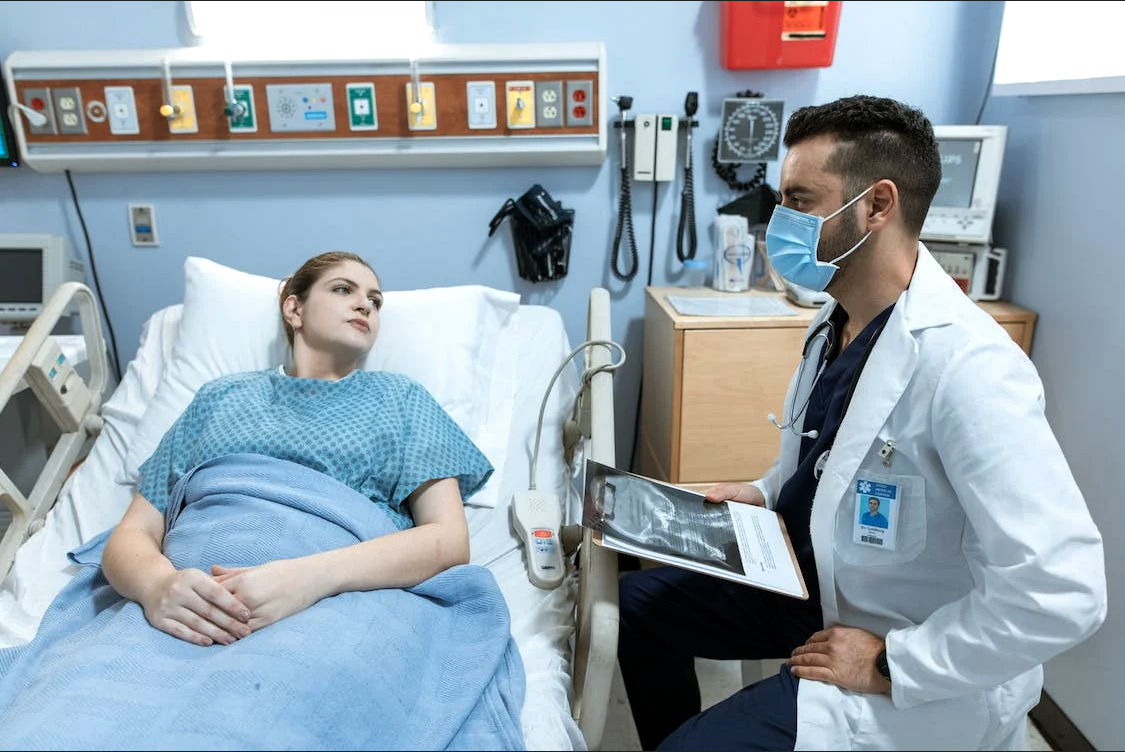
Kouloumas also fears the onset of “bureaucratic, time-consuming procedures” if ambulances remain within the public sector (the service is currently under Okypy, the state health services organisation) – and in any case, he says, Osak has always had a different vision for the ambulance sector.
Their vision is for pre-hospital care to be under a “deputy ministry of crisis management” which would also include the fire department and civil defence, and could deal with natural disasters.
This deputy ministry would be able to act unimpeded, allocating resources – including ambulances – as required. ‘112’, the emergency number, wouldn’t just be a switchboard, as it is now, but a proactive service sending warning texts about floods or wildfires.
That vision languished for years – but the events of the past two weeks have brought it closer than ever. The ‘national civil protection mechanism’ being mooted in the wake of the drone strike on Akrotiri is very close to the deputy ministry envisioned by Osak – though it’s still unclear, according to the interior minister, whether it will include ambulances.
Ironically, the national agency may end up being superseded just as it’s becoming a reality. Still, the idea has some obvious benefits.
Having the sector run by Okypy – i.e. state health services – means that ‘112’ calls must be handled by a state hospital, which is arbitrary and again inefficient. (Private hospitals are allowed to have ambulances, but only for non-urgent transports within Gesy.) Once it’s under the ministry, that restriction will be lifted.
On the flipside, the current loophole that allows almost anyone to offer pre-hospital care will be closed.
It’s a big problem, a source in the ambulance service told the Cyprus Mail. At the moment, an entrepreneur can decide to buy a cheap secondhand ambulance – mostly at auction, and mostly from the UK – bring it to Cyprus and go about ferrying patients, albeit not for emergency cases.
Such vehicles are unlicensed, with almost no oversight. They typically set up at football matches and other events, so the organisers are covered as regards medical provision. They have a siren, and look like ambulances – but aren’t properly staffed or equipped, making them a hazard if someone actually falls sick. This, too, will be regulated once the law passes.
A broader question is whether the drive to more centralisation – whether it’s a mechanism, a national agency or a deputy ministry – is really the best option.
There should be only one provider when it comes to emergency calls, says Kouloumas – if only so that people know who to call – and it has to be a state agency. The NHS equivalent in the UK is also state-owned, points out our source in the ambulance service.
The rationale is that a private provider, being driven by profit, might find it more lucrative – or be bribed – to favour some hospitals or doctors over others.
Then again, the private sector always tends to be more incentivised. Part of the current drive for a national civil protection mechanism comes from the scandal about evacuation shelters having not been adequately inspected for years.
A private company tasked with the inspections would surely have been more competent – if only because they’d have lost their contract if they weren’t. As with shelters, so with ambulances.
In the end, the one all-important requirement of an ambulance service is that ambulances should be there when needed – so why not maximise supply (with guardrails, of course), instead of tightly controlling it?
Hopefully the national ambulance agency, if and when it comes into being, will look at the issue with fresh eyes.





Click here to change your cookie preferences