Europe is striving to progress its Green Deal, but it is facing significant headwinds. Lacklustre economic growth, high energy prices, excessive regulation and declining industrial competitiveness have thrown its energy transition, affordability and security into sharp focus. Balancing short-term economic growth and stability with long-term sustainability presents a complex puzzle for policymakers and Europe is struggling to find the right balance.
President Trump’s trade policies, the EU-US trade deal and tariffs are hurting European industry, as is Trump’s energy strategy that is centred around US energy dominance.
Lack of cohesion within the EU and its regulation-driven system are in danger of leaving Europe sidelined at a time when US and China are resetting global trade rules and their growing rivalry is ushering in an age of global uncertainty. Europe must sort out its internal divisions and reshape its economy, but also energy – implement Draghi – if it is to remain relevant at the world stage.
Europe turns to US LNG
The US strategy for the EU and the wider region is to stop all dependence on Russian gas and energy and replace it by US LNG and energy. Europe agreed in October to phase-out all Russian pipeline gas and LNG imports, with a full ban to take effect by the end of 2027.
In addition, in July, the EU committed to importing up to $750 billion worth of US energy products, primarily LNG, by 2028. This commitment was part of a larger trade and tariffs agreement between EU and US, intended to boost energy security by replacing Russian energy imports. But given the fraught EU-US political relationship, this brings with it the risk of getting rid of one energy dependency and creating another.
Challenges
Even though the share of renewables in EU’s power generation now exceeds 50%, Europe is experiencing some harsh reality checks:
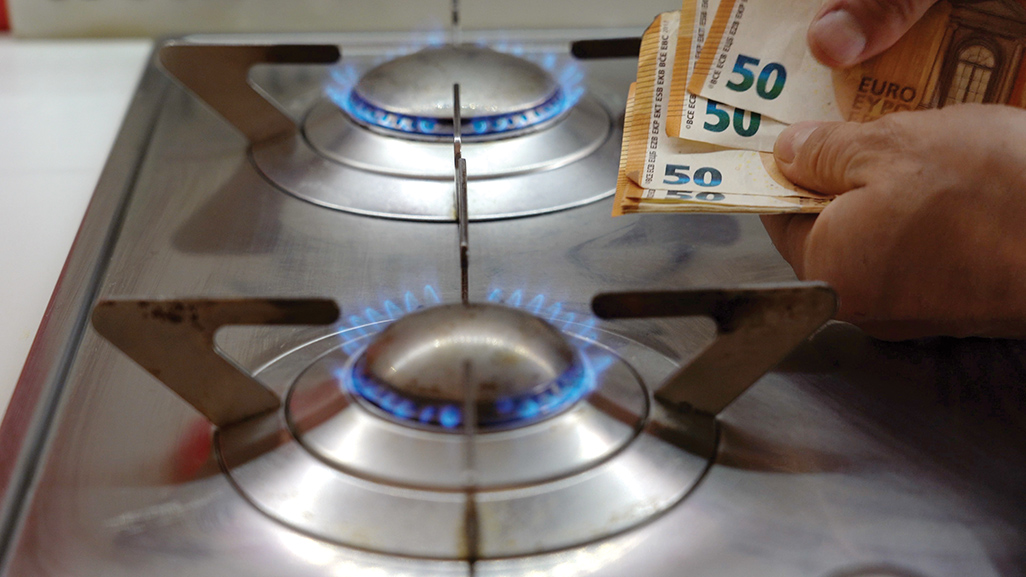
· Electricity prices are too high – wholesale electricity prices in the EU are 2-3 times higher than in 2020 and 2-3 times higher than in the US and China (Figure 1)
· Its electricity grid infrastructure has become a bottleneck to further expansion, requiring €1.4trillion new investments by 2040 to bring it to the required level
· The economics of capital-intensive offshore wind are becoming challenging, with project cancellations in Denmark, the UK and the Netherlands
The combination of reduced wind speeds, less sunshine, and drought conditions poses a significant challenge to European energy systems and water resources.
These will only increase with time. European electricity demand is expected to increase by more than 30% by 2030 due to electric vehicles, datacenters and AI and increasing cooling and heating, as global weather becomes more extreme due to climate change.
The massive blackout in Spain and Portugal in April brought home how insecure our energy systems have become, raising questions about the resilience of Europe’s grid infrastructure. The IEA has pointed-out that “systemic challenges will emerge from balancing increasingly renewable-dominated grids during extended low-generation periods.”
The blackout has shown that Europe needs more interconnection, more electricity storage, grid upgrading and more sophisticated technology to manage the network and strengthen its resilience. It also needs a balanced energy mix, including baseload power, to manage the intermittency of expanding renewable sources, ensuring a stable and reliable power supply.
And above all, it needs an electricity market design that will bring its stubbornly high energy prices down, improve industrial competitiveness and ease the unbearable burden on households.
EU energy security
These challenges have in turn brought the focus back to the security of energy supplies and energy independence. These have become more important than ever and are seen as critical to national security. Voter anger due to high energy prices has been increasing, bringing with it short termism and a swing to the far-right.
The transition to a decarbonized global economy is behind schedule and possibly losing momentum. It is not that it will not happen – but it is unlikely that it will happen by 2050.
This is also happening to Europe, where transition to a low-carbon economy is losing momentum as prohibitively high electricity prices continue to undermine both household adoption of clean technologies and industrial competitiveness.
These problems were becoming increasingly challenging even before President Trump’s second term. He has simply made it more difficult. With tariffs impacting costs, including cost of materials, if they stay there will inevitably be fallout on energy transition, as supply chains that depend heavily on global trade are being disrupted.
Coupled with these developments, Europe is facing economic challenges and inevitably investment in clean energy and energy infrastructure is now competing with the need to invest in defense that has become top priority.
In reality the world is moving into an age of ‘energy-addition’ where rising energy demand is being met by a combination of low-carbon energy and natural gas. This will require greater investment in new energy systems, especially in electricity grids and energy storage.
If grid and storage limitations are not addressed with a degree of urgency, the expansion in renewables and electricity may be delayed. Also, the curtailment of increasing amounts of renewable electricity because of the inability of outdated systems to accept them will increase.
Europe must prioritise competitiveness and energy resilience
The EU is being increasingly sidelined at international fora, eclipsed by the US and China. At the global climate summit COP30 in Brazil, it came up against its own lack of cohesion and weakness in confronting the new geopolitical realities without the US on its side. It was expected to take more responsibility but could not muster it against the strong resolve of China, India, Saudi Arabia and Russia. In effect, the Europeans (EU+UK) were sidelined. As pointed out at COP30, if the EU wants to be an energy and climate leader, it needs to sort out its internal divisions.
In a world where the US and China battle it out, fracturing of the global economy in the process, unless Europe can stand its ground the likelihood is that everybody will do worse in absolute terms.
Already concerns about Europe’s industrial decline have intensified thanks to very high energy prices, the onset of Trump’s tariffs and cheaper Chinese goods flooding the EU market. As things stand, Europe remains uncompetitive, has little to offer, and is gradually being squeezed out, with ittle faith that a recovery is coming anytime soon.
If this is to change, Europe must step down from being regulation-driven and prioritise lower prices, especially in energy, the economy and competitiveness. It must become energy resilient. At present this is lacking, to our detriment.
Charles Ellinas is Councilor of the Atlantic Council. The article is republished from the Blog of the Cyprus Economic Society (https://cypruseconomicsociety.org/blog/blog-posts/)


Click here to change your cookie preferences