
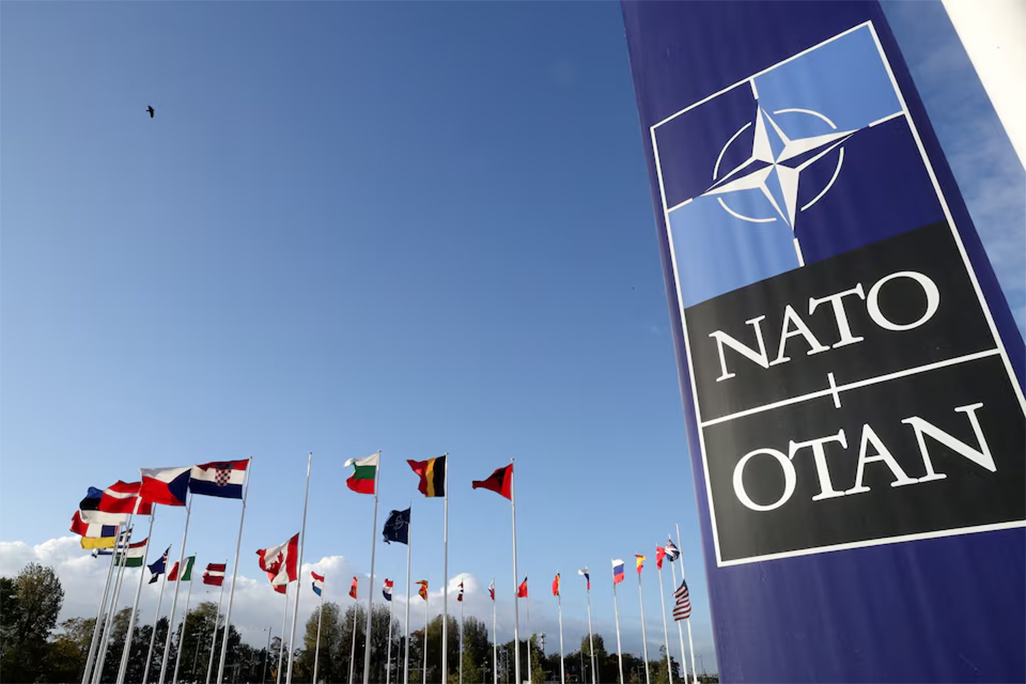
In the wake of the March 2, 2026, drone strike on the British Sovereign Base at Akrotiri, President Nikos Christodoulides has moved to reorient the Republic of Cyprus’s grand strategy. His repeated declarations of intent to apply for NATO membership represent more than a reactionary policy shift; they signal a fundamental ideological departure from the non-aligned, neutralist foundations of the Republic.
However, beneath the cover of ‘Western anchoring’ and ‘strategic modernization’ lies a landscape of high-risk illusions. Contrary to the prevailing domestic narrative, NATO membership has never been a viable procedural option for Cyprus since its birth in 1960, and in the fractured geopolitical climate of 2026, pursuing it without a negotiated settlement risks not just permanent division, but a catastrophic collision with Turkey.
Cyprus’ security dilemma
The core of the Cypriot security dilemma is rooted in the 1960 Treaty of Guarantee. This foundational document, effectively preempted the formation of any alternative security structure by granting Greece, Turkey, and the United Kingdom unilateral rights to maintain the island’s constitutional order. It failed, but in the absence of a comprehensive solution that expressly replaces or absorbs this framework, NATO membership is legally and politically impossible short of total war.
Maintaining a narrative of accession raises profound questions about cause and effect. At a time when the Republic has traded its traditional neutrality for militaristic advantages, it has done so without securing firm, legally binding security guarantees. The current administration has essentially moved to change the fundamental parameters of a solution by bypassing the negotiating table in favor of a ‘Defense Mechanism.’ In doing so, it has set in motion a process it can neither control nor manage, transitioning Cyprus from a neutral buffer state to a frontline tripwire, mirroring the tragic trajectory of Ukraine.
The Architecture of an Illusion
A standard NATO accession strategy is traditionally viewed through three distinct phases. The first is standardization and interoperability, where a national military aligns its hardware, communications, and doctrine with NATO protocols. The second is membership in the Partnership for Peace (PfP), a preparatory stage designed to foster bilateral cooperation. The third is full membership. As of 2026, Cyprus is aggressively pursuing the first phase through the ‘Cyprus Defense Roadmap with the United States. This five-year plan (2024–2029) allows for the ‘NATO-ization’ of the Cypriot National Guard, a process the US can facilitate bilaterally without requiring the unanimous approval of the North Atlantic Council.
However, the second and third phases—PfP and full membership—require the unanimous consent of all NATO members. While the domestic discourse often focuses on a ‘Grand Bargain’ where Cyprus lifts EU-Turkey vetoes in exchange for Turkey lifting its NATO veto, this is a strategic mirage. Turkey’s opposition is not a mere diplomatic bargaining chip when it rejects the Republic of Cyprus’s legal existence.
Furthermore, the fundamental conditions for NATO membership, defined by the 1995 Study on NATO Enlargement and made more stringent under the ‘Trump 2.0’ centred on a 5 per cent GDP spending standard, present insurmountable barriers. These criteria include a democratic anchor, military utility, respect for minority rights, and, most critically, an absence of territorial disputes.
While Cyprus is a functioning democracy and its military utility is demonstrated by high-value assets like the Andreas Papandreou Air Base and the Mari Naval Base—now integrated into Western networks—the unresolved Cyprus Problem remains the terminal obstacle. NATO is structurally allergic to importing ‘active wars’ or unresolved borders that could immediately trigger Article 5. For Cyprus, the ‘Open Door’ is effectively locked from the inside by a NATO ally that occupies 36 per cent of its territory.
The ‘Shadow Umbrella’ and the Grey Zone Trap
The Christodoulides administration argues that even if full membership is distant, the ‘strategic dialogues’ with the US and France provide a sufficient deterrent. This is perhaps a dangerous illusion. The United States offers deterrence, not defense. The Defense Roadmap is a letter of intent, not a mutual defense treaty. Similarly, despite President Emmanuel Macron’s grandiose gestures and the deployment of French air defense batteries to Paphos in early 2026, the European Union is not a defense union. French support is transactional, driven by Paris’s need for a Levant hub during the 2026 Iran War, rather than a permanent commitment to Cypriot sovereignty.
This lack of a formal ‘Article 5’ umbrella leaves Cyprus vulnerable to Grey Zone’ provocations—hostile acts that stay below the threshold of conventional war. Turkey does not need to launch an invasion to paralyze the Republic. As of March 2026, Ankara’s strategy has shifted toward hybrid warfare.
The Ukrainian Correspondence: A Grim Historical Lesson
The administration’s tendency to equate Russia’s invasion of Ukraine with Turkey’s 1974 invasion serves domestic political ends, but it ignores a bitter strategic reality. Comparing Ukraine’s status in 2008 with Cyprus’s position in 2026 reveals how a vague path to NATO can create deadly ‘Security Vacuums.’ At the 2008 Bucharest Summit, the US pushed for a Membership Action Plan for Ukraine, which France and Germany blocked to avoid provoking Russia. The resulting ‘compromise’—a promise of future membership without a timeline or security guarantee—was the worst of both worlds. It gave Kyiv the confidence to behave like a future member without providing the safeguards of a current one. Russia exploited this vacuum in 2014 and 2022.
Cyprus is now entering its own ‘Bucharest Moment.’ By hardening its position and seeking a ‘Defense Mechanism’ in the absence of a solution, Nicosia is feeling emboldened by Western hardware. However, Turkey views this militarization as a breach of the 1960 guarantees. Unlike Ukraine, where the adversary (Russia) was outside the NATO tent, Turkey is inside the tent. By setting Cyprus on a collision course, Christodoulides is challenging not just an adversary, but the internal cohesion of NATO itself. The risk is that Turkey may decide to ‘test’ the Western shield—perhaps by seizing a drilling rig in Block 12 or expanding the military zone.
The Economic Cost of Frontline Status
The pivot to a ‘Frontline State’ carries a staggering economic price tag. To be considered ‘NATO-capable’ in the current era, the Republic is being pushed toward a 5 per cent GDP defense spend. For an economy still managing the dualism of a high-tech services sector and a ‘shadow’ balance sheet of legacy non-performing loans, this militarization of the budget is a return to fiscal fragility. The diversion of resources from social infrastructure and the green transition to purchase French Rafales or Israeli Iron Dome components creates an internal vulnerability that Ankara can exploit.
Conclusion: The Permanent Divorce
The strategic pivot of 2026 suggests that rather than pursuing a Bi-zonal, Bi-communal Federation, Nicosia is seeking to ‘change the equation’ by making the Republic so essential to Western military interests. However, a negotiated solution based on a federation almost certainly precludes NATO membership. A unified Cyprus would likely require demilitarization and neutrality to satisfy both the Greek Cypriot fear of Turkish troops and the Turkish Cypriot fear of Greek Cypriot dominance. By choosing the path of NATO interoperability and ‘frontline’ status, Nicosia has effectively traded the dream of a unified, federal island for the reality of a militarized, Western-aligned outpost. Taking nationalism and strategic alignment to this extreme is not ‘love of country’; it is an ideology that risks a collision the Republic cannot manage, transforming the Green Line into a permanent geopolitical fault line.
*Ioannis Tirkides is an economist




Click here to change your cookie preferences