
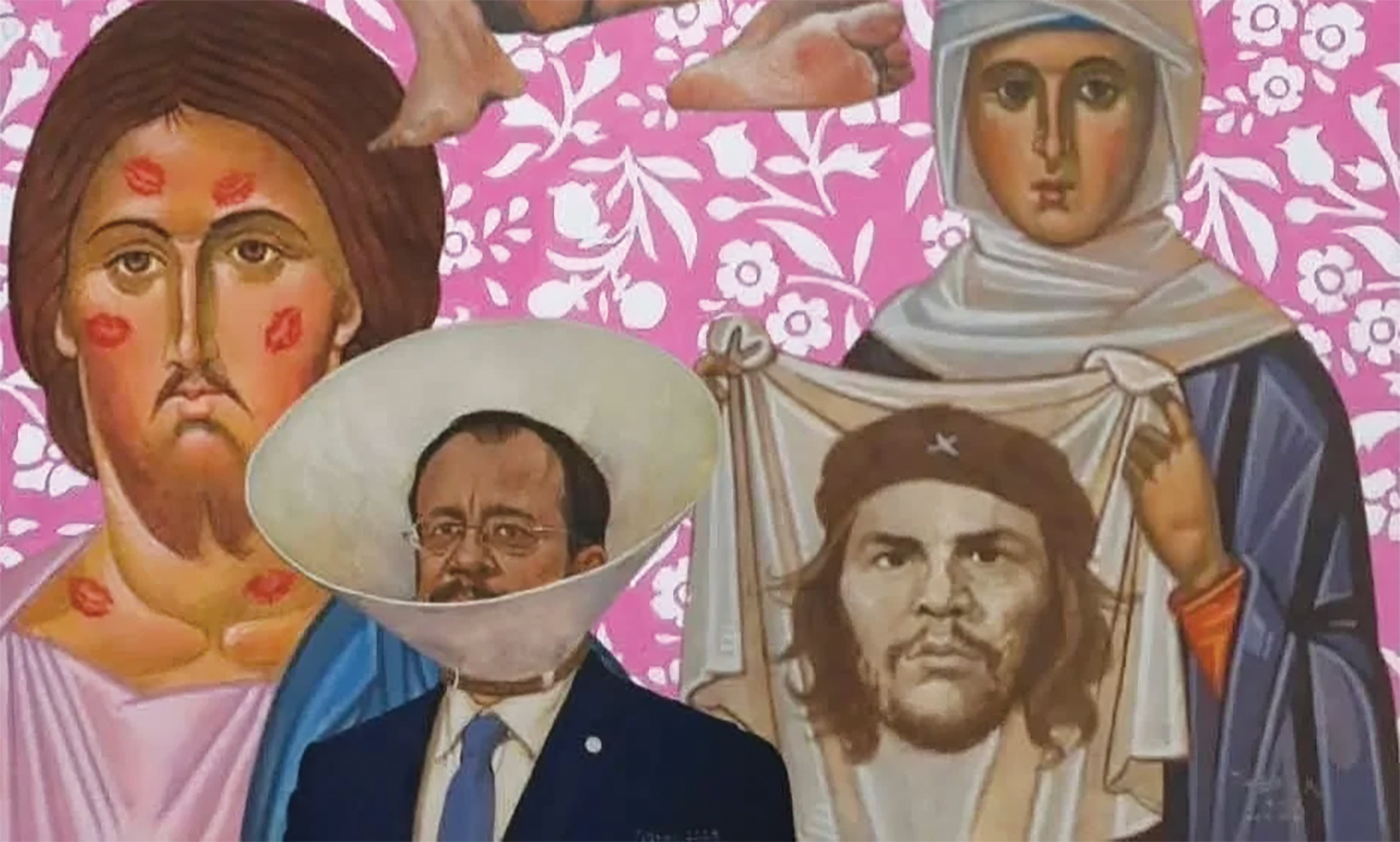
It was sad to see the hysterical reaction of the political parties to works by controversial artist Giorgos Gavriel, most of which lambasted his paintings. The art was dismissed as “blasphemy,” a “provocation to society,” and “obscene.” The paintings could be all these things as well as offensive, iconoclastic, artistically crude and aesthetically worthless, but these are still no justifications for banning them and making threats against the artist and the Paphos gallery owner who exhibited them.
It was not the first time that the artist had provoked a hysterical reaction from the great and the good of Cyprus society, led by the right-wing extremists of Elam. We witnessed a similar reaction a few years ago to Gavriel’s work, so Elam knew its latest attacks would be well-received by sections of the population and that other deputies would jump on the bandwagon, with parliamentary elections on the horizon. The faithful are a very big voting block and nobody would lose votes pandering to them.
An Elam parliamentary candidate initiated the campaign by posting a video on social media in which he slammed the artist, accusing him of blasphemy. This spurred individuals to make death threats against the owner of Blue Iris gallery – and his family – which was hosting the ‘Anti-systemic Art’ exhibition. On Saturday evening, at the opening, unknowns had taken down a couple of the paintings, while the next day, the gallery owner, intimidated by the threats to him and his family, closed the exhibition. Police had also contacted Gavriel to inform him he should remove a collage of his work from public view.
As if this were not bad enough, Elam also filed a complaint to the police, accusing Gavriel of actions and behaviour that insulted the Orthodox faith. Elam is not aware that free artistic expression is safeguarded by the constitution and neither the political parties nor the police have authority to exercise censorship, because they have taken offence at what an artist is saying. This is not Iran.
It was inevitable that Archbishop Georgios felt obliged to give his views on the matter, but he stopped short of backing censorship or police charges against the artist. He said, “it is unacceptable, in the name of freedom of expression, to have such obscenities in a society that does not tolerate them.” He said the artist had already received the right message from the Cypriot people, implying there was no need for further action.
People had every right to express their dislike – even disgust – at Gavirel’s paintings but demanding the cancellation of the exhibition and threatening the gallery owner was unacceptable. What was most shocking is that deputies and political parties, who are supposed to be the guardians of our democracy and defenders of our freedoms, found it so easy to demand the suppression of artistic expression. It is encouraging that they did not have their way, as wiser heads pointed out that the right to freedom of expression is inviolable.

Click here to change your cookie preferences