
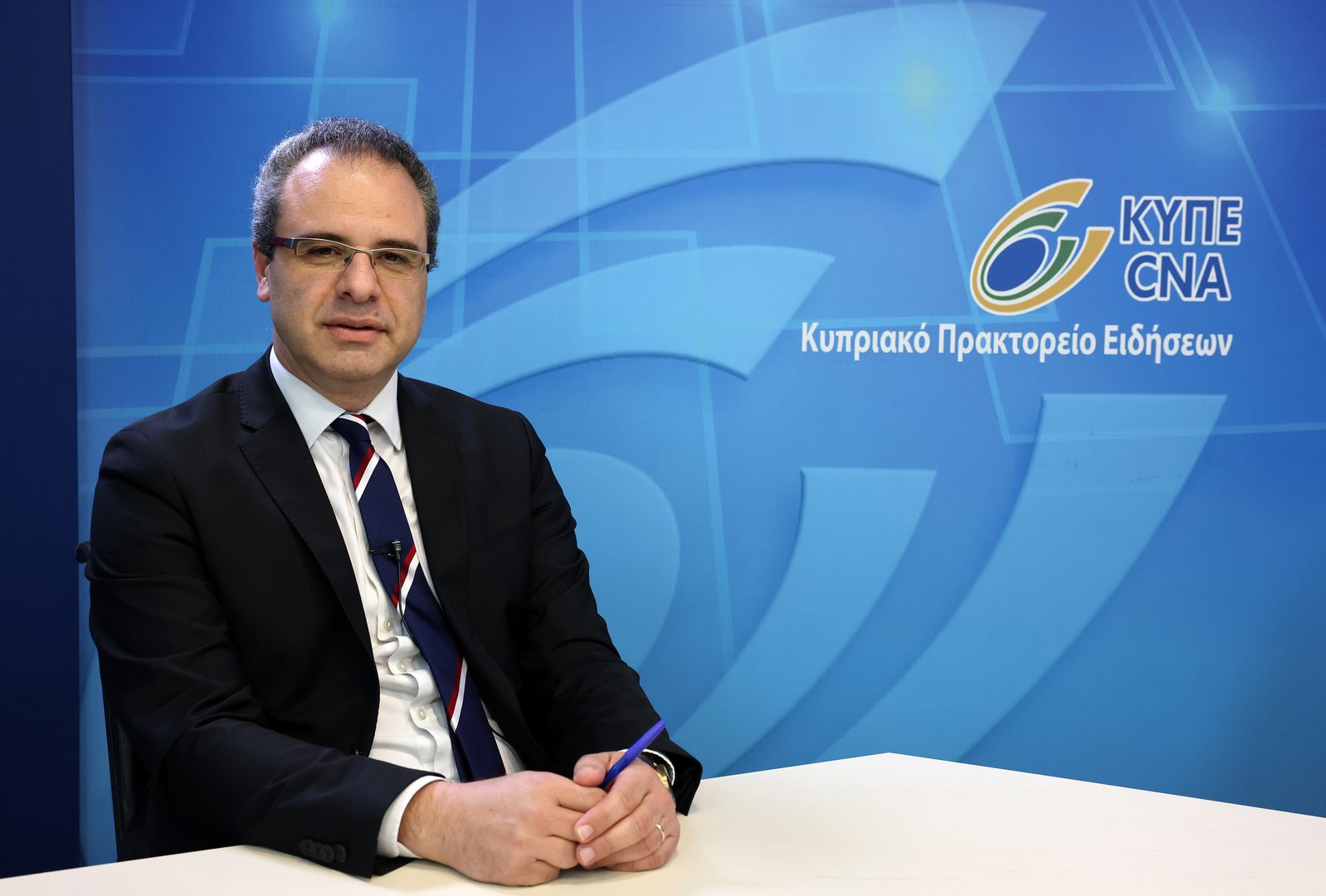
Greek Cypriot negotiator Menelaos Menelaou has pointed to what he described as a positive shift in the Turkish Cypriot side’s position on the Cyprus problem, following the recent change in leadership of the Turkish Cypriot community.
Speaking in separate interviews with Politis and Kathimerini, Menelaou said the rhetoric of “sovereign equality” and a “two-state solution” appears to be giving way to renewed acceptance of a bizonal, bicommunal federation with political equality, as defined by UN Security Council resolutions.
He described the development as a critical step that brings discussions back to their core objective – the resumption of substantive negotiations for a one-state solution within the agreed UN framework.
However, Menelaou stressed that clarity is still required regarding the intentions of the Turkish side as a whole, including Turkey, to ensure that the shift is genuine and not merely tactical. He reiterated the Greek Cypriot side’s position that talks should resume from where they left off at Crans-Montana in 2017, preserving the acquis of the negotiations and aiming for a settlement free from guarantees and intervention rights by third countries.
In his interview with Politis, Menelaou said a “different landscape” has emerged since the leadership change in the Turkish Cypriot community on October 19. He noted that discussions have moved away from a focus on confidence-building measures and back to the substance of the Cyprus issue, namely the relaunch of negotiations on the basis of a bizonal, bicommunal federation with political equality, as set out in UN resolutions.
He also referred to the joint communiqué issued after the second meeting between the two leaders, held in the presence of the UN Secretary-General’s personal envoy, which includes references to Security Council resolutions. This, he said, is significant as it reflects a shift from previous positions advocating sovereign equality and two states towards political equality within a federal solution.
“The discussion is now about one state,” Menelaou said, adding that while not all issues have been resolved, developments are moving in the right direction.
At the same time, he cautioned that the intentions of Turkey remain unclear. Asked whether the new Turkish Cypriot leader is more flexible, Menelaou acknowledged a noticeable shift but said Ankara’s stance continues to be a key concern.
On the prospect of a broader meeting before the end of the year, Menelaou said time was running out but stressed that the Greek Cypriot side remains ready. He said the next steps would depend on the UN’s assessment, following consultations by the Secretary-General’s envoy with all parties involved.
In his interview with Kathimerini, Menelaou highlighted the importance of the Turkish Cypriot leader’s apparent abandonment of the two-state position in favour of political equality within a federal framework. He described the acceptance of political equality, as defined by the UN, as the key to returning to the agreed basis for negotiations, ensuring the effective participation of both communities in federal governance.
Despite the positive signals, Menelaou said further ground needs to be covered to fully clarify the intentions of both the Turkish Cypriot side and Turkey. The Greek Cypriot side, he stressed, is seeking tangible actions to confirm a genuine commitment to the agreed framework and a federal solution.
On confidence-building measures, he emphasised the importance of opening the Athienou–Pyroi–Aglantzia crossing point, describing it as another key step towards improving the climate and building trust between the two communities.
Menelaou also expressed reservations about imposing artificial timelines, saying the process must remain meaningful. He underlined the importance of safeguarding the gains achieved at Crans-Montana and resuming talks without reopening issues already agreed, particularly on security and guarantees.
Finally, he underlined the crucial role of the European Union, the United States and the UN Security Council. Any settlement, he said, must be free of guarantees and intervention rights, ensuring Cyprus’ full sovereignty and its complete integration within the European Union.


Click here to change your cookie preferences